
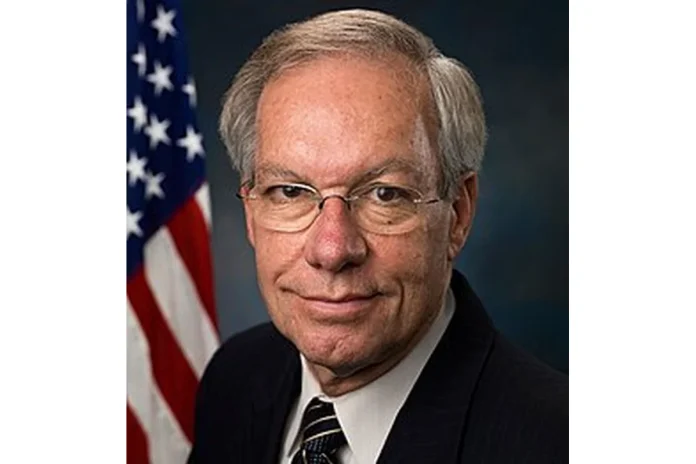
Wayne Allard Bio
Alan Wayne Allard (born December 2, 1943) is an American veterinarian and Republican politician who built a three-decade career in public service in his home state of Colorado and in Washington, D.C. He served in the Colorado State Senate from 1983 to 1991, represented Colorado’s 4th Congressional District in the U.S. House of Representatives from 1991 to 1997, and then represented Colorado in the United States Senate from 1997 to 2009. A two-term senator, Allard honored a 1996 campaign pledge to serve only two Senate terms and retired in January 2009. After leaving office, he transitioned into the private sector as a lobbyist and government relations professional.
Before entering politics, Allard earned a Doctor of Veterinary Medicine degree and practiced veterinary medicine for many years, a background that shaped his reputation as a practical, science-minded legislator. His career reflects a steady rise from local ranch country to statewide office and finally to the U.S. Senate, where he served on committees dealing with the federal budget and federal spending.
Early Life and Background
Alan Wayne Allard was born on December 2, 1943, in Fort Collins, Colorado. He is the son of Amos Wilson Allard and Sibyl Jean Allard, née Stewart, and is descended from immigrants from Canada and Scotland. Allard was raised on a ranch near Walden, Colorado, an experience that gave him a deep connection to rural Colorado, agriculture, and the concerns of western communities.
Growing up in ranch country, Allard developed an early interest in animal care that eventually led him toward veterinary medicine. He pursued his higher education at Colorado State University, where he earned a Doctor of Veterinary Medicine degree in 1968. That same university later became closely tied to his family life as well, since it was there that he met his future wife.
Path to US Politics
After completing veterinary school, Allard founded and operated the Allard Animal Hospital, a veterinary practice that he and his wife ran together. While continuing to practice veterinary medicine full-time, he entered state-level politics in the early 1980s, winning election to the Colorado State Senate in 1982 and taking office in 1983. During his years in the state legislature, he represented Larimer and Weld counties and developed a reputation for supporting fiscal responsibility and for protecting the idea of a citizen legislature.
Allard’s time in the Colorado State Senate gave him a platform to shape state policy and to build the political organization needed to move to federal office. He is the sponsor of Colorado’s law that limits state legislative sessions to 120 days, a reform that continues to define how the state legislature operates. His steady work in the state senate prepared him to run successfully for the U.S. House of Representatives in 1990.
Wayne Allard Career
Early Career (1983–1991)
Allard began his political career in the Colorado State Senate in 1983, representing Larimer and Weld counties. He continued to run his veterinary practice full-time throughout his tenure in the state legislature, a balancing act that became a defining feature of his early public service. His commitment to constituent service and his work on fiscal and procedural issues helped him build a strong base in northern Colorado.
During these years, Allard championed efforts to streamline state government and to keep the legislature close to the citizens it served. His most lasting state-level achievement was sponsoring the measure that capped Colorado’s legislative sessions at 120 days, a reform that reshaped the rhythm of state government and limited the influence of career politicians in the state capitol.
U.S. House of Representatives Breakthrough (1991–1997)
In 1990, Allard won election to the United States House of Representatives from Colorado’s 4th Congressional District and took office in 1991. He served three terms in the House, representing the district until 1997. During this period, he served on the Joint Committee on Congressional Reform, a panel that recommended many of the institutional changes later bundled into the Contract with America.
Those reform recommendations became some of the first measures passed by the Republican-controlled Congress in 1995, marking an early high point of Allard’s federal career. His work on the Joint Committee positioned him as a serious policy thinker on congressional procedure, an area that dovetailed with his longstanding interest in limited, accountable government. By the time he left the House, he had earned a reputation as a reliable conservative voice from Colorado.
U.S. Senate Era (1997–2009)
In 1996, Allard won election to the United States Senate, first defeating Colorado Attorney General Gale Norton in the Republican primary and then beating Tom Strickland in the general election. At the time of his victory, he pledged to serve only two terms in the Senate, a promise he would later keep. In 2002, he won re-election, again defeating Strickland by roughly the same five-point margin.
During his Senate tenure, Allard served on key committees including the Budget Committee and the Appropriations Committee, which placed him at the center of federal spending decisions. In 2003, he introduced the Federal Marriage Amendment in the Senate, seeking to ban same-sex marriage, and he reintroduced the legislation in 2004; both attempts fell short of the two-thirds support needed for a constitutional amendment. He also co-sponsored the James Peak Wilderness Bill, which created a roughly 14,000-acre preserve, and sponsored legislation that established Colorado’s 85,000-acre Great Sand Dunes National Park and Preserve. In addition, he founded and chaired the Senate Renewable Energy and Efficiency Caucus. In March 2008, the National Journal ranked him the second most-conservative U.S. Senator based on his 2007 votes.
On January 15, 2007, Allard announced that he would honor his 1996 pledge and retire in January 2009. He did not seek re-election in 2008, closing out a 26-year career in elected office that began in the Colorado State Senate.
Notable Events and Milestones
One of the defining moments of Allard’s Senate career was his sponsorship of the Great Sand Dunes National Park and Preserve legislation, which protected a major Colorado landscape for future generations. He was also recognized for his bipartisan work on the Capitol Visitors Center construction project, a role that drew praise from a 2006 Time magazine profile that otherwise named him one of America’s five worst senators. In retirement, the Denver Post noted that, while it had not always agreed with Allard on policy, it never doubted that he was working hard for Colorado. His decision to keep a self-imposed term limit pledge was itself a notable milestone in an era when such commitments were uncommon.
Wayne Allard Family
Family Background and Lineage
Allard was raised in a household with deep roots in the American West. He is the son of Amos Wilson Allard and Sibyl Jean Allard, née Stewart, and is descended from immigrants who came to the United States from Canada and Scotland. His upbringing on a ranch near Walden, Colorado, gave him firsthand knowledge of agricultural life and Western land issues that would later shape his policy work on wilderness, energy, and public lands.
Personal Life
While completing his studies at Colorado State University, Allard married Joan Malcolm, who earned a degree in microbiology from the same university. Together they founded the Allard Animal Hospital, the veterinary practice Allard ran while serving in the Colorado State Senate. The couple raised two daughters, Christi and Cheryl, in Loveland, Colorado, and Allard is the grandfather of five grandsons. He is a Protestant. In 2007, Allard authored Colorado’s U.S. Senators: A Biographical Guide, published by Fulcrum Publishing, a project that reflected his long interest in the history of his state and its representation in Washington.
Wayne Allard Later Career
Shortly after leaving the Senate in January 2009, Allard joined The Livingston Group, a Washington, D.C.-based lobbying and government relations firm. In 2011, he moved into a government relations role with the American Motorcycle Association, continuing to apply his decades of legislative and political experience in the private sector.