
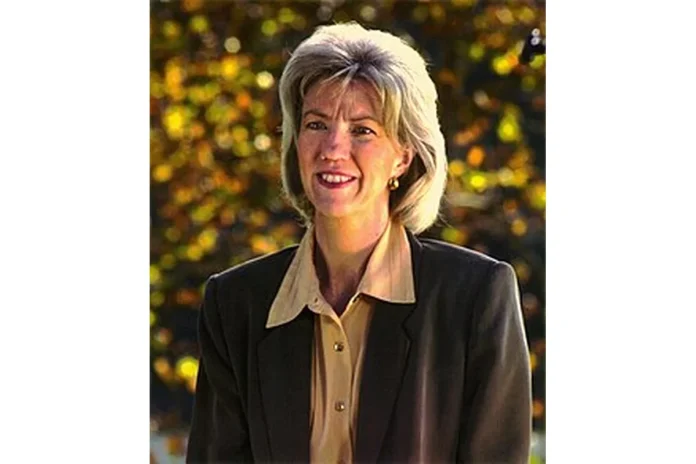
Gale Norton Bio
Gale Ann Norton (born 11 March 1954) is an American politician and attorney who served as the 48th United States Secretary of the Interior under President George W. Bush from 2001 to 2006. A member of the Republican Party, she previously served as the 35th Attorney General of Colorado from 1991 to 1999 and was the first woman to hold each of those posts. Norton earned a Bachelor of Arts and a Juris Doctor from the University of Denver and built a career that spanned federal and state government, private legal practice, and the energy sector.
After leaving national office, Norton transitioned to corporate and consulting work focused on natural resources and regulatory policy. Her career is closely associated with advocacy for energy development on public lands and with the so-called wise use and free-market environmentalist movements that shaped late-twentieth-century conservation debates in the American West.
Early Life and Background
Gale Ann Norton was born on 11 March 1954 in Wichita, Kansas, to Dale and Anna Norton. She was raised in Wichita and later in Thornton, Colorado, growing up in a household that moved between the Great Plains and the Rocky Mountain region. This early exposure to very different parts of the American West helped shape her long-standing interest in land use and natural resource policy.
Norton graduated magna cum laude and as a member of Phi Beta Kappa from the University of Denver in 1975. She went on to earn her Juris Doctor degree with honors from the University of Denver College of Law in 1978. While in college and law school, she was influenced by the writings of novelist Ayn Rand and developed views on property rights and limited government that would guide her later career. In the late 1970s she joined the Libertarian Party and was nearly selected as its national director in 1980, before later switching to the Republican Party, where she has remained since the 1980s.
Path to US Politics
Following her graduation from law school, Gale Ann Norton worked as a senior attorney at the Mountain States Legal Foundation from 1979 to 1983. The Mountain States Legal Foundation was a leading voice in the wise use movement, and the role gave Norton early courtroom experience defending property rights and challenging federal environmental regulations. She then spent 1983 to 1984 as a National Fellow at the Hoover Institution at Stanford University, where she deepened her network among conservative policy thinkers.
In 1984, Norton moved into the federal government as an assistant to Deputy Secretary of Agriculture Richard Edmund Lyng. From 1985 to 1990, she served as Associate Solicitor for the United States Department of the Interior, supervising attorneys who worked for the National Park Service and the United States Fish and Wildlife Service. These positions in Washington, D.C., established her reputation inside the conservative legal movement and prepared her to run for statewide office in Colorado.
Gale Norton Career
Early Career (1979–1990)
Norton’s first notable legal position was at the Mountain States Legal Foundation, where she handled cases tied to private property, grazing rights, and federal land management in the western United States. The work connected her with organizations such as the Property and Environmental Research Center, of which she later became a fellow. Her time at the foundation is widely viewed as the launching pad for her career in natural resource law.
After a fellowship at the Hoover Institution, she joined the U.S. Department of Agriculture in 1984 and then became Associate Solicitor at the Department of the Interior. In that role she supervised agency lawyers for the National Park Service and the Fish and Wildlife Service, giving her direct experience with the statutes she would later administer as Secretary.
Colorado Attorney General Era (1991–1999)
Returning to Colorado, Gale Ann Norton was elected in 1990 as the state’s first female Attorney General and took office in 1991. As the state’s chief legal officer, she led efforts to defend state laws in court, including Colorado Amendment 2, a 1992 constitutional amendment that barred state protection of homosexuals as a class. The amendment was ultimately struck down by the U.S. Supreme Court in Romer v. Evans in 1996.
In 1996, Norton ran for the Republican nomination for the United States Senate but was defeated in the primary by U.S. Representative Wayne Allard. During the same year she delivered a controversial speech arguing that, in the aftermath of the Civil War, the country had lost the idea of states as a check on federal power. She also joined the attorneys general of 45 other states in negotiating the 1998 Tobacco Master Settlement Agreement, which required tobacco companies to compensate states for Medicaid costs linked to smoking. Her second term ended in 1999, and Colorado’s term limits kept her from running again.
U.S. Secretary of the Interior Era (2001–2006)
After leaving the Colorado Attorney General’s Office, Norton joined the Denver law firm Brownstein, Hyatt & Farber as a senior counsel. In 2001, President George W. Bush nominated her to lead the Department of the Interior, and she was confirmed by the Senate as the first woman to serve as Secretary of the Interior. She held the post until 2006, when she was succeeded by Idaho Governor Dirk Kempthorne.
During her tenure, Norton was widely described as the Bush administration’s leading advocate for expanding oil and gas drilling and other industrial activity on public lands in the West. On 29 January 2002, she served as the designated survivor during President Bush’s first State of the Union Address. Her decisions on leases and resource development attracted sustained legal and political scrutiny long after she left office.
Post-Government Career (2006–Present)
At the time of her 2006 resignation, Norton joined Royal Dutch Shell as a general counsel in its exploration and production business. In 2009 the U.S. Department of Justice opened a criminal investigation into whether her hiring had violated a federal conflict-of-interest law, focusing on a 2006 decision to grant oil shale leases to Shell. The Department of Justice closed the investigation in 2010 without bringing charges.
As of 2017, Norton worked for Norton Regulatory Strategies, an Aurora, Colorado-based consulting firm focused on environmental regulation. In 2012 she also served as a senior adviser for Clean Range Ventures, an energy venture capital firm. She has served on the boards of the Federalist Society, the Reagan Alumni Association, and the Renewable and Sustainable Energy Institute at the University of Colorado.
Gale Norton Career Highlights
Notable Milestones
Norton’s most prominent milestones include becoming Colorado’s first female Attorney General in 1991, her participation in the 1998 Tobacco Master Settlement Agreement, and her confirmation in 2001 as the first female United States Secretary of the Interior. Her record on natural resource development and her role in the Bush administration’s western land policy remain the defining features of her career.
Gale Norton Family
Family Background
Gale Ann Norton was born to Dale Norton and Anna Norton and raised in Wichita, Kansas, and Thornton, Colorado. Public information about her immediate family is limited, and she has not been widely associated with a political family lineage.
Personal Life
Norton lives in Colorado with her husband, John Hughes, her second spouse. The couple’s life together has been based primarily in Colorado, where she has continued her work in law, energy, and consulting after leaving federal service.