
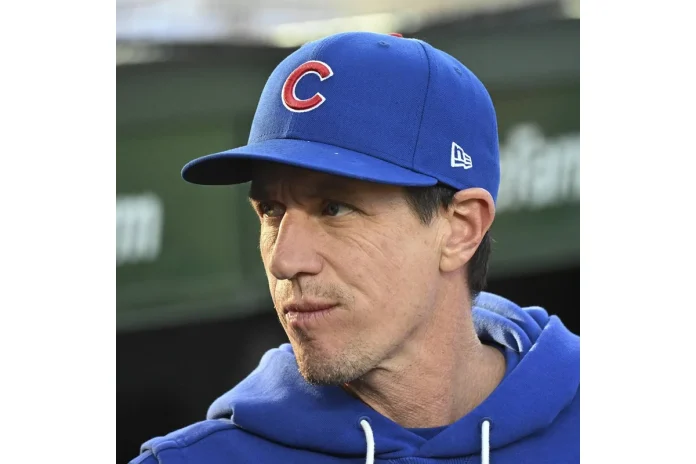
Chicago Cubs Overview
The Chicago Cubs are a professional baseball team based in Chicago, Illinois, competing in Major League Baseball (MLB) as a member of the National League (NL) Central Division. Founded in 1870 as the Chicago White Stockings, the Cubs are one of the two remaining original NL charter franchises that debuted in 1876. The club plays its home games at the historic Wrigley Field on Chicago’s North Side and is owned by the Ricketts family, led by Chairman Thomas S. Ricketts.
Known for their dark blue, red, and white team colors, the Cubs have cultivated a passionate fanbase celebrated as the “Bleacher Bums.” The franchise has captured three World Series championships in 1907, 1908, and 2016, with the most recent title ending a 108-year drought that stood as the longest in major North American professional sports. Jed Hoyer serves as President of Baseball Operations, Carter Hawkins as General Manager, and Craig Counsell as Manager, with Clark the Cub serving as the official mascot since 2014.
Founding and Organizational Origins
The Chicago Cubs originated in 1870 as the Chicago White Stockings, playing their home games at Ogden Park and Dexter Park. Six years later, owner William Hulbert led the club into the National League as a charter member, assembling a roster of star players that included pitcher Albert Spalding and infielders Ross Barnes, Deacon White, and Adrian “Cap” Anson. The White Stockings captured the first National League pennant in 1876, with Spalding winning 47 games and Barnes leading the league in hitting at .429.
Following Hulbert’s death, Spalding assumed ownership and built a dominant club under player-manager Cap Anson, who guided the team to six NL pennants between 1876 and 1886. By 1890, the franchise had become known as the Chicago Colts, and after Anson’s departure in 1897, local journalists dubbed the team the “Orphans.” In 1902, Spalding sold the club to Jim Hart, and the Chicago Daily News began calling the franchise the Cubs that same year, with the name officially adopted in 1907.
The early 1900s produced one of baseball’s most celebrated infields, as Joe Tinker, Johnny Evers, and Frank Chance were immortalized in Franklin P. Adams’ 1910 poem “Baseball’s Sad Lexicon.” Under Chance’s leadership as player-manager from 1905 to 1912, the Cubs became the first Major League club to play in three consecutive World Series and the first to win two titles. In 1914, advertising executive Albert Lasker acquired a controlling interest in the franchise, and in 1916, chewing-gum magnate Bill Wrigley began acquiring stock that would eventually make him majority owner by 1921.
Growth Into Major League Baseball Competition
As one of the National League’s charter franchises, the Cubs established themselves among baseball’s early powerhouses during the dead-ball era, capturing four additional pennants between 1906 and 1918. Key pitchers during this stretch included Mordecai “Three-Finger” Brown, Jack Taylor, Ed Reulbach, Jack Pfiester, and Orval Overall. The franchise moved to Weeghman Park in 1916, a venue originally built for the Chicago Whales of the Federal League, and the team has remained there ever since, with the ballpark eventually renamed Wrigley Field in 1926.
The early decades of the 20th century brought both triumph and frustration. After winning the 1918 NL pennant, the Cubs fell to the Boston Red Sox in the World Series, a defeat that became part of the Red Sox’s own championship curse. The management partnership of Bill Wrigley and team President Bill Veeck, Sr., known as the “Double-Bills,” guided the franchise through the 1920s and into the 1930s, overseeing ballpark renovations and the introduction of night-game lights in 1988. Throughout this period, the Cubs added National League pennants in 1929, 1932, 1935, 1938, and 1945, though they did not secure another World Series title.
Chicago Cubs Competitive Journey
The Cubs’ competitive journey traces a path from 19th-century dominance through 20th-century droughts to a triumphant modern era. The franchise has won 17 National League pennants, three World Series championships, eight division titles since 1969, and four Wild Card berths. Throughout their history, the Cubs have played 11 World Series and appeared in the postseason 11 times since the start of divisional play in 1969 through the 2024 season.
Early Seasons and Development (1870-1968)
During their formative decades, the Cubs were a fixture in National League contention, capturing pennants in 1876, 1880, 1881, 1882, 1885, 1886, 1906, 1907, 1908, 1910, 1918, 1929, 1932, 1935, 1938, and 1945. The 1906 squad set a modern-era record with 116 wins and a .763 winning percentage, though they lost the World Series to the “Hitless Wonders” Chicago White Sox. The back-to-back championships of 1907 and 1908 marked the franchise’s high-water mark for the next century.
Following the 1945 pennant, the Cubs endured a long stretch without postseason appearances, during which iconic players such as Ernie Banks, Ron Santo, Billy Williams, and Fergie Jenkins became fan favorites. The team’s broadcast partnership with WGN, established in 1948, helped cultivate a national following that transcended Chicago. Despite memorable individual performances, including Banks’ consecutive MVP awards in 1958 and 1959, the Cubs remained outside the postseason picture for decades.
Breakthrough in Major League Baseball (1969-2002)
The Cubs’ first postseason appearance in the divisional era came in 1984, when they won the NL East title under manager Jim Frey. The team surged to the National League Championship Series, where they lost to the San Diego Padres in five games. Steve Goodman’s song “Go, Cubs, Go!” became an unofficial anthem that season, and its continued use at Wrigley Field has made it a permanent part of the franchise’s identity. Two years after Goodman’s death, the Cubs clinched the 1984 NL East crown, their first title in 39 years.
The Cubs returned to the playoffs in 1989 with another NL East title, but the 1990s brought limited success. Under owner Tom Ricketts’ family, who assumed control in 2009, the organization embarked on a rebuilding effort that produced four Wild Card berths in 1998, 2015, 2018, and 2025, along with eight division championships. The 2003 NL Central title launched a memorable playoff run that ended in the National League Championship Series, while the 2015 Wild Card victory led to an NLCS matchup with the New York Mets.
Modern Program and Current Direction (2003-Present)
The 2016 season stands as the defining moment of modern Cubs history. Under President of Baseball Operations Theo Epstein and Manager Joe Maddon, the Cubs won the NL Central, swept the Los Angeles Dodgers in the NLCS, and defeated the Cleveland Indians in seven games to capture the World Series. The victory ended a 71-year National League pennant drought and a 108-year World Series championship drought, both MLB records, and the longest championship drought in major North American professional sports.
The Cubs have maintained competitive relevance in the years since, capturing NL Central titles in 2017 and 2020. The Ricketts family’s ownership has invested in Wrigley Field renovations, broadcast partnerships including the 2020 launch of Marquee Sports Network, and uniform sponsorships beginning with Motorola Mobility in 2024. Craig Counsell was named Manager, and Carter Hawkins serves as General Manager. The franchise continues to balance its storied traditions with modern player development and analytics-driven operations.
Philosophy and Competitive Strengths
The Cubs’ identity centers on patience at the plate, strong starting pitching, and a defense-first mentality. The organization has historically emphasized player development through its farm system, with an eye toward building sustainable contention rather than short-term fixes. Wrigley Field’s unique dimensions and day-game traditions shape the team’s strategic approach, favoring pitchers who can handle the rigors of a National League Central schedule.
Key Milestones and Major Moments
The franchise’s landmark moments include the 1907 and 1908 World Series titles, Ernie Banks’ 500th career home run in 1970, Ryne Sandberg’s MVP-caliber play in 1984, and the historic 2016 World Series victory. The Cubs became the first Major League club to play in three consecutive World Series and the first to win two, while their 2016 championship ended the longest title drought in North American professional sports history. The introduction of Clark the Cub in 2014 marked the team’s first official physical mascot.
Chicago Cubs Achievements and Results
The Chicago Cubs’ verified accomplishments include three World Series championships, 17 National League pennants, eight division titles since 1969, and four Wild Card berths. The franchise’s 2016 World Series victory stands as one of the most celebrated moments in modern baseball history.
World Series Achievements
The Cubs have won three World Series championships in 1907, 1908, and 2016, with the back-to-back titles of 1907 and 1908 establishing them as the game’s early dynasty. The 1906 Cubs set a modern-era record with 116 regular-season wins before losing the World Series to the Chicago White Sox. After a 108-year championship drought, the 2016 Cubs defeated the Cleveland Indians in seven games, a victory that ended the longest title drought in major North American professional sports.
Conference Achievements
The Cubs have captured 17 National League pennants, the most recent coming in 2016 when they swept the Los Angeles Dodgers in the NLCS. The franchise’s pennant total dates to the league’s earliest years, with championships in 1876, 1880, 1881, 1882, 1885, 1886, 1906, 1907, 1908, 1910, 1918, 1929, 1932, 1935, 1938, 1945, and 2016. The 2016 pennant ended a 71-year drought without a National League title.
Divisional Achievements
Since divisional play began in 1969, the Cubs have won eight division titles, beginning with back-to-back NL East crowns in 1984 and 1989. The franchise captured six NL Central titles in 2003, 2007, 2008, 2016, 2017, and 2020. The 1984 NL East title ended a 39-year postseason drought, while the 2003 NL Central crown launched a memorable playoff run that ended in the National League Championship Series.
Series Achievements
The Cubs have earned four Wild Card berths in 1998, 2015, 2018, and 2025, demonstrating the franchise’s ability to reach the postseason through multiple paths. The 2015 Wild Card victory over the Pittsburgh Pirates preceded an NLCS matchup with the New York Mets. These Wild Card appearances, combined with the franchise’s division titles and pennants, reflect a sustained competitive presence in the modern era.