
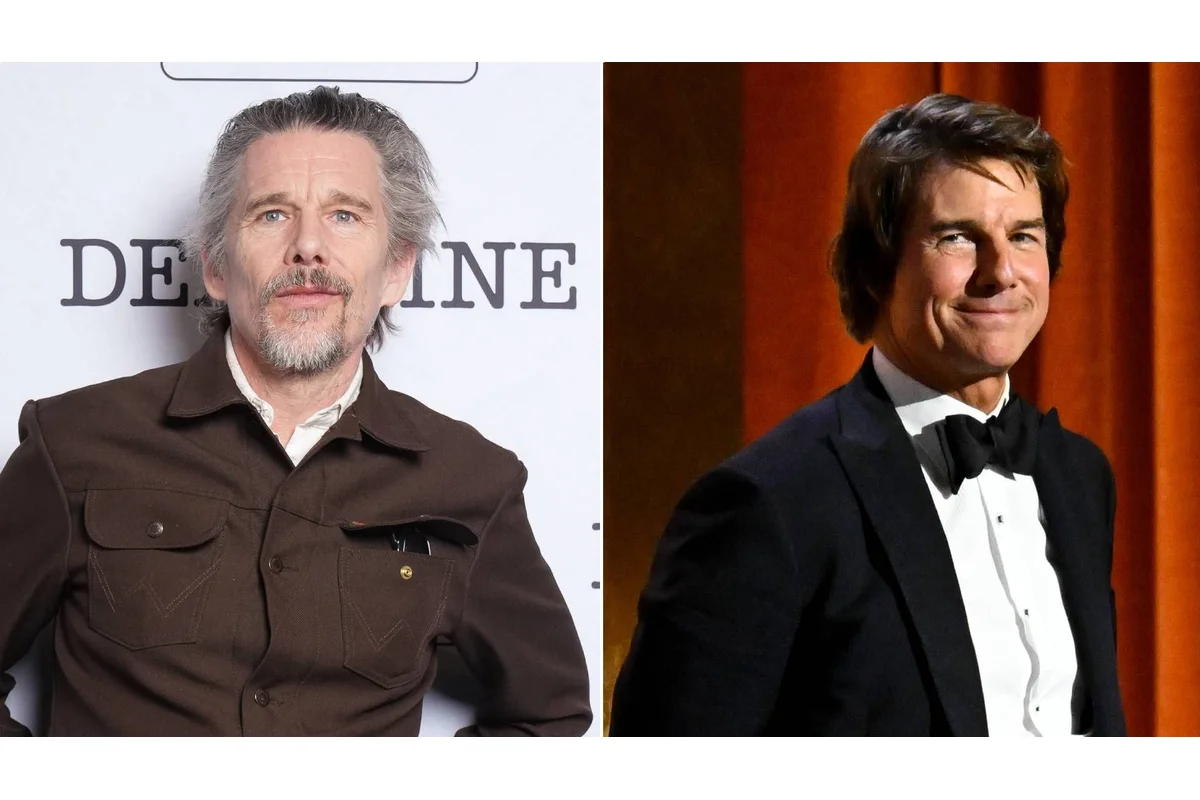
Actor Ethan Hawke recently discussed his views on stunt work during an interview at the Sundance Film Festival, connecting his perspective to the legendary stunts performed by Tom Cruise. Hawke, known for his role in Blue Moon, opened up about performing his own stunts for his upcoming historical action drama, The Weight, while addressing the rising industry expectations influenced by Cruise’s daring feats. The conversation highlighted Ethan Hawke stunt views as he expressed frustration over actors feeling pressured to do stunts themselves rather than relying on stunt teams.
Tom Cruise has carved out an iconic reputation in Hollywood due to his commitment to performing his own stunts, which include scaling the world’s tallest building, the Burj Khalifa, clinging to a plane mid-flight, holding his breath underwater for over six minutes, and executing a motorcycle jump off cliffs. These astonishing feats have not only pushed the limits within the film industry but have even led the Oscars to plan a Best Stunt Design category debuting in 2028, marking a recognition of stunt work as a crucial component of filmmaking.
Despite this, Ethan Hawke voiced concerns that actors are unfairly judged for using stunt doubles. Speaking to Variety, he said,
Tom Cruise has totally changed what’s expected for actors,
before admitting,
Some part of me is getting angry over the years because everyone somehow feels like they’re less if they use a stunt team.
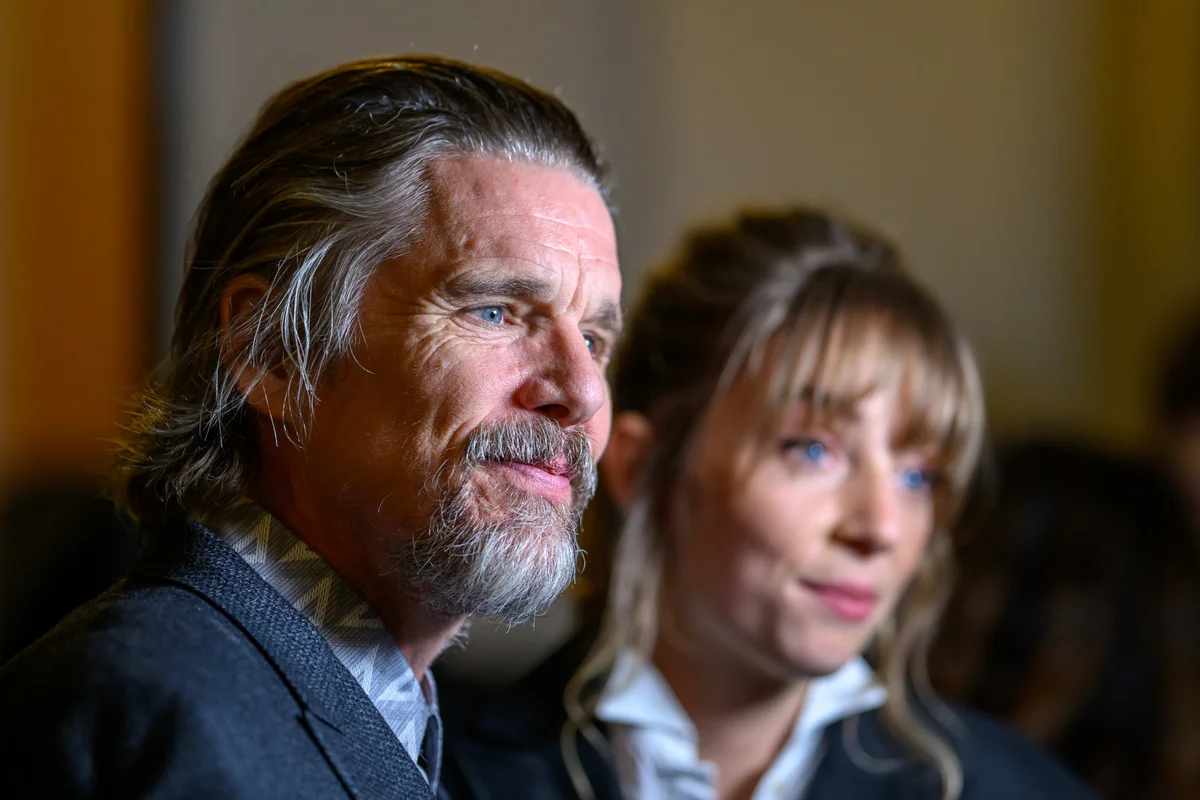
Hawke emphasized a different approach with The Weight, stating,
What I liked about our movie is there were no ridiculous stunts,
and further explained,
It’s human. It’s not about things blowing up, so most of the stunts were things we could do. They weren’t superhero things.
Plot and Physical Demands of The Weight
In The Weight, Ethan Hawke portrays a widowed father during the Great Depression who is forcibly separated from his daughter and sent to a harsh labor camp. The story intensifies when the warden, played by Russel Crowe, offers a chance for early release if Hawke’s character smuggles gold through a treacherous wilderness. The film demands physicality and endurance, requiring Hawke to perform various stunts aligned with his character’s desperate mission to reunite with his child.
The Physical and Emotional Costs of High-Risk Stunts
While Tom Cruise’s stunt work is widely respected for its skill and daring, it is also known for exacting a significant toll on his health and stamina. Wade Eastwood, Tom Cruise’s longtime stunt coordinator and second unit director, revealed the toll of such stunts in a conversation with The Times of London. He highlighted a particularly dangerous stunt during the filming of the latest Mission: Impossible installment, where Cruise walked on the wing of a small biplane mid-flight. Eastwood detailed how exhausting this was, sharing that Cruise often needed to be carried off the plane due to sheer physical depletion.
Eastwood said,
The audience will never really appreciate how dangerous that plane chase is,
and added,
I have to do what I can to eliminate as much risk as possible, but there is still a lot of risk.
He described the stunt’s physical challenges:
It beat the hell out of him. The wind hitting him, and the blast of the propeller, particles hitting him,
continuing,
It was the hardest workout you could ever do, it was very dangerous and very exhausting for him … Many times we were carrying him off the wing because he was so tired. And he was flying all day.
Beyond aerial stunts, the Mission: Impossible series is also famous for intense underwater sequences. Eastwood recounted one recent stunt where Cruise wore a diving suit weighing more than 125 pounds. He described the underwater filming as chaotic and unpredictable, noting,
It was absolutely hectic and chaotic underwater,
and that despite extensive rehearsals, conditions underwater always posed unique challenges. He remarked,
We rehearsed as much as we could, but it’s like having an animal on set: they always react slightly differently, no matter how much you rehearse, and filming underwater was the same.
Nevertheless, Eastwood praised Cruise’s attitude and professionalism:
Tom doesn’t show fear, Tom shows competence,
and noted,
He had fun during all his stunts, even when it was exhausting. He’s always positive, he’ll always put on a smile, and he genuinely enjoys it.
The Broader Conversation Around Stunts and Actor Expectations
The discussion involving Ethan Hawke’s reflections on stunt work raises important questions about industry pressures. Cruise’s ability to perform extreme stunts has reset standards for actors, but Hawke’s perspective suggests that not using stunt doubles should not diminish an actor’s value or authenticity. His comments reveal a tension between valuing physical bravery and recognizing the collaborative effort involved in ensuring safety on set.
Moreover, Hawke’s preference for “human” stunts in The Weight underscores a significant contrast to the superhero-like feats typical in blockbuster action movies. This distinction speaks to varying storytelling needs and the importance of tailoring stunt work to the story’s emotional core rather than purely spectacle.
As Hollywood evolves, the balance between practical stunt work, actor safety, and audience expectations will likely remain a hot topic. With the Oscars formalizing recognition of stunt design and more actors sharing their experiences, conversations like those involving Ethan Hawke and Wade Eastwood may help the industry appreciate the full scope of what stunt performance entails, while respecting diverse approaches.
Related semantic context: related coverage · external reference.
