
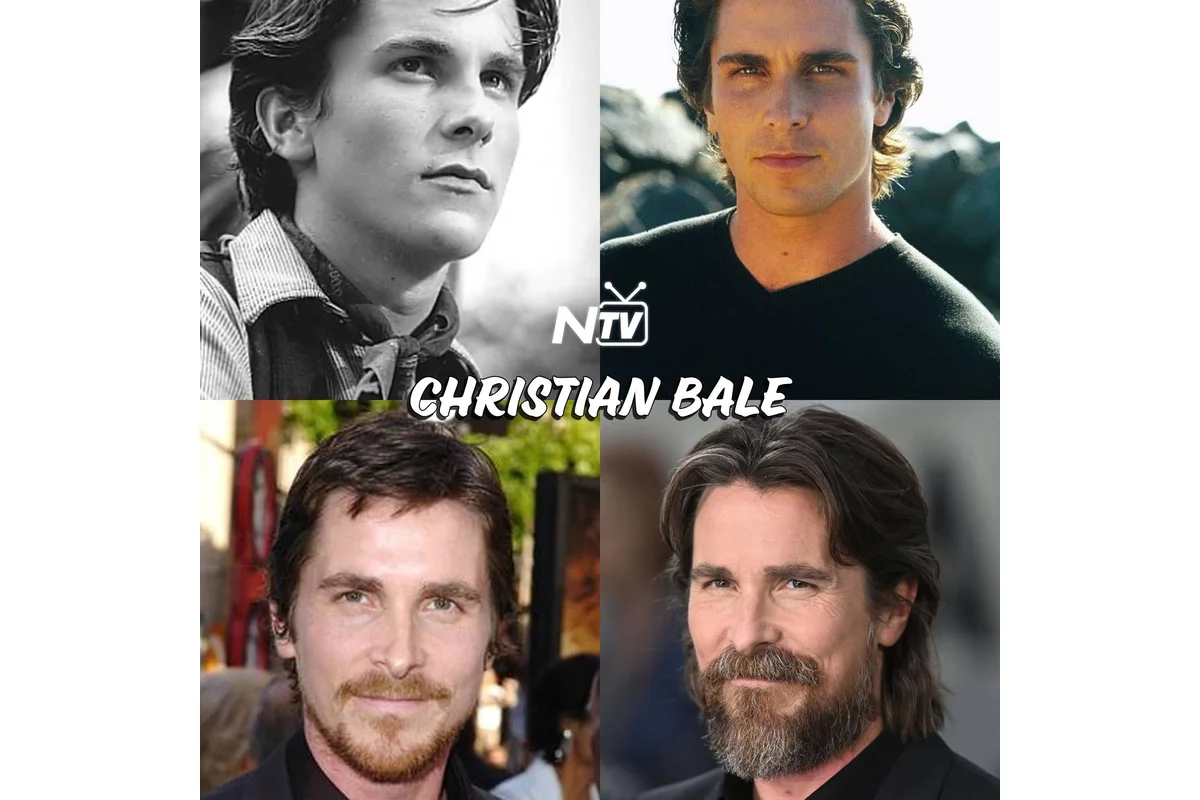
Just two days after earning her first Golden Globe for her role in Hamnet, Jessie Buckley shifted her full focus to her transformative role as the Bride in director Maggie Gyllenhaal’s audacious reinvention of the Frankenstein story. On the set of Entertainment Weekly’s cover shoot at Hollywood’s Nya Studios, Buckley fearlessly embraced the physical demands of becoming a corpse bride, demonstrating the intensity and dedication behind the Christian Bale Bride role.
Set to the pulsating beats of Gesaffelstein’s dark techno track Opr, Buckley emerged from the shadows surrounded by goth dancers, embodying a haunting figure as fog enveloped the set. A meticulously choreographed moment involving her veil unexpectedly amplified the drama when the lace snagged her bouquet and yanked her head backwards. The crew’s collective gasp turned to relieved sighs as Buckley continued with deliberate, eerie movements, turning the mishap into an improvised display of the Bride’s unhinged spirit, even sticking out her black-tinted tongue in defiance.
Reflecting on the experience, Buckley, a new mother, expressed excitement over the physicality of the role and the renewed connection she felt with the Bride’s wild essence. Despite wrapping production a year and a half prior, she found that energy still vividly alive within her.
“Any opportunity to just let your body go that way is so fun. As a woman, and especially post-birth, I want to be in that place more,”
Buckley said.
“The female body is so full of expression, and it isn’t something that’s limited to just being objectified or to be appealing. It’s something that’s way more expansive and wild and curious. Since I’ve been in that experience with The Bride! — and with Hamnet — I just don’t want anything else now.”
A Bold and Dark Reimagining of a Classic Tale
Jessie Buckley stars alongside Christian Bale in The Bride!, Maggie Gyllenhaal’s much-anticipated follow-up to her directorial debut, The Lost Daughter. This film offers a strikingly original twist on James Whale’s 1935 horror classic The Bride of Frankenstein. Gyllenhaal’s inspiration came from a tattoo she once saw of Elsa Lanchester’s iconic Bride, which sparked her desire to center the ghostly figure who was silent in the original but now given a resounding voice and fierce presence.
Bale plays the creature himself, who calls himself Frank, after his creator, the “father” figure, diverging from the traditional literary title “Frankenstein’s monster.” Bale warns that this film is less a standard horror and more a dark love story, an element that heightened his intrigue:
“It’s a great, kick-ass, bold, original film. This is real cinema.”
Frank’s quest for companionship leads him to Dr. Euphronious, played by Annette Bening, to create a bride for him, a gesture driven by profound loneliness after a century of isolation. Bening describes her character’s reaction to Frank as a scientist’s dream come true. Together, they resurrect a corpse that soon captivates Frank with her vitality and rebellious spirit.
“What he gets is pure electricity on a mission from God — and that’s also a good description of Jessie,”
Bale remarked.
“He thought he was alive, but he realizes after meeting her that he was just breathing.”
On-Set Chemistry Fuels the Film’s Electric Energy
The intense on-screen relationship between Buckley’s Bride and Bale’s Frank translated to their off-screen dynamic, which was described as exhilarating and exhausting. “We were both intense,” Buckley recalled.
“We both were two greyhounds that were just let out of their kennels, and it was really, really thrilling. It was really probably the most intense, exhausting shoot of my life, but it was so fun.”
Buckley’s challenge was amplified by the demand to portray three distinctive roles within the film. Aside from the Bride, she embodies Mary Shelley, the author of Frankenstein, and Ida, a young woman who was tragically murdered. Each character demanded unique accents, mannerisms, and physicalities, yet she managed to navigate these seamlessly, impressing Bale with her skill and presence.
“You recognize when there’s the arrival of a person who is not business as usual,”
Bale said.
“What she does is very serious, and in many ways sacred, but it’s also bloody ridiculous and hilarious and raw and profane. It’s everything that you want in a storyteller.”
From Script to Screen: Gyllenhaal’s Fight for Buckley
Maggie Gyllenhaal knew Jessie Buckley was the perfect choice early on, but she initially kept her intentions private while writing the script. When the two reunited in Paris, Gyllenhaal ultimately shared the project. “We drank too much wine,” Gyllenhaal confessed.
“And I said, ‘I’m working on something. Do you want to just read it?’ We read the opening sequence, pretty similar to how it is in the movie.”
Despite Buckley’s lack of a major social media presence, studio executives at Warner Bros., particularly CEOs Mike De Luca and Pam Abdy, supported Gyllenhaal’s vision fully. Buckley acknowledges the struggle to win over decision-makers based on traditional star metrics:
“She had to basically convince the powers that be that it didn’t matter that I didn’t have an Instagram account, that she only wanted me to do it. And I’m very, very grateful — it’s not an easy thing to do.”
She also reflected on the shifting landscape of film casting today:
“I’m probably going to get in a lot of trouble for saying this. Maybe there was a moment where that actually had weight, and I just don’t believe it does anymore. I think people like Paul Thomas Anderson, Martin Scorsese, Maggie Gyllenhaal, Chloé Zhao, Denis Villeneuve, they’re just making their s—, doing it their way. I don’t think they can make the movies that they’ve made if they chose an ingredient based on Instagram followers rather than what color paint they wanted to use.”
Gyllenhaal was relentless in championing Buckley, explaining,
“I’ve been an actress for many years, and I just was like, ‘I’m going to bat for this girl. Who else is going to play her?’ When people did that for me, it changed my life, so I’m doing it. And it worked, and now she’s going to win the Oscar, so I feel very vindicated.”
Reviving the Bride: From Silence to Unfiltered Expression
The resurrection scene during the photo shoot vividly illustrated the Bride’s awakening, complete with lightning and cracking electricity animating her body and breaking restraints on her wrists. Buckley herself adjusted to her costume’s quirks, notably when she discovered her shoes were switched on the wrong feet, underscoring the physical commitment necessary to embody the role.
Gyllenhaal explains how the Bride was largely ignored in the original films, appearing silently with no dialogue:
“The movie’s called The Bride of Frankenstein, but she’s not really in it. It’s just a Frankenstein sequel, and she literally doesn’t speak. But without words, when she wakes up, she communicates ‘no f—ing way.’ She says ‘no’ to him. That’s certainly unusual now, and it must have been unusual then.”
To counter that historical suppression, Gyllenhaal crafted a narrative where the Bride is fully alive, outspoken, and unrestrained by societal expectations. Inspired by Mary Shelley’s defiant voice, this Bride channels a fierce spirit speaking for all women, both living and dead.
“It’s someone who has so much to say, has been so shut up,”
the director said.
“What happens if you try to keep your hand on a geyser? When it finally explodes, it’s going to explode with triple the energy, and that is what happens to her.”
Complex Characters Wrestling with Monstrosity
Both Frank and the Bride grapple with their identities as creatures brought back from death, but their monstrousness extends beyond the literal. Frank named himself after his creator, marking a yearning for humanity alongside a profound insecurity about his place in the world. Their love story grows amid secrets, violence, and discovery, with the Bride learning to accept her monstrous self after a violent episode sparked at a club.
Gyllenhaal reflects on the wider thematic layers:
“The thing that was on my mind at the time was this idea of the monstrous — the monstrous outside us, but also the monstrous inside us. I believe that we all have aspects of us that are actually monstrous, and not just dark, but like really f—ed up, as though it’s so terrifying you spend your life running from it. But if you turn around and look at it, shake hands with it, what happens? That’s pretty universal, and I do think it’s something on everyone’s mind right now.”
Peter Sarsgaard, who plays the detective following the couple, added,
“I think people need an outlet for their rage. It’s a very interesting first date movie, right? Kind of a litmus test. It’ll inspire some people to be their own wildest selves and dance in the fountain in their underwear at night.”
Bale elaborated on the metaphorical monsters among us:
“They’re monsters in the way that every single one of us is able to be a monster. And it’s an equally violent love.”
Gyllenhaal teased darker human antagonists, commenting,
“There are characters in the movie that are way more monstrous and are purely human, who haven’t been brought back from the dead. I’m more interested in that aspect of the monstrous than…. Well, I also am very interested in the biting people’s tongues out and smashing their heads against the wall.”
Unflinching Depiction of Violence and Women’s Resistance
The Bride’s story does not shy away from brutal scenes, reflected in its R rating. Both Frank and the Bride are threatened throughout their journey but deal with violence differently. While Frank suppresses his nature with difficulty, the Bride directly confronts threats, evolving into a fierce protector not only of herself but symbolically for all women subjected to systemic violence.
Buckley spoke candidly about the weight of this responsibility:
“There’s an insidious nature to an establishment that can continue to be violent towards not just women, but to everyone, and they seem to get away with it. She’s calling it out. She’s creating a revolution to speak out against the establishment that is getting away with murder. It was saying the thing out loud. You can see in my body, I was shaking from the truth of it all.”
The film’s narrative involves a violent crime spree catalyzed by the couple’s shared rage following a harrowing night on the town. Gyllenhaal acknowledged that the sexual violence portrayed in the film was deliberately brutal:
“I’m kind of interested in violence, as you can tell in the movie. I’m surprised sometimes by the response — people are like, ‘It’s a lot.’ Same with the sexual violence. I felt strongly that the sexual violence had to be brutal, real, because if you gloss over it, it doesn’t feel like the brutality that it is. And I got taken to task on that, too.”
Yet she firmly maintains the scenes are purposeful and respectful:
“Not one bit of the sexual violence in the movie is unconsidered or gratuitous. I am totally taking responsibility for my take on all of that. And I think that it is honoring people who have gone through things like that by making it feel horrible, brutal, massive, and really difficult to watch. That’s my take, and it might be different if a man were making the movie.”
Distinct Vision Amid Contemporary Frankenstein Portrayals
Maggie Gyllenhaal began developing The Bride! at Netflix, where she was aware that Guillermo del Toro was simultaneously creating his own Frankenstein adaptation, scheduled for release in October 2025. Despite the topical overlap, Gyllenhaal did not view the films as competing:
“How cool that Guillermo del Toro and I just randomly, at the same moment, are thinking about somewhat similar things? And, as it turns out, in extremely different ways.”
She humorously proposed double billing the two films:
“When we were both at Netflix, I thought, ‘Let’s double-feature it.’ I always thought we’ll be the 10 p.m. showing to his 8 p.m. showing, no problem.”
While del Toro’s film approaches the Frankenstein mythos in its own right, Gyllenhaal’s project distinguishes itself with its incorporation of electrifying, large-scale musical sequences, though she adamantly denies The Bride! is a musical.
Energetic Dance Sequences Amplify the Story
“Can we just put to bed the thing about it being a musical?”
Gyllenhaal stated firmly.
“It is not a musical at all. That’s a different form. I don’t know why that keeps coming up.”
Nonetheless, the film features substantial, elaborate dance numbers reminiscent of classic movie musicals, framed within Frank’s deep obsession developed during his life in isolation.
Gyllenhaal cast her brother Jake in the role of Ronnie Reed, a glamorous Hollywood star and the object of Frank’s affection, tapping into Jake’s singing and dancing talents. Reflecting on working with him, she said,
“He’s such an incredible singer, and I love hearing him sing. If you sit through all the credits, at the very end is one of his beautiful songs he sings. That was really a live, exciting connection, working with him on set.”
Bale embraced the physicality and vulnerability required for the dance sequences.
“You get to humiliate yourself in a really wonderful way,”
he explained.
“I love humiliating myself, and it was fantastically exhausting, but in a really ecstatic and joyful way.”
Both actors trained extensively beforehand with choreographer Judson Emery on these sequences, described by Buckley as
“a hybrid of Gaga dancing and tap dancing.”
“Our first ever day of shooting was a ginormous tap dance sequence for seven hours,”
Buckley recalled with a laugh.
“It was so wild and so fun. It was like, ‘Okay, I think we’ve started!’ It felt like running a marathon. At least twice a week, I had to go and get a massage because everything would just be sore.”
One particularly ambitious dance number featured over 200 extras, requiring precise coordination and acting. Gyllenhaal marveled at pulling off this complex scene despite demanding makeup hours for Bale each day and lengthy shot lists. The set’s atmosphere blended exhaustion with euphoria as cast and crew persevered to bring the vision to life.
A Familial Atmosphere on Set Enhances Creativity
Gyllenhaal involved her immediate family in the production, casting her husband Peter Sarsgaard and brother Jake, along with their two daughters, Ramona and Gloria, who made cameos.
“I just thought if they want to, come be in the movie!”
Gyllenhaal said warmly.
“And they did. I love having them be in it. My little daughter, she’s 13 now, but she was 11 then, is sitting on the bar at the end. And my other daughter was, for a long time, a really serious dancer, and so she’s with the dancers.”
Sarsgaard enjoyed the familial reunion atmosphere during filming.
“Everyone was in their comfort zone on some level, and Maggie makes it very comfortable,”
he said.
“Jake doing what he does in this movie is what I’ve been waiting for him to do for a very long time. Of course, Maggie had done Batman with Christian, and I’d known Christian for 30 years. I’d done maybe three movies with Penelope before, so it felt more like a reunion, everybody coming together to do something really special.”
Christian Bale’s Unique Routine Supports Intense Performance
Bale endured long daily makeup sessions, often exceeding six hours, but found an unusual way to manage the mental strain during these extended periods: screaming to release pent-up emotions.
“I would scream like crazy, every day,”
he revealed.
“Just to [release the] despair, all of that restraint that you have to display when you’re sitting still for that long…. I didn’t want to do it driving into work because I thought I might cause a crash. And I didn’t want to do it by myself because I thought everyone would just think I’m going nuts.”
His hair and makeup team joined him in the ritual at first, turning what might have been a solitary coping mechanism into a communal bonding experience.
“Oh man, I’m telling you, the whole crew got involved by the end, because people would hear us screaming,”
Bale recounted.
“We would open the doors, and gradually, a bit like the Bride’s revolution, a few people were going, ‘Can we do it too?’ And then by the end, there were like 30 people who would hear us and run to the makeup trailer to be a part of it and scream as well.”
This shared release became a memorable and uniting tradition, reminding the cast and crew that sometimes, nothing expresses life quite like a scream.
Behind the Scenes: Creative Team Contributions
The production benefited from the talents of directors Kristen Harding and Alison Wild, with photography by Gina Gizella Manning. Maddie Leach served as Director of Photography, supported by a skilled team including Kyle Summers, Jonathan Maurer, Bailey Clark, and others.
Production design was led by Ward Robinson with contributions from Rene Ureno, Abi Linares, and David Celaya. The lighting team, including Mike Pecci and James Swartz, crafted the atmospheric visuals essential to the film’s mood.
Meanwhile, hairstyling was directed by Rachel Lita with Pat McGrath and Jordan Liberty overseeing makeup design. Choreographer Judson Emery coordinated dance sequences with dancers Devan Aischa, Sasha Mallory, Caitlin Fearrington, Augustine, and Devin Waxman adding dynamic movement to the production.
Post-production efforts by Nate Seymour/TRAFIK on color correction, Derek Viramontes with visual effects, Alex Sandoval on design, and composer Hildur Guðnadóttir contributed to completing the film’s intense and haunting aesthetic. Sound design by Kristen Harding and BTS documentation by Briana Monet and Jordan Moran rounded out the meticulous creative process.
The Cultural Impact and Anticipated Reception
Maggie Gyllenhaal’s The Bride! revitalizes the Frankenstein myth through a passionate, unflinching portrayal of identity, rage, and resistance, anchored by Jessie Buckley’s fearless performances and Christian Bale’s nuanced portrayal of Frank. By giving the Bride a powerful voice and presence long denied to her character, this film offers a compelling commentary on agency, monstrosity, and survival against systemic violence.
The exploration of monsters both literal and metaphorical resonates deeply in contemporary society, providing a fitting outlet for the themes of anger, empowerment, and redemption. With its bold narrative, intricate choreography, and dynamic performances, The Bride! promises to challenge traditional genre expectations and catalyze conversations about gender, violence, and artistry.
As the film approaches its theatrical release on March 6, audiences can expect an intense, electrifying experience that transcends horror conventions, blending raw emotion and dark romance with fierce social critique. Jessie Buckley’s dedication to the Christian Bale Bride role, alongside the supporting ensemble and creative team, solidifies this production as a landmark reimagining destined to leave a lasting impression on cinema.
Related semantic context: related coverage · external reference.
