
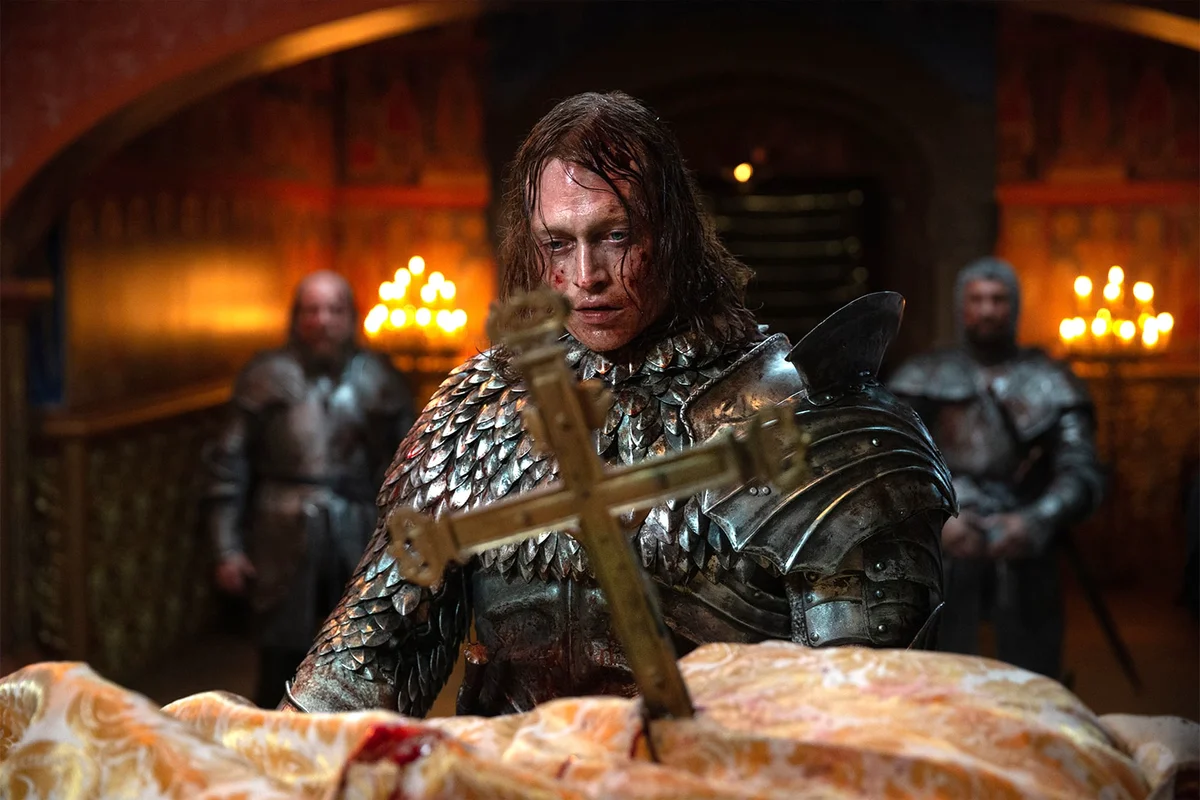
Christoph Waltz, the acclaimed Austrian actor, has recently embodied characters from iconic horror literature, starring in two major adaptations during the winter season. In Guillermo del Toro’s Frankenstein, Waltz plays Henrich Harlander, the wealthy patron of Victor Frankenstein, while he also portrays Van Helsing in Luc Besson’s upcoming take on Dracula, set to feature Caleb Landry Jones as the vampire antagonist. This dual engagement with classic monster stories marks a distinctive chapter in Waltz’s career, emphasizing his connection to the genre and his ongoing collaboration with prominent filmmakers.
Waltz’s Background with Classic Monster Literature
Despite his central roles in these adaptations, Christoph Waltz reveals he did not grow up immersed in the original books. He explains,
“Both ‘Frankenstein’ and ‘Dracula’ are not part of the German-speaking literary canon. So they were mostly movies to me. I was duly impressed by them, but I didn’t lose my self-control.”
This admission sheds light on Waltz’s approach, grounded more in cinematic interpretation than literary tradition, highlighting his detachment from classic horror narratives and a focus on film as the primary encounter with these stories.
Contrasting Characters Reflecting Waltz’s Artistic Approach
The characters Waltz portrays in these monster tales symbolize two opposing artistic forces. Dr. Frankenstein embodies ambition and analysis, while Dracula represents the depth of soul and romantic intensity. Together, they illustrate Waltz’s balanced approach to acting—combining intellectual rigor with emotional resonance. When queried about contemporary acting trends, Waltz answered simply, “No,” signaling his preference for a steadfast, practice-oriented view of his craft rather than chasing fleeting fads.
Waltz’s meticulous control and thoughtful speech evoke the presence of a formidable mentor, one who values discipline and insight. His breakthrough Hollywood moment came as the chilling Nazi officer Hans Landa in Quentin Tarantino’s Inglourious Basterds, where he portrayed a calculated antagonist whose calm interrogation techniques intensified the scene’s tension. This role earned him his first Oscar for Best Supporting Actor and set a precedent for subsequent performances.
Partnerships with Renowned Filmmakers Shape Waltz’s Monster Roles
Waltz’s involvement in these projects was primarily motivated by the filmmaker-collaborators attached to them. Guillermo del Toro, known for award-winning monster narratives such as Pan’s Labyrinth and The Shape of Water, has long desired to bring Mary Shelley’s tale to the screen. Meanwhile, French director Luc Besson, celebrated for visually extravagant blockbusters like The Fifth Element and Valerian and the City of a Thousand Planets, infuses his Dracula adaptation with lavish and erotic imagery, emphasizing the vampire’s complex relationship with Mina, played by Zoë Bleu.
Waltz reflected on working with Besson:
“I thought, ‘If anyone’s going to do Dracula with a new perspective, it’s Luc Besson.’ I always want to work with great people. I was very flattered when he asked me. I didn’t really expect ‘Dracula’ to be up his alley, but it turned out to be a wonderful collaborative process.”
In response, Besson praises Waltz’s precision and generosity on set:
“He’s very minimalist in the role. He doesn’t overact or anything. He’s very specific, very precise. The only way to get to this kind of performance is if you are so full of information and character that you don’t have to play it. And he’s so sweet with everyone. He’s helping everybody on the set; he’s a generous actor with others. That’s not always the case, so he helped me a lot.”
Colleague Caleb Landry Jones endorses Waltz’s professionalism, sharing,
“He’s prepared and ready in a way that I strive to be. I feel like when I come to set, I’m still figuring so much of it out. When I look to Christoph, I feel like if I can get out of my own way and join him in the place that he’s at, then we might have something. I think when acting with someone of that caliber, you can’t help but rise, or you end up climbing up there without realizing it.”
Staying True to Original Material Without Imitation
Even though Frankenstein and Dracula have been adapted extensively, Waltz deliberately avoids revisiting other portrayals to maintain the authenticity of his interpretations. He explains,
“I use the background, not other people’s foreground. Sometimes it’s a little difficult. If you have an iconic performance like Bela Lugosi’s, that should not direct your thinking. So you take the script and then you go from there.”
This philosophy highlights Waltz’s focus on creating distinct characterizations rather than echoing previous versions.
Throughout his career, Waltz often plays characters in supporting but pivotal roles, frequently embodying antagonists who challenge heroic protagonists such as Tarzan, Pinocchio, and James Bond. He regards every role as significant regardless of its size, stating,
“Every part is a leading part. It may be for a second or two only, but when you have something to contribute, you’re leading. Categorizing for award reasons makes sense. Supporting a main part—especially if you get to play the antagonist—is a fantastic task.”
He appreciates the layered dynamic villains bring to storytelling.
The Dynamic of Contradiction in Villainous Roles
Waltz embraces the complexity villains introduce to narratives, seeing their interactions as vital to the story’s energy and tension. He reflects,
“It’s a conversation. It’s like in life, in a relationship, in politics—the contradiction is an indispensable part of the whole. That’s one of the problems we’re living through right now. We refuse to accept contradictions. The contradiction makes the dynamic possible. It energizes.”
This understanding of conflict as a driving force in art underpins Waltz’s compelling performances.
Foundations in Acting Training and Philosophy
Christoph Waltz’s ideas on acting are influenced by rigorous training at Vienna’s Max Reinhardt Seminar and later studies with legendary teachers Lee Strasberg and Stella Adler in New York. Strasberg, often associated with Method acting, taught an approach that Waltz believes has been misunderstood over time. He clarifies,
“Frankly, everything is being ripped out of the context and inflated beyond recognition, and it’s acquired a completely different quality. Strasberg himself said, ‘It’s just a method,’ meaning an approach to what you have to do with yourself. You’re not a robot programmed to follow ‘the Method.’ No, you learn basically what actors have been doing for hundreds of years.”
Waltz applies a straightforward approach to his work. Describing preparations for his priest role in Dracula, he says,
“I get up on time. I show up on time. I have learned my lines, and I’m informed as to what the whole thing is supposed to be. Everything else follows from there. If you don’t know what it is that you’re doing, your urge to find out how to do it is going to be a lost cause.”
Career Development and Global Perspective
The actor’s transition to predominantly English-language roles arose from broader career opportunities. Waltz remarks,
“Part of the reason why I wanted to venture out is because I thought, in the 20th century, you shouldn’t be confined. If you can take an airplane and be on the other side of the world within half a day, you should be able to incorporate this experience into your development. Not specifically for acting purposes, just as a person. The world is pretty big.”
This openness to global experiences has shaped his artistic range and adaptability.
Waltz’s reputation and accolades afford him the choice of scripts that resonate with him personally. He seeks projects containing significant moments of insight, noting,
“When an exchange is energized by real thought and insight into a topic, it doesn’t have to be deep and philosophical; it can be quick and then flat and superficial. But it needs to have the thought and consideration behind it. As soon as I read that in a script, I’m interested.”
Philosophy on Storytelling and Acting
While increasingly distancing himself from metaphysical concepts tied to storytelling, Waltz remains committed to the actor’s role in bringing narratives to life. He states,
“With increasing age, I get away from metaphysics. There is no truth, as such, hovering behind the world as we perceive it.”
However, when prompted, he elaborates further, gesturing skyward:
“The job at hand is to make the story experience-able, not just believable. You go to the movies to experience a momentary transformation of your existence. You need bodies for that. The actor is that body.”
This vision emphasizes the actor’s function as the vessel through which audiences undergo emotional and experiential immersion, confirming Waltz’s belief that acting requires both precision and presence to move viewers beyond mere plausibility into genuine engagement.
