
Michael Douglas is the primary entity for this article, supported by Entertainment topic context.
Related WII context: related keeper article. External authority context: industry context.
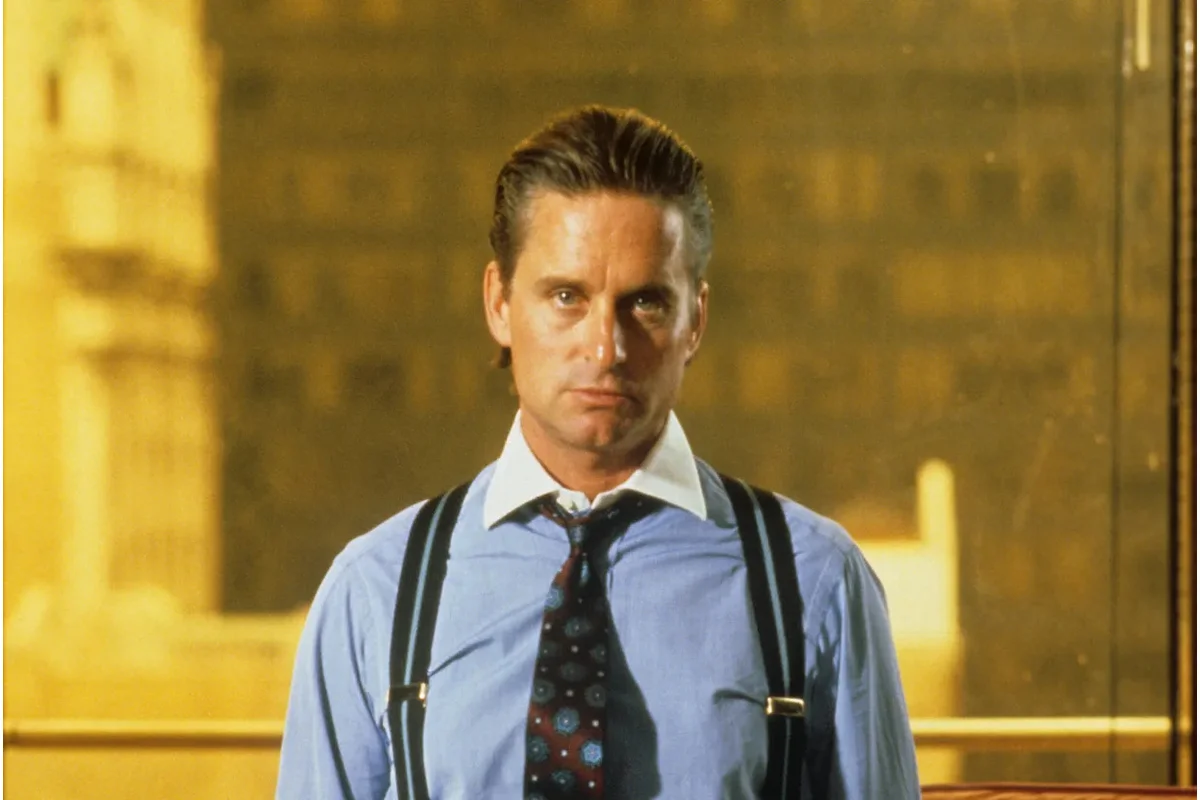
Michael Douglas received unexpectedly harsh feedback from director Oliver Stone during the early weeks of shooting the 1987 film Wall Street, a performance that perfectly embodies the era’s ruthless financial culture. Known for his role as Gordon Gekko—the quintessential symbol of 1980s corporate greed—Douglas’s portrayal captured the spirit of the decade. However, behind the scenes, Stone’s blunt critique challenged Douglas, despite his established status in Hollywood by then.
The film’s portrayal of extreme capitalism is epitomized by Gekko’s infamous line,
“Greed, for the lack of a better word, is good”
, which has become emblematic of that time period’s ethos. Yet the path to achieving that sharp, unsettling character was fraught with tension, as Douglas revealed in a candid interview on Turner Classic Movies.
Director Oliver Stone’s Unfiltered Assessment Pushed Douglas to New Limits
During the second week of filming, Stone unexpectedly showed up at Douglas’s trailer to confront the actor about his performance. Stone’s blunt questioning included asking if Douglas was using drugs, an insinuation meant to highlight the director’s dissatisfaction. Stone remarked that Douglas looked as if he
“never acted before in your life,”
a cutting observation particularly striking given Douglas’s well-established career and pedigree as the son of Kirk Douglas.
“We were finishing the second week of filming, and there was a knock on my door. ‘Hey Mike, it’s Oliver. Can I come in?’ I say, ‘Yeah, come on in.’ He comes in the trailer and sits down. He says to me, ‘You okay?’ I said, ‘Yeah, I’m okay.’ [He asks], ‘Are you doing drugs?’ I said, ‘No, I’m not doing drugs.’ And he said, ‘Because you look like you’ve never acted before in your life.’” – Michael Douglas, Actor
This clash came at a time when Douglas was not accustomed to scrutinizing his own performances regularly, a habit common among many actors. Stone encouraged him to watch the daily footage, or “dailies,” to better understand the director’s concerns.
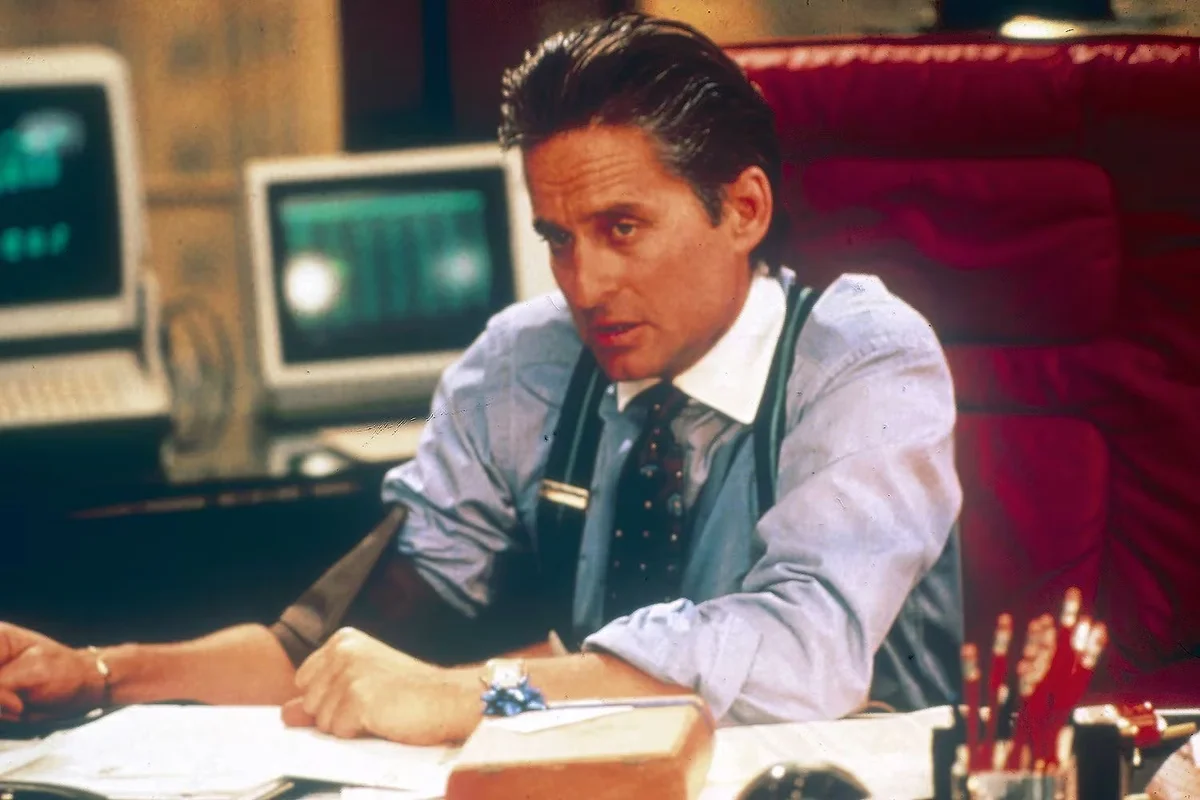
“So I said, ‘Well, I don’t like to look at the dailies because I’m one of those guys that always sees what’s wrong or what’s not going to be in the film’… so I don’t pay attention to the dailies. So I said, ‘I guess I’d better take a look,’ and he said, ‘Yeah, you better.’” – Michael Douglas, Actor
Evaluating Key Scenes Together Revealed Tensions and Opportunities
Stone and Douglas reviewed several scenes, including one in which Gekko attempts to manipulate Charlie Sheen’s character, Bud Fox. While Douglas initially felt confident with his work, Stone stressed that the performance was not conveying the intended impact. Although the director did not specify the exact flaws, this confrontation sparked a certain friction between the two men, an intensity Douglas ultimately felt enhanced his portrayal of Gekko’s darker qualities.
“He was willing for me to hate his guts for the rest of this movie to get that extra little push… His record of successes with actors is quite impressive. So I’m deeply, deeply appreciative of the fact that it gave me part and the fact that he pushed me to another level.” – Michael Douglas, Actor
This dynamic illustrates how the tumultuous relationship behind the camera contributed to creating the layered and menacing character that so effectively represented 1980s Wall Street culture.
The Enduring Legacy of Wall Street and Its Iconic Performance
Michael Douglas and Oliver Stone collaborated again in 2010 on the sequel Wall Street: Money Never Sleeps, but this follow-up did not resonate with audiences as strongly as the original. The first film remains a culturally significant piece for its raw examination of greed and ambition in the finance world.
Although Wall Street is not currently available on subscription streaming platforms, it can be rented or purchased digitally, and physical copies on Blu-ray are accessible for collectors or new viewers interested in revisiting this defining work. The film’s lasting impact owes much to Douglas’s complex portrayal, shaped in part by the director’s demanding and uncompromising feedback during production.
