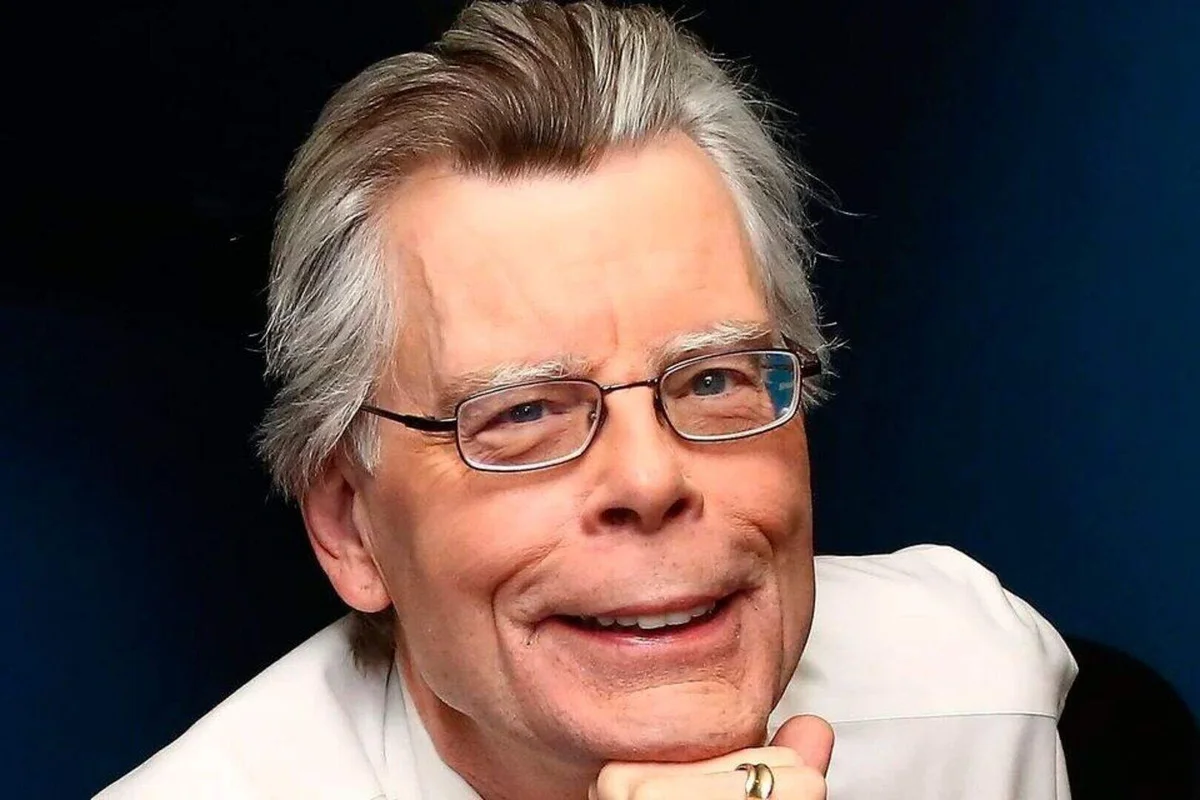
Stephen King celebrates punk music’s raw power and storytelling. [Image Source: CONTENTSTACK]
Stephen King, renowned for his suspenseful storytelling since his 1973 debut with Carrie, has authored 64 novels and over 200 short stories, showcasing his boundless creativity. Beyond writing, King’s passion for music—particularly punk music—plays a significant role in his life, often seen with a guitar in hand during his rare moments of leisure.
Growing up in Durham, Maine, during the baby boomer era, King was shaped by the BritishInvasion’s influence in the 1960s, with bands like The Beatles and The Rolling Stones leaving a lasting impression on his teenage years. His admiration for these iconic groups set the foundation for his deep attachment to rock music.
From British Rock to American Classics
King’s fondness for the British invasion era was evident when he appeared on BBC Radio 4’s Desert Island Discs in 2006. He named The Beatles’ “She Loves You” as one of his all-time favorite songs, praising its enduring freshness:
“Of all The Beatles songs, it seems to me that it’s travelled the best over the years to my ear,”
King recalled.
“It still sounds totally fresh when I hear it today, as it did when I first heard it when I was probably 16 years old.”
Despite this respect for The Beatles, King showed a deeper overall enthusiasm for The Rolling Stones and American rock acts. During a 2013 Reddit AMA, he put Creedence Clearwater Revival as his top musical act, while also listing AC/DC, The Temptations, and The Rolling Stones near the top of his favorites, joking,
Image of: Stephen King
“Favourite musical act of all time? Probably Creedence Clearwater Revival,”
and adding,
“But AC/DC is close…and The Temptations…The Stones…ah, man, don’t get me started. Just not Led Zeppelin.”
Discovering Punk Through the Ramones
While the ’60s were dominated by classic rock, the 1970s introduced new sounds, with Stephen King gravitating toward the burgeoning punk scene. In 1975, the arrival of the Ramones captivated King, marking a fresh chapter in his musical journey that diverged from the complex prog-rock of Led Zeppelin, which he disfavored.
In 2003, Columbia Records released We’re a Happy Family: A Tribute to Ramones, a tribute album featuring bands like Red Hot Chili Peppers, Eddie Vedder, Metallica, Green Day, and The Pretenders. King contributed extensive liner notes for the album, reminiscing about punk’s rise alongside disco in the mid-1970s.
King’s Candid Liner Notes Reflect His Punk Affinity
King’s liner notes provide a vivid snapshot of his musical preferences during that era. He confessed to enjoying disco as much as punk, an uncommon stance among Ramones fans:
“I liked Disco, and if you have a problem reading quote/unquote Liner Notes from someone who liked disco, then it’s a bona fide case of tuff titty said the kitty.”
King explained his motivation for writing the notes was his long-standing love for the Ramones:
“I loved the Ramones from the first time I heard them.”
He noted there were some talented musicians on the tribute album, expressing curiosity about how these artists would handle the band’s famous simple three-chord style with irreverence:
“fucked up the 3-chord majesty (okay, sometimes 4) of Joey, Johnny, Dee Dee, Marky and Tommy.”
Despite his interest, King was skeptical of tribute albums in general:
“But they will fuck it up, I think,”
he wrote, adding:
“Every tribute album is a piece of shit. This is the Fabled Automatic, like how if you drop your toast on the floor, it always lands butter-side-down where the dog took a piss, or how you can’t get snot off a suede jacket.”
Contrasting Punk with Disco Culture
King drew a sharp contrast between punk’s gritty realism and disco’s glamorous excess. He described disco as the soundtrack for limousine rides fueled by expensive drugs, whereas the Ramones’ music reflected a budget-conscious, raw form of escapism:
“in the back of a limo while they snorted Peruvian Flake through $100s,”
he said of disco, while the Ramones
sang about getting high on a budget: sniffing glue and huffing various household products like Carbona.
King illustrated the difference in vocal style, contrasting Donna Summer’s smooth crooning:
“Ooooooooooh luv to love you, baby,”
with the Ramones’ aggressive sound:
“screaming until your lungs popped out your nose and just sort of hung there pulsing on your upper lip and banging your head until your fucking ears bled.”
Why the Ramones Truly “Saved” Rock and Roll
Stephen King believed that punk and disco occupied distinct spaces that should never overlap. He underscored the importance of the Ramones in rock history, noting that they never achieved a top-ten hit but still played a crucial role:
“saved rock and roll when it needed saving, and I miss them.”
He reflected on how the tribute album made him realize the band’s impact more deeply:
I never knew how much until I heard the songs on this record.
Though King did not explicitly state what the Ramones rescued rock from, his comments about his dislike for Led Zeppelin suggest a wariness of rock’s overindulgence and complexity. Instead, King admired the Ramones’ straightforward, unpretentious style, which aligned closely with his own creative philosophy.
The Parallels Between King’s Writing and Punk Principles
King’s appreciation for the Ramones stems from their shared artistic values of momentum, clarity, and immediacy. Both his fiction and the band’s music avoid unnecessary embellishments, favoring directness and emotional force. The Ramones, like King’s prose, move quickly and deliver an undeniable impact without distraction.
This alignment reveals King’s broader creative outlook: he favors artists who convey power through conviction rather than complexity. Whether in horror writing or three-chord punk, King believes the ultimate goal is to provoke a visceral, undeniable emotional response. According to King, the Ramones not only saved rock and roll but also demonstrated how storytelling can be compelling without overcomplication.