
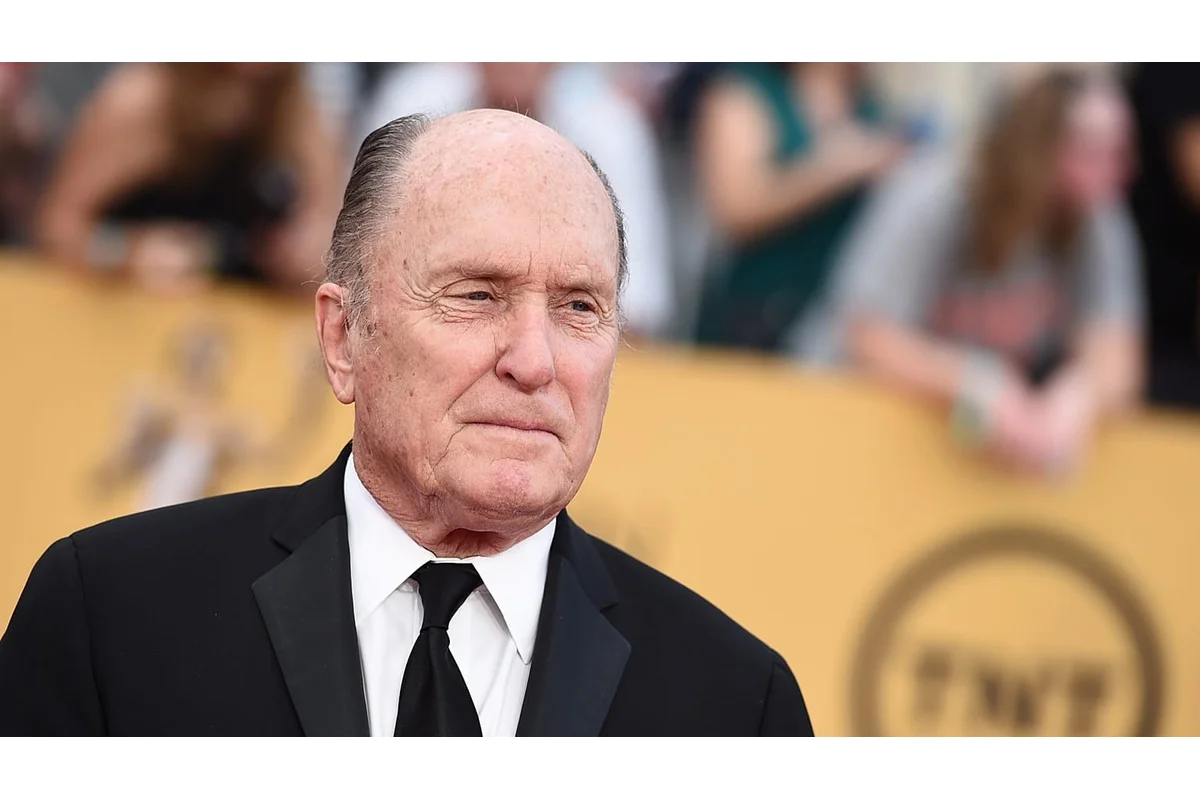
Robert Duvall, a renowned actor known for embodying unforgettable characters such as the calm Mafia consigliere Tom Hagen in The Godfather and the Vietnam War colonel Kilgore in Apocalypse Now, passed away peacefully Sunday at the age of 95 in his home in Middleburg, Virginia. Celebrated for his wide-ranging talent, Duvall’s extensive career created a lasting impression on American cinema, solidifying his standing through decades of versatile performances and contributions to film.
According to his family, Duvall wished to forego a formal memorial service, encouraging admirers to honor him by
“
watching a great film, telling a good story around a table with friends, or taking a drive in the countryside to appreciate the world’s beauty.
”
From San Diego Beginnings to Hollywood Stardom
Robert Seldon Duvall was born on January 5, 1931, in San Diego, California, to Mildred Hart, an amateur actress, and William Duvall, a rear admiral in the U.S. Navy. Raised primarily on Navy bases, including time spent at the U.S. Naval Academy in Annapolis, Maryland, Duvall’s formative years were shaped by a disciplined environment. He graduated from Principia College in Elsah, Illinois, in 1953 before serving two years in the U.S. Army during the Korean War.
Following his military service, he pursued drama training at the Neighborhood Playhouse in New York under Sanford Meisner, where he studied alongside future stars Dustin Hoffman, Gene Hackman, and James Caan. Early in his career, Duvall worked various jobs while honing his craft in Broadway and off-Broadway productions, including notable plays by Arthur Miller such as The Crucible and A View from the Bridge.
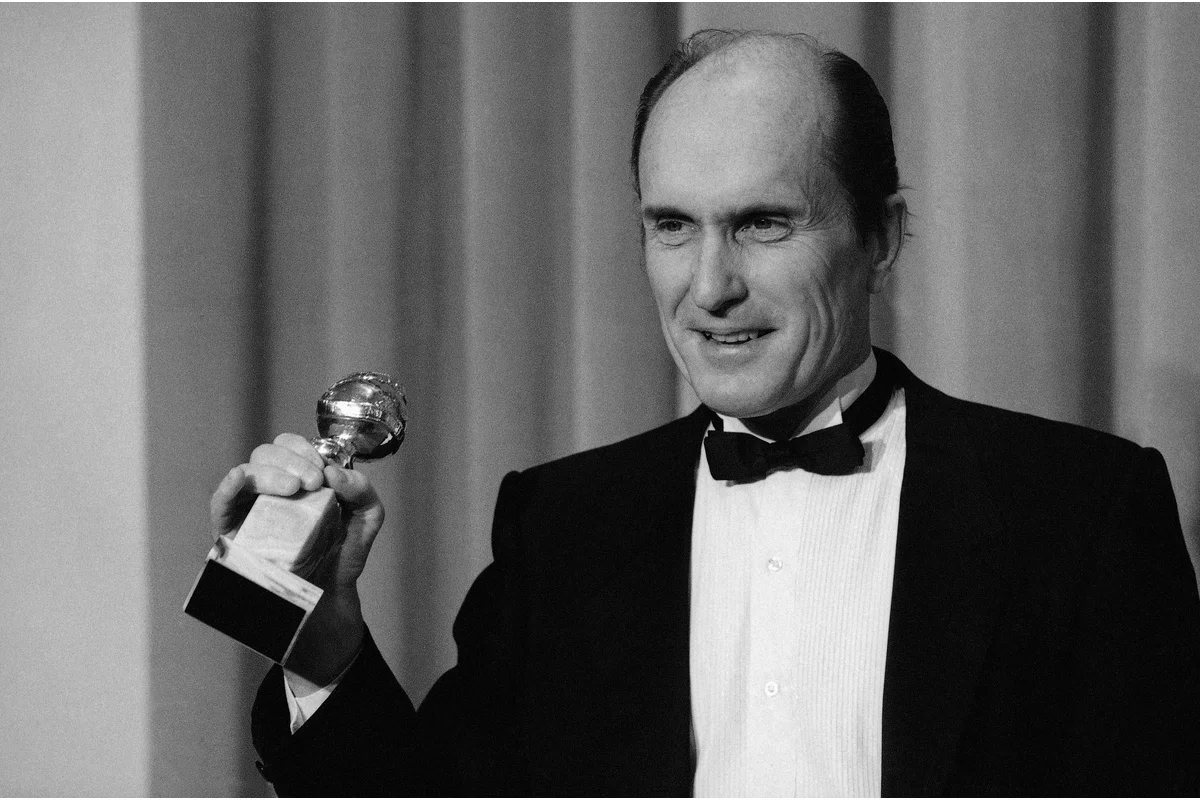
He also accumulated television experience with guest roles on popular shows like The Twilight Zone before making his film debut at age 31 with a small but pivotal role as Arthur “Boo” Radley in the 1962 adaptation of Harper Lee’s To Kill a Mockingbird. Throughout the 1960s, Duvall expanded his film résumé with significant parts in movies like John Wayne’s True Grit (1969) and Francis Ford Coppola’s contemplative drama The Rain People (1969).
Emergence as a New Hollywood Icon
In the 1970s, Duvall became a leading figure in the New Hollywood movement, joining a cohort of unconventional male actors including Al Pacino, Robert De Niro, Dustin Hoffman, and Gene Hackman. His collaborations with groundbreaking directors redefined American cinema, yielding memorable performances across diverse genres.
He portrayed the hypocritically righteous Major Frank Burns in Robert Altman’s satirical anti-war film M*A*S*H (1970), and took the lead in George Lucas’s dystopian sci-fi feature debut THX 1138 (1971). However, it was his role as Tom Hagen, the poised legal counsel for the Corleone family in Coppola’s 1972 masterpiece The Godfather, that elevated him to worldwide recognition and earned his first Oscar nomination.
He reprised this role in The Godfather Part II (1974), which expanded his character’s significance within the saga. Reflecting on the film’s impact, Duvall said,
“
It always comes back to ‘The Godfather.’ The first ones are two of the best films ever made. About a quarter of the way into it, we knew we had something special,
”
speaking to the San Francisco Chronicle in 2010. Despite the success, he did not appear in The Godfather Part III due to salary disputes with Paramount Pictures.
A Career Defined by Intense, Varied Roles
Duvall, sometimes dubbed
“Hollywood’s No. 1 No. 2 lead”
by People magazine, continued to deliver commanding performances throughout the late 1970s and 1980s. In The Great Santini (1979), he portrayed the harsh Lt. Col. Bull Meechum, a character based on Pat Conroy’s novel. That same year, Duvall’s portrayal of the charismatic yet eccentric Lt. Col. Kilgore in Apocalypse Now gave audiences one of cinema’s most iconic lines:
“
I love the smell of napalm in the morning.
”
Recalling the cultural impact of this line, Duvall told the Daily Telegraph in 2003,
“
I don’t know how many people have come up to me over the years and repeated to me, as though speaking a secret, ‘I love the smell of napalm in the morning.’ They act like only the two of us know that line,
”
adding,
“
But what’s funny is that they often mangle it, substituting ‘gasoline’ for ‘napalm,’ or whatever comes into their minds,
.”
Four years later, Duvall earned his only Academy Award for Best Actor for his performance as Mac Sledge, an alcoholic country singer experiencing redemption, in Bruce Beresford’s Tender Mercies. For this role, he performed his own singing, adding a layer of authenticity to the heartfelt film.
Continued Success in the 1980s and 1990s
The 1980s saw Duvall expand his range with roles like the insightful sportswriter in Robert Redford’s The Natural (1984) and a hardened LAPD veteran in Colors (1988), co-starring Sean Penn. He also garnered critical acclaim for his portrayal of a former Texas Ranger in the 1989 miniseries Lonesome Dove.
Through the 1990s, Duvall sustained his steady career with appearances in commercial films such as Days of Thunder (1990), The Paper (1993), Falling Down (1994), Phenomenon (1995), and Deep Impact (1998). His work in A Civil Action (1998), as a corporate lawyer, earned him his sixth Oscar nomination.
In addition to acting, Duvall undertook one of his most personal projects by directing, writing, financing, and starring in The Apostle (1997), a story about a passionate preacher seeking redemption in Louisiana’s bayou country. Of the dual challenges on set, he told The Associated Press,
“
I thought I would have to put up a full-length mirror so I could yell at the director,
”
followed by,
“
But I didn’t have to do that. We even finished one day ahead of schedule. It’s a movie I’m proud of.
”
Later Years and Enduring Influence
In his later career, Duvall continued portraying complex characters, from gruff law enforcement officers to wise father figures in movies including Gone in 60 Seconds (2000), John Q (2002), Secondhand Lions (2003), and Open Range (2003). Among his notable roles were Confederate General Robert E. Lee in Gods and Generals (2003), a hermit in the Great Depression drama Get Low (2009), and a tough family patriarch alongside Robert Downey Jr. in The Judge (2014), which brought him another Oscar nod.
He also had a significant role in Steve McQueen’s crime drama Widows (2018), portraying a politically powerful and racist figure. Besides acting, Duvall directed four feature films, including Angelo My Love (1983), The Apostle, Assassination Tango (2002), and Wild Horses (2015).
Personal Life and Lasting Legacy
Robert Duvall is survived by his wife, Argentine actor and director Luciana Duvall. He was previously married to Barbara Benjamin Marcus, Gail Youngs, and Sharon Brophy. His extensive career and contributions have helped shape multiple generations of actors and filmmakers, influencing his peers like Robert De Niro, Gene Hackman, and James Caan, with whom he shared both training and early living arrangements.
Duvall’s profound ability to fully inhabit a wide spectrum of characters—from ruthless mafia attorney and military colonel to country crooner and preacher—cements his place as a vital figure in cinema history. His dedication to craft and stories that resonate deeply ensures his Robert Duvall acting legacy will endure well beyond his passing, inspiring both audiences and actors alike.

Related semantic context: related coverage · external reference.
