
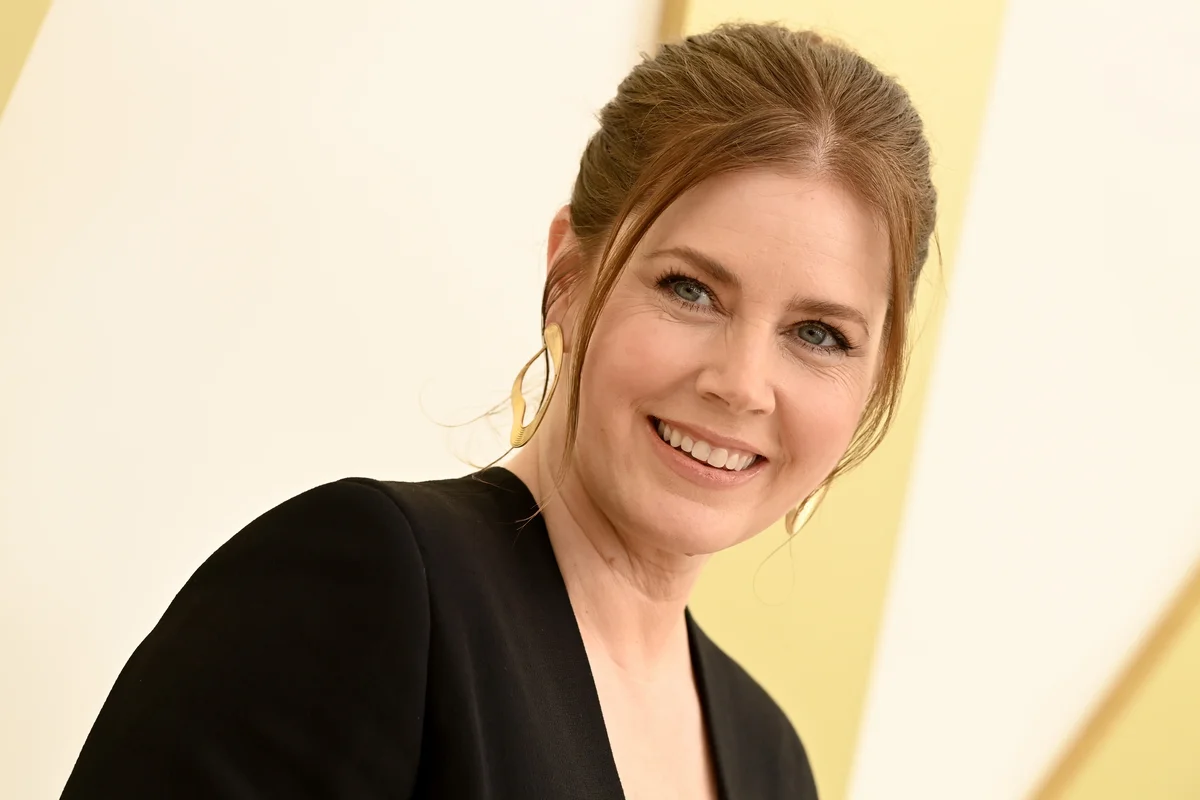
For over a decade, Amy Adams maintained her reputation as a reliable and compelling actress, from her enchanting role in Disney’s Enchanted to the emotionally nuanced performance in Denis Villeneuve’s Arrival. However, her recent trajectory, including projects like Ron Howard’s Hillbilly Elegy and adaptations such as Joe Wright’s The Woman in the Window and Stephen Chbosky’s Dear Evan Hansen, has seen a gradual decline in critical enthusiasm. Her latest film, Kornél Mundruczó’s At The Sea, fails to reverse this trend, delivering a confused and uneven exploration of grief that obscures Adams’s potential.
The drama, set against the backdrop of Cape Cod, follows Laura, played by Adams, a high-profile CEO of a struggling dance company who is newly out of rehab. She returns to her family’s summer home with her husband Martin (Murray Bartlett) and their two children: the moody teenage daughter Josie (Chloe East) and hesitant young son Felix (Redding L. Munsell). The film attempts to depict Laura’s journey through sorrow and recovery but struggles to provide a coherent and engaging portrait of its lead character.
Exploring the Film’s Flawed Character Development and Visual Approach
Though At The Sea presents itself as a character-driven story, it notably lacks a firm understanding of Laura’s inner world, which undermines the film’s intentions. Although the narrative is non-linear, reflecting memory’s fragmented nature, director Mundruczó muddles rather than clarifies Laura’s emotional state. The film references Laura’s lineage as the daughter of a ruthless choreographer, yet offers scant insight into her connection with dance as an art form—an intriguing omission given Adams’s own professional dance background.

Visual choices compound this sense of confusion. French cinematographer Yorick Le Saux alternates between overexposed, stylized shots reminiscent of perfume ads and stiff, soap opera-like framing. A particular VHS-style tape of Laura’s speech appears strikingly low-quality, recalling a mediocre streaming series aesthetic. The camera’s unsettling focus on Josie’s physical attributes veers into voyeurism, raising concerns about the film’s approach to portraying the adolescent daughter’s objectification. A single, awkward scene meant to address this issue only worsens its impact, adding to the film’s overall discomfort.
Amy Adams’s Performance and Supporting Cast Deliver Limited Impact
Adams’s portrayal, which many anticipated as a career highlight akin to Vanessa Kirby’s work in Mundruczó’s Pieces of a Woman, instead comes across as unconvincing and muted. Her delivery during the film’s pivotal monologue is repetitive and lacks emotional depth, diminishing the dramatic weight. At times, Adams’s performance borders on caricature, veering between detachment and lethargy, failing to fully inhabit the role’s complexities—likely reflecting the uneven direction and script.
The surrounding cast offers little relief from the film’s shortcomings. Mundruczó’s choice to cast well-known comedy actors such as Rainn Wilson, Jenny Slate, and Dan Levy in a somber drama disappoints. Wilson appears as a shady millionaire with disturbing implications, Slate as his shrill ex-wife tied to an unvoiced Italian boyfriend, and Levy as a former assistant-turned-marketing director who adds little narrative value. Brett Goldstein’s cameo as a ghost figure is especially perplexing; his role feels contrived, focusing on praising Adams’s beauty and delivering a forced monologue about sobriety using a clumsy kite metaphor.
Critical Viewpoints on the Film’s Social and Cinematic Context
At The Sea situates itself among films examining the problems of the white upper class but fails to engage meaningfully with its themes. As a product of European auteur sensibilities addressing American bourgeois concerns during a period marked by growing class tensions, the movie’s tone is both out of touch and shallow. Rather than providing insight into its characters or context, it recycles tired narratives that feel disconnected from current sociopolitical realities.
“It is baffling how little grasp of its main character At the Sea exhibits, given that it is presented as a character study.” – Rafa Sales Ross, Film Critic
“It is also frankly unnerving how the camera captures the dancer’s 17-year-old daughter, lingering on her breasts and barely covered bottom with a voyeuristic lens.” – Rafa Sales Ross, Film Critic
“The Oscar-nominated actress dips the same French fry in a tiny pot of ketchup a whopping dozen times while half-heartedly delivering what is meant to be a climactic monologue.” – Rafa Sales Ross, Film Critic
“Of all the cameos, Brett Goldstein is the most puzzling… to deliver a maddeningly written monologue on the challenging road to sobriety, entirely built on a cheap kite metaphor.” – Rafa Sales Ross, Film Critic
“In its staunch belief in the undying appeal of the white upper class and its white upper-class problems, At the Sea is a late addition to a very specific canon of American cinema that died back in 2008 and is now finding a second life in the hands of European auteurs.” – Rafa Sales Ross, Film Critic
Implications for Amy Adams and Upcoming Prospects
After a decade of trust built through consistently strong performances, Amy Adams’s venture in At The Sea adds to a series of high-profile yet underwhelming projects. The film’s failure to connect with audiences highlights ongoing challenges in Adams’s career choices and the difficulty of reinventing or sustaining momentum in demanding dramatic roles under weak direction. As her portfolio grows more inconsistent, it remains to be seen how Adams will navigate upcoming opportunities or return to the form that once made her a reliable critical favorite.
For director Kornél Mundruczó, At The Sea marks a disappointing follow-up to the acclaim of Pieces of a Woman, illustrating the risks involved when thematic ambition is not met with narrative clarity. The film’s inability to offer fresh insight or emotional resonance in a familiar genre may affect its reception at major venues like the Berlin Film Festival where it premiered, and reduce its standing in broader cinematic discussions.
Related semantic context: related coverage · external reference.
