
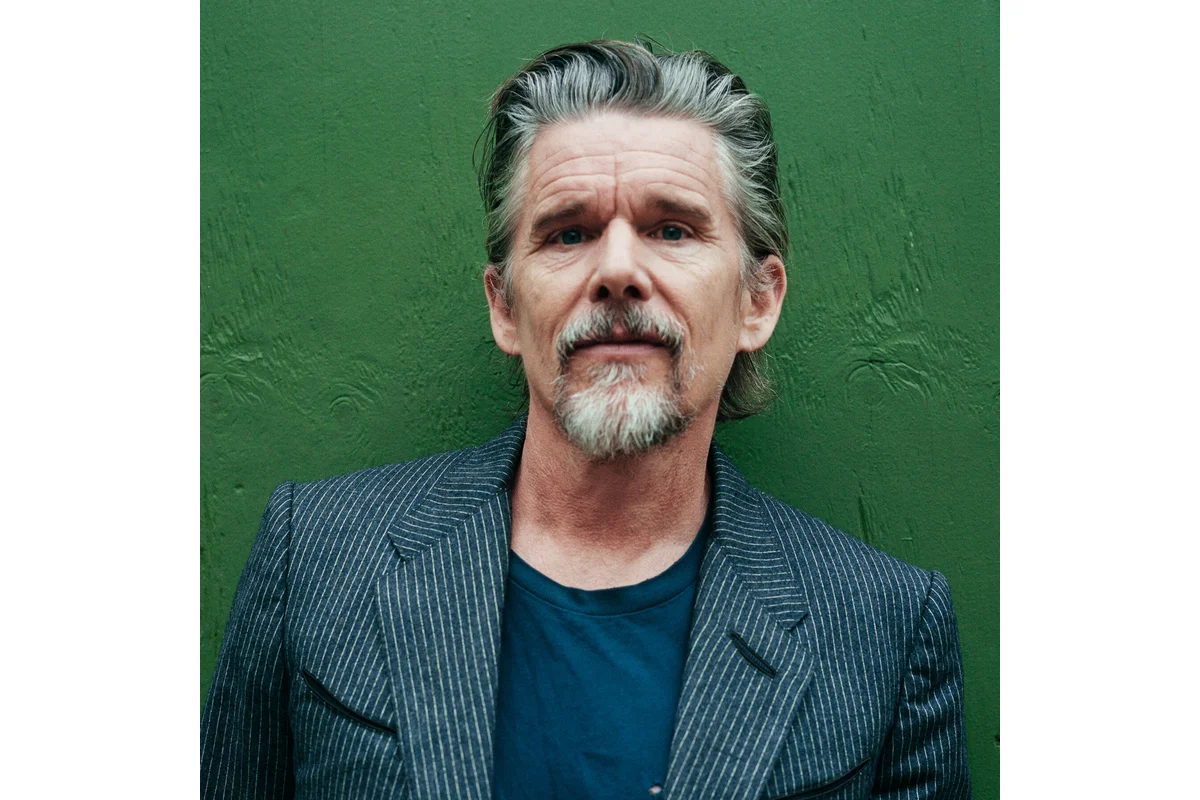
At the recent Berlin Film Festival, Ethan Hawke addressed the role of actors in political discourse, expressing a nuanced view that reflects his complex stance on public activism. Hawke suggested that artists might do better focusing on their work, rather than overt political statements, while also affirming support for fighting fascism. This Ethan Hawke politics stance has sparked conversation about the responsibility of public figures to engage in political issues.
Hawke’s Remarks Spark Reflection on Artists and Political Activism
Ethan Hawke was asked whether well-known figures should publicly speak out against political dangers such as fascism during the Berlin Film Festival. He gave a response that some interpreted as discouraging political speech among artists. Hawke remarked,
“Alright… the last place you probably want to look for advice in your spiritual counsel is a bunch of jet-lagged, drunk artists talking about their films,”
which led to laughter and applause from the festival audience, according to Variety. His answer came across as somewhat dismissive but also carried a tongue-in-cheek tone.
Hawke emphasized his belief in the power of film itself to communicate important messages without the artist needing to be outspoken directly. He explained,
“I believe in the power of cinema to affect… you know how every night we all dream and those dreams kind of heal us and get us ready for the next day? I feel like, collectively, the whole festival — all of you, all of us here — are responsible for creating an international dream life,”
before questioning,
“What is it? What are our dreams? What are we talking about? What are we thinking about?”
This framing highlights Hawke’s view that art generates a shared, healing experience that can influence society subtly but powerfully.
The Message Behind Hawke’s Film and His Final Standpoint
Hawke also discussed the film he was promoting at the festival, The Weight, which focuses on a group of people who come together despite having nothing in common except their desire to resist greed and cruelty. This story underlines a timely and universal message of solidarity against oppressive forces. Hawke made his stance unmistakably clear near the end of his statements:
“Anything that fights fascism, I’m all for it.”
This closing remark modifies his earlier, more cautious comments and affirms his opposition to harmful political ideologies. It suggests Hawke acknowledges the importance of activism, even if he believes the artist’s primary role is to allow their work to speak on their behalf. The mixed nature of his comments has drawn attention, as it seems he may have tempered his initial reluctance with a clearer moral position.
Contextualizing Hawke’s Views Through Personal Experience
Andrew Sanford, who had a lengthy career as a Broadway bartender, shared a story that indirectly relates to Hawke’s point about perception and responsibility in service roles. He recounted an encounter during a busy intermission where a customer, known to Sanford from seeing him in Boyhood, scoffed at a Maker’s Mark priced at $15, repeatedly expressing disbelief at the cost. Although Sanford was not responsible for the price, the disdain from the customer lingered with him, emphasizing how judgment can be unfairly directed at those without control.
Sanford’s anecdote mirrors the tension in Hawke’s comments—how people often expect public figures or employees to act as mouthpieces or representatives for larger issues or systems, even when their influence is limited. Hawke’s hesitance to advise publicly, coupled with his ultimate support for anti-fascist efforts, reflects this complicated dynamic faced by individuals in and around the public spotlight.
The Broader Implications of Hawke’s Position on Celebrity Activism
Hawke’s mixed message underscores the ongoing debate about whether actors and artists should engage directly in political discourse or allow their creative output to represent their views. His acknowledgment of cinema’s power reflects a belief in subtle cultural influence, while his support of fighting fascism signals that silence is not an option in the face of clear threats.
By urging caution about public declarations while endorsing the cause against oppression, Hawke highlights the tension between personal expression and public responsibility. His stance may influence other artists wrestling with the balance between art and activism, encouraging nuanced approaches rather than outright political involvement.
This episode raises questions about the effectiveness of celebrity voices in politics and whether art alone can sufficiently challenge societal issues. As public pressure on actors to take stands continues, Hawke’s position invites reflection on the complex roles artists inhabit in today’s political climate.
Related semantic context: related coverage · external reference.
