
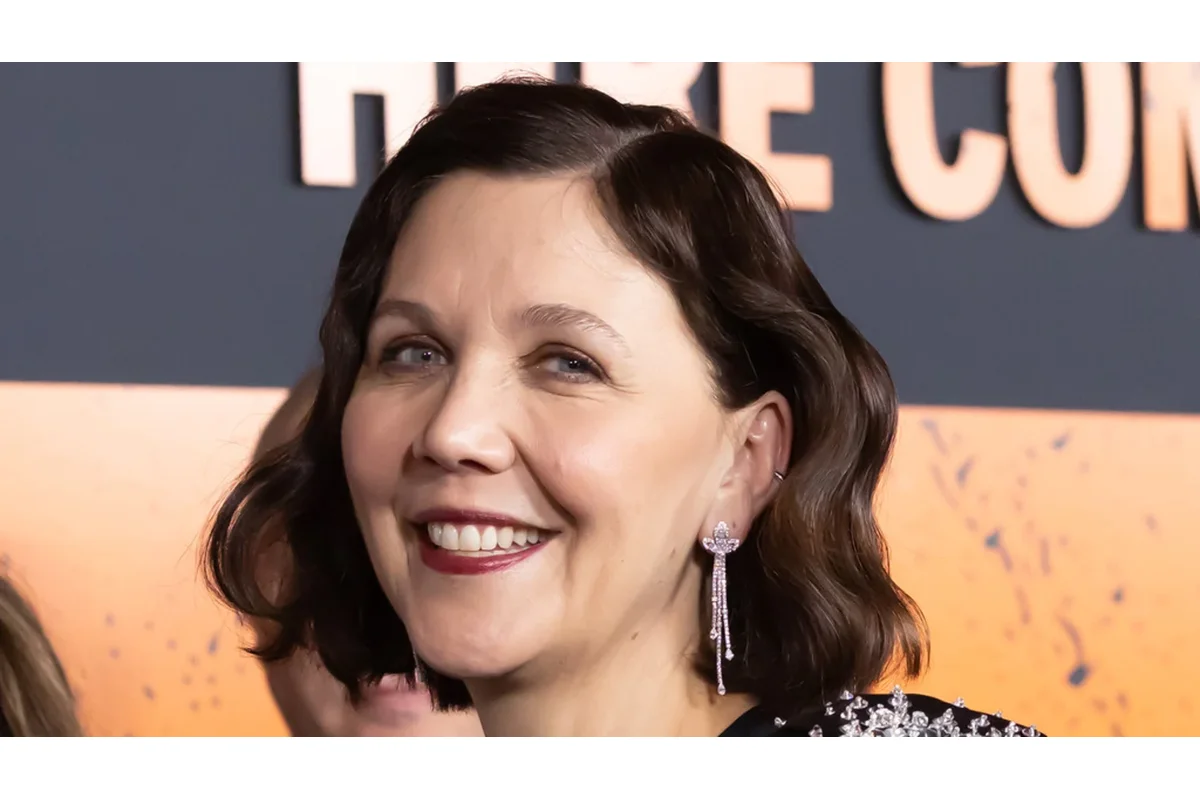
Maggie Gyllenhaal is the primary entity for this article, supported by Entertainment topic context.
Related WII context: related keeper article. External authority context: industry context.
Maggie Gyllenhaal The Bride emerges as a boldly inventive film, reshaping the familiar Frankenstein myth with a fresh, intense perspective. Released in cinemas on March 6, this new work by the actress-turned-director reimagines the legendary story through a deeply personal and emotionally charged lens.
Reinterpreting a Classic Through Personal Inquiry
Acclaimed writer and director Maggie Gyllenhaal approached The Bride! not merely as a retelling of a classic tale but as a continuation of a long-standing personal exploration about confronting harsh truths that audiences rarely see. After directing The Lost Daughter, an adaptation of Elena Ferrante’s novel about a troubled mother, she noticed a powerful reaction from viewers to honest and taboo subjects.
“I noticed that telling the truth about something, which is what we did in that movie – and something that was a little taboo – hit a nerve. I could feel it.”
– Maggie Gyllenhaal, actress-turned-director
This response inspired Gyllenhaal to test if such unwavering honesty could be presented within a larger, more dramatic format.
“I wondered, after that experience, what would happen if I tried to tell the truth about something else, and do it in a big pop way? Would that hit a nerve – and what kind of nerve?”
– Maggie Gyllenhaal
Shifting focus from motherhood to a new subject close to her mind, she explored the concept of inherent monstrousness present in every individual.
“It was something else that was on my mind, which is the monstrous aspects inside of every single one of us. I see it in myself, I see it in other people. I thought, what if we really got down to it and told the truth about that, but in a way that was big and hot.”
– Maggie Gyllenhaal
The Bride! As a New Frankenstein Narrative
The Bride! grew out of this exploration, serving as Gyllenhaal’s inventive reimagining of the Frankenstein legend. She recalls experiencing the original 1935 film, James Whale’s The Bride Of Frankenstein, in a way that unsettled her due to its treatment of the Bride character.
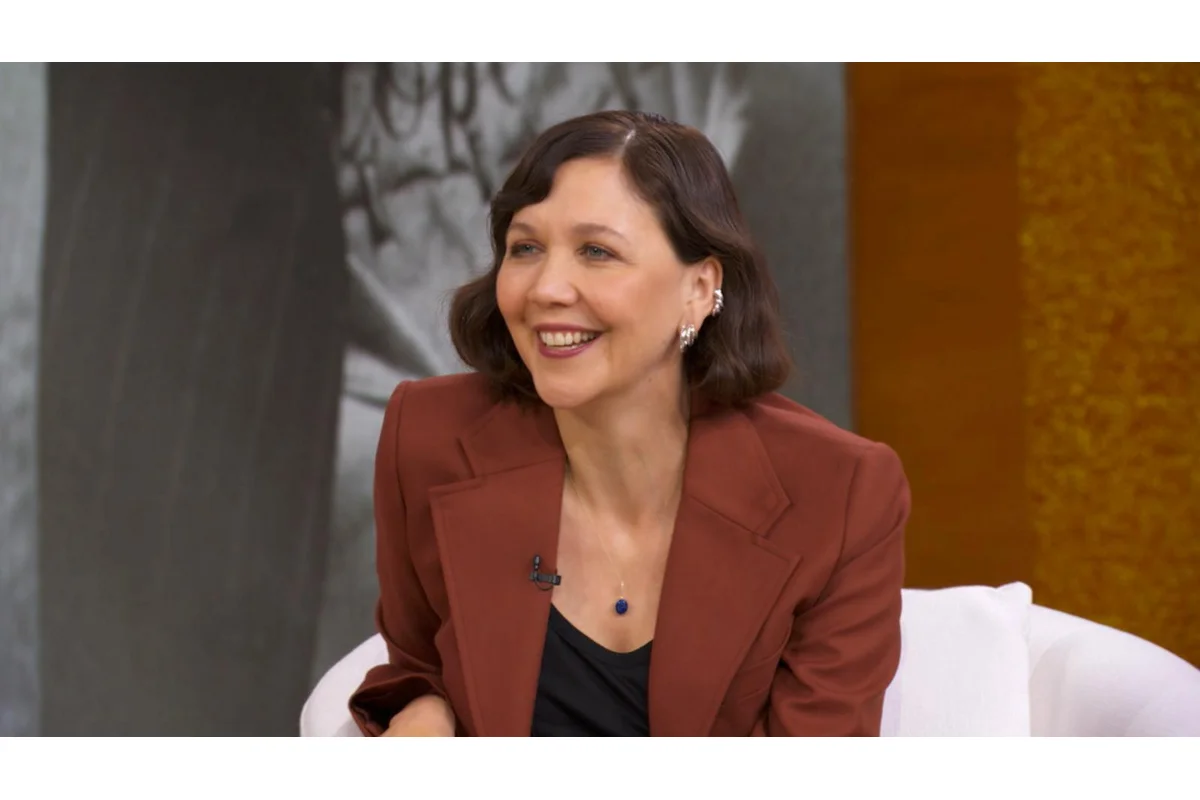
“The Elsa Lanchester, original Bride Of Frankenstein just has this impact, it’s formidable. Then I watched the movie, and I realised she doesn’t speak.”
– Maggie Gyllenhaal
Despite being the film’s namesake, the Bride’s silence and brief presence highlighted her lack of agency. She awakens only to reject her existence, saying no just once before fading back into myth.
“She wakes up and says no. That’s basically what she does, and that’s unusual.”
– Maggie Gyllenhaal
This refusal to conform inspired Gyllenhaal’s film, which imagines the Bride returning with her own desires, fears, and identity struggles.
“What if she comes back, and she has her own needs and agenda, and her own wants and terrors? That’s what this movie really gets into.”
– Maggie Gyllenhaal
Exploring Fame, Fantasy, and Human Connection
The Bride! delves into themes beyond horror, including loneliness, fantasy, and the nature of connection. Gyllenhaal reflects on Frankenstein’s isolation, pointing to the surreal relationship he forms with a movie star who exists only as an imagined presence.
Frankenstein’s so lonely, she explains.
“He doesn’t have anyone to talk to, and his primary relationship is with a movie star, because a movie star is someone you can imagine you have a relationship with, and they don’t know.”
– Maggie Gyllenhaal
Set against the cultural backdrop of the 1930s, an era rich with cinematic fantasy and glamor, the film contrasts fantasy love, appearance, and desire with the complicated reality of human relationships.
The movies are so fantasy, Gyllenhaal says,
“A lot of the movie is about the difference between fantasy love, fantasy looks, fantasy sex, fantasy everything, versus reality – and what is the real pleasure of a love affair that’s based in reality.”
– Maggie Gyllenhaal
Yet, she resists creating a strictly faithful period piece. Instead, The Bride! reflects a dreamlike ‘30s influenced by the energy of 1981 downtown New York City.
“It is set in the ‘30s, but it’s not exactly set in the ‘30s. It’s like the ‘30s by way of downtown New York in 1981, so it’s a ‘30s that comes out of my imagination.”
– Maggie Gyllenhaal
Subverting Film Conventions with a Punk Spirit
The film’s style challenges classic cinematic tropes with a consciously subversive approach, drawing inspiration from films like Bonnie and Clyde, Badlands, and Metropolis while avoiding mere tribute or imitation. Gyllenhaal notes the influence of David Lynch’s Wild At Heart as a point of comparison, though her own take differs.
“I was interested in subverting a kind of classic movie style. So yes, Bonnie And Clyde, Badlands and even Metropolis. And I think about a movie like Wild At Heart that does subvert those classic movie things in a David Lynch way, which is different than my way.”
– Maggie Gyllenhaal
The term “punk” frequently arises in descriptions of the film, at times as acclaim and at others simply highlighting its resistance to conventional categorization.
“I do think the movie is punk. But is punk just a celebration of something that doesn’t fit easily into a box? Then yeah, totally.”
– Maggie Gyllenhaal
Christian Bale, who portrays Frankenstein, contributed to the film’s punk aesthetic by sharing images of Sid Vicious during their collaboration, adding a raw edge to the character’s conception.
“Even that, in some way, has a punk aspect to it.”
– Maggie Gyllenhaal
Jessie Buckley as the Complex Bride
For the central role of the Bride, Gyllenhaal cast Jessie Buckley, a choice that evolved naturally after their work together on The Lost Daughter. Initially hesitant to write the role exclusively with Buckley in mind, Gyllenhaal ultimately recognized the Irish actress as the only fitting choice.
We were really kindred spirits, Gyllenhaal notes.
“With Jessie, I just talked to her like I talked to myself, it’s completely pure. I wrote it and I was like, okay, it’s only Jessie. I still really don’t know who else could have played this part.”
– Maggie Gyllenhaal
Buckley’s talent for embracing complexity is essential to the film’s portrayal of the Bride, who embodies contradictions rather than a singular identity.
“Every human being holds the whole spectrum of feelings. So fierce and powerful, and right next to that is the deepest vulnerability – so smart and also totally irrational. What’s so extraordinary about her as an actress is she really allows all those things to be a part of the work.”
– Maggie Gyllenhaal
The Bride character is not just defiant or strong but also confused, angry, and searching for her sense of self.
“She plays somebody who in her life was not able to get herself expressed before she dies. She comes back to life not knowing who she is. She’s without any point of reference, any compass to figure out who she is. Part of her agenda is just to figure out her identity.”
– Maggie Gyllenhaal
The exclamation mark in the title symbolizes the intensity and urgency of this rebirth and expression.
“Maybe when you come back to life, you have a backlog of many things you need to get said. When it finally comes out, it comes out with an exclamation point attached.”
– Maggie Gyllenhaal
Collaborative Direction and Unpredictable Performances
Gyllenhaal’s experience as an actress informs her directing style, emphasizing discovery and spontaneity rather than strict preconceptions of performance. She prefers to shape the film’s tone collaboratively, remaining open to unexpected moments from her actors.
“As an actress, I don’t want a director to have imagined my performance before I get there, and then try and fit me into it, it just kills the life of things.”
– Maggie Gyllenhaal
“They surprised me a hundred times a day. It’s my job inside of that to just tip it back a little if it goes off. Like, ‘Let’s just get you right back on, I got you.’”
– Maggie Gyllenhaal
Innovative Visual Presentation and Emotional Scale
The decision to release The Bride! in IMAX was driven by curiosity around its emotional impact rather than commercial strategy. Gyllenhaal wanted to understand how expanding the frame would heighten the story, particularly in scenes entering the realm of magic or the mind.
“My question was, why grow vertically? What’s the emotional reason?”
– Maggie Gyllenhaal
The film’s visual approach intentionally reveals transitions between reality and imagination through animated effects, breaking with standard cinematic concealment.
“By being a beginner and just imagining what it could offer, we ended up doing something that hasn’t really been done before.”
– Maggie Gyllenhaal
A Love Story Beyond Convention
Despite the film’s scale and spectacle, its core remains a raw, unpolished love story. Gyllenhaal emphasizes that love is complex, filled with contradictions, pleasures, and pain.
“The movie is a deep, deep love story about a very imperfect connection – and if we’re honest, that’s every love story.”
– Maggie Gyllenhaal
This intensity and complexity reflect the director’s ongoing effort to evoke powerful emotional responses from audiences, this time amplifying the volume on the themes she explores. With its blend of myth, fantasy, and personal truth, The Bride! is poised to stir conversations about identity, love, and the monstrous within us all.

