
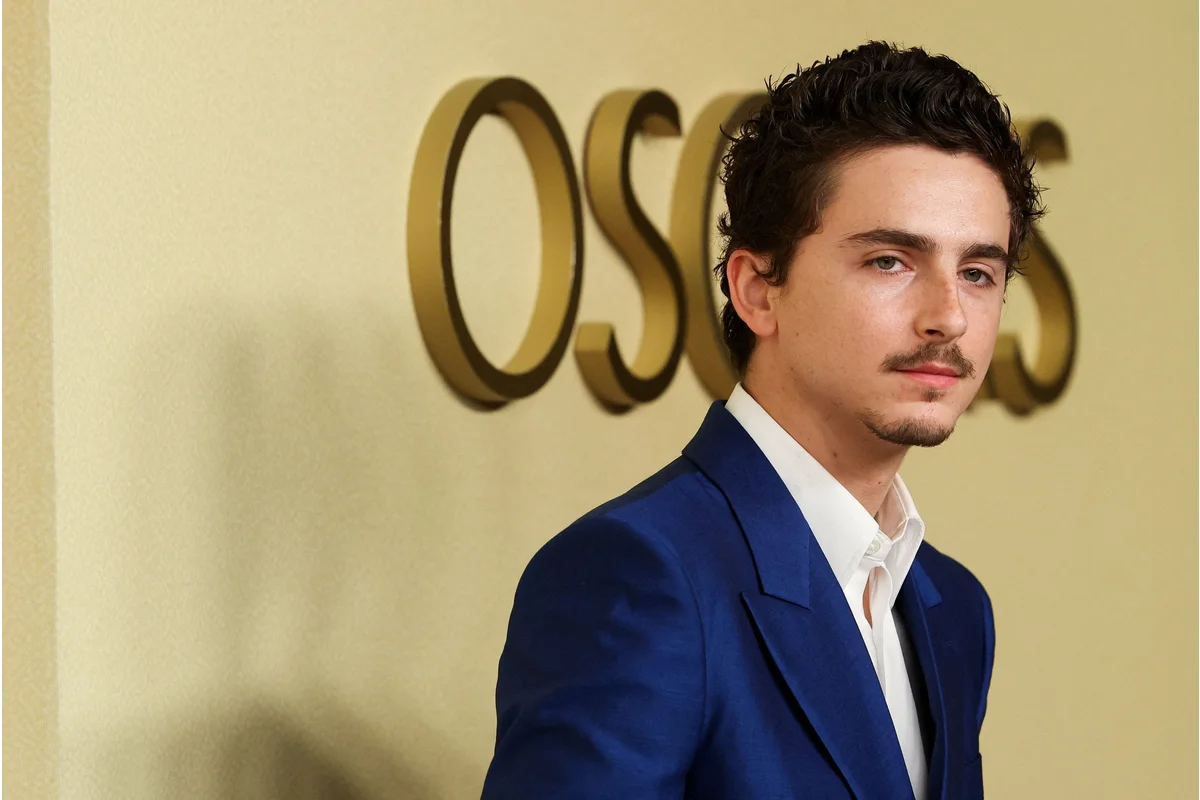
Actor Timothée Chalamet, nominated this week for Best Actor at the Oscars, has sparked significant controversy following remarks made about ballet and opera during a public discussion. The actor, promoting his film Marty Supreme, attracted criticism over comments perceived as dismissive toward these traditional art forms, igniting debate across artistic communities and social media.
Chalamet’s remarks were made during a February 21 Town Hall conversation with Matthew McConaughey at the University of Texas at Austin, where both actors discussed the future of storytelling in film. The discussion included a viral sound bite that resurfaced on March 5 when Hollywood Reporter journalist Seth Abramovitch shared it on X, prompting widespread backlash from ballet and opera circles.
Details of the Controversial Remark
In the conversation captured during the Town Hall, McConaughey raised concerns about Hollywood’s adaptation to shrinking audience attention spans, saying studios fear viewers won’t watch films unless they are immediately captivated. Responding, Chalamet acknowledged efforts to keep movie theaters and certain genres alive but went on to contrast film with other art forms like ballet and opera.
Chalamet said,
“I admire people—and I’ve done it myself, too, gone on a talk show and go, Hey, we gotta keep movie theaters alive, you know, we gotta keep this genre alive. And another part of me feels like, if people wanna see it—like Barbie, like Oppenheimer—they’re gonna go see it and go out of their way to be loud and proud about it. And I don’t wanna be working in ballet or opera, or things where it’s like, Hey, keep this thing alive, even though it’s like, No one cares about this anymore. All respect to the ballet and opera people out there. I just lost 14 cents in viewership … I just took shots for no reason.”
This candid admission, delivered with a dose of awkward humor as he then broke into song, triggered backlash due to its perceived disrespect toward these struggling art forms.
Despite the underlying truth that ballet, opera, and classical music have faced financial and audience challenges, Chalamet’s tone and wording were seen by many as dismissive and offensive, especially since he acknowledged making the comment “for no reason” without offering an apology.
Family Ties and Ironies Behind Chalamet’s Statement
Adding complexity to the controversy is Chalamet’s own familial connection to ballet. He shared in earlier interviews that several family members, including his grandmother, mother, and sister, were dancers with the New York City Ballet. He said,
“My grandmother danced in the New York City Ballet, my mother danced in the New York City Ballet, my sister danced in the New York City Ballet. I grew up dreaming big backstage at the Koch Theater in New York.”
This background suggests a deep personal familiarity with the ballet world, intensifying criticism about his dismissive phrasing.
The irony extends to the film’s promotional campaign as well. Marty Supreme’s marketing leaned into a “Dream Big” tagline, featuring influencers and boundary-breaking figures in various fields. Among them was Misty Copeland, the American Ballet Theatre’s first African American female principal dancer, who prominently wore the film’s branding.
Chalamet’s remarks align with a longer-standing concern he has expressed about traditional art forms fading away; clips dating back to 2019 show him fearing that cinema might join operatic and balletic arts in their perceived decline. Yet the timing and bluntness of this latest statement reignited discussions and criticism.
Responses From Ballet and Opera Communities
While Chalamet has remained silent publicly on the controversy, continuing to promote Marty Supreme overseas in China amid the storm, ballet and opera communities reacted swiftly and creatively on social media. The Metropolitan Opera posted footage highlighting the immense effort behind their productions, tagging Chalamet with a caption reading,
“All respect to the opera (and ballet) people out there.”
The Los Angeles Opera took a more pointed tone, sharing a post about their production of Akhnaten that included a jab:
“Sorry, @tchalamet. We’d offer you complimentary tickets to Akhnaten, but it’s selling out. There are a few seats left to purchase if you hurry.”
Meanwhile, the Paris Opera shared a clip of Nixon in China captioned with a tease that ping-pong exists in opera too, playfully referencing other aspects of the viral conversation.
Dancers from the New York City Ballet, such as Megan Fairchild and Sara Mearns, also voiced their reactions. The Vienna State Opera engaged the public by asking street passersby their thoughts about opera, while prestigious groups like the Royal Ballet and Royal Opera used the moment both to criticize Chalamet and encourage him to attend their performances.
Unexpected Support and Cultural Commentary
The controversy inadvertently brought attention to these endangered art forms, with some institutions leveraging it as a marketing opportunity. For example, the Seattle Opera introduced a discount for Carmen tickets using the promotional code TIMOTHEE, directly tying sales efforts to the actor’s name.
Support also came from outside classical art communities. Rapper and singer Doja Cat publicly rebuked Chalamet for his remarks, and hosts of the daytime talk show The View called him “vapid” and “shallow,” reflecting the intensity of disapproval his comments provoked among diverse audiences.
Broader Context: Chalamet’s Growing Controversies
The ballet comment is just the latest episode in a series of controversies surrounding Chalamet this awards season. His Oscar campaign for Marty Supreme brought heightened scrutiny due not only to his promotion tactics but also cultural appropriation accusations related to his engagement with Black culture, which some critics interpreted as performative.
Competing against fellow actor Michael B. Jordan as top contenders for Best Actor introduced another layer of debate. Some commentators alleged a racial bias in favoring Chalamet over Jordan, sparking a complex conversation about representation in Hollywood awards. This existing tension has made Chalamet a frequent subject of polarized opinions in the media and online.
Furthermore, early publicity for Marty Supreme attracted some ire over Chalamet’s presentation style, with detractors accusing him of coming across as pretentious due to his rigorous acting methods. Yet, despite these criticisms, Chalamet’s influence in fashion, music collaborations, and social media remains strong, maintaining his presence in public discourse.
Potential Consequences for Chalamet’s Oscar Prospects
The timing of the ballet comment’s viral resurgence complicated its potential impact on Oscar voting. Since Seth Abramovitch shared the clip just hours before the voting deadline, industry insiders speculate that most Academy voters had already cast ballots, reducing the likelihood that the remark dramatically altered Chalamet’s chances.
Nevertheless, longstanding backlash from various quarters could cumulatively affect perceptions of Chalamet’s candidacy. Award prediction platforms like Gold Derby currently give Michael B. Jordan a 53.7 percent chance of winning Best Actor, compared to Chalamet’s 32.2 percent, reflecting the tight competition and the possible influence of controversy on voters.
What Lies Ahead for Timothée Chalamet?
Cultural commentator Caroline Siede offered a hopeful perspective, suggesting that Chalamet’s reputation might stabilize once he re-embraces his iconic curly hairstyle, creating what she referred to as “a real Samson scenario.” Siede emphasized that Chalamet’s distinct blend of masculinity and vulnerability, particularly evident in his earlier queer and women-led film roles, endears him to many fans.
Looking forward, a return to projects helmed by female directors, such as Greta Gerwig, could help restore the softer, more nuanced facets of Chalamet’s image that critics and admirers alike appreciate. Until then, the ongoing ballet comment backlash adds another layer of complexity to an already intense awards season for the actor who continues to balance fame, controversy, and artistic ambition.
Timothée Chalamet tells Matthew McConaughey that he thought he and Austin Butler were going to kiss, given how close they were to each other:
“I saw Austin get closer to Matthew and then Matthew gets closer to Austin. And then Austin — I was like, ‘They’re gonna do it! They’re… pic.twitter.com/arGn96y1e1
— Buzzing Pop (@BuzzingPop) February 21, 2026
Ok I did not hear this. This sucks pic.twitter.com/O2ZW26zHrb
— Seth Abramovitch (@SethAbramovitch) March 5, 2026
Timothée Chalamet talking about growing up at the backstage of the New York City Ballet and how that impacted him:
“My grandmother danced in the New York City Ballet, my mother danced in the New York City Ballet, my sister danced in the New York City Ballet. I grew up dreaming… pic.twitter.com/fUhGRMUpKG
— Timothée Chalamet Updates (@timotheeupdates) December 9, 2025
mind u this isn’t even his first time saying this 😭 https://t.co/ujw1Ok3mYt pic.twitter.com/LXHDJ5s0Bm
— ★ (@BALUCIAGA) March 9, 2026
he’s taking this so serious i can’t pic.twitter.com/ifltc3l2GO
— m ˚⟡˖ ࣪ (@virgosrecords) March 9, 2026
academy voters mad at his youth, the opera community using his name for sale, filmtwt waiting for his hypothetical post oscar crash out. BUT he got the chinese grandmas on his side. pic.twitter.com/99RgiAJZmy
— timothée chalamet's impregnator (@indiehamlet) March 8, 2026
they’re crucifying him online and he’s dancing with the elderly in china 😭 pic.twitter.com/VLI2Fk6t2O
— m ˚⟡˖ ࣪ (@virgosrecords) March 8, 2026
Doja Cat defends the arts of ballet & opera following Timothée Chalamet’s recent comments. pic.twitter.com/texwfiqVMM
— Pop Base (@PopBase) March 9, 2026
Upon further reflection, I think the only reason people are acting this way about Timothée Chalamet is because his hair is short. Once the curls are back, everyone will be normal again. A real Samson scenario.
— Caroline Siede (@CarolineSiede) March 8, 2026
Related semantic context: related coverage · external reference.
