
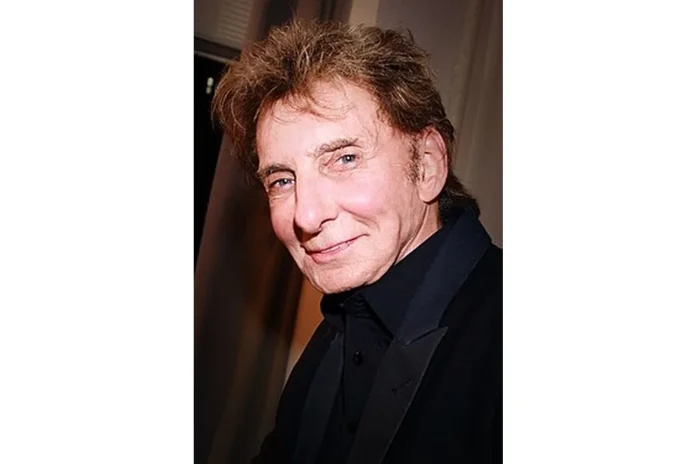
Barry Manilow Bio
Barry Manilow (born Barry Alan Pincus; 17 June 1943) is an American singer and songwriter whose career has spanned more than six decades. Rising to prominence in the mid-1970s, he recorded numerous adult contemporary and pop hits that became staples on radio and the charts. Manilow is known for his piano-driven arrangements and theatrical performances, and he has written, produced, and arranged music for himself and other artists. Over his career he has released multiple platinum albums and dozens of charting singles, performed worldwide, and worked in theater, film, and television. He remains a prominent figure in popular music with a loyal fan base.
Early Life and Background
Barry Manilow was born Barry Alan Pincus on June 17, 1943, in the Brooklyn borough of New York City. He is the son of Harold Kelliher, a truck driver of Irish descent, and Edna Manilow. Barry’s mother had his father’s name changed to Pincus, the name of a Jewish uncle of his father from the 1800s. His parents divorced when he was a baby, and his mother’s family allowed no further contact between Barry and his father. His maternal grandparents were Russian Jewish immigrants, and his paternal grandfather was Jewish, while his grandmother was a Catholic of Irish descent. His Irish roots trace back to Limerick, Ireland. His grandfather had his surname changed to Manilow a few weeks before Barry’s bar mitzvah.
Manilow grew up in the Williamsburg neighborhood of Brooklyn and graduated in 1961 from the now-defunct Eastern District High School. In high school, he met Susan Deixler, who would later become his first wife. He enrolled in the City College of New York, where he briefly studied before entering the New York College of Music. He also worked at CBS to pay his expenses while he was a student. Afterward, he studied musical theater at the Juilliard Performing Arts School. These formative years in Brooklyn gave him a strong foundation in piano and theater, which shaped his approach to music production and stage performance.
Path to Music
In 1964, Manilow met Bro Herrod, a CBS director, who asked him to arrange songs for a musical adaptation of the melodrama, The Drunkard. Instead, Manilow wrote an entire original score. Herrod used Manilow’s composition in the Off Broadway musical, which had an eight-year run at New York’s 13th Street Repertory Theatre. During this time, Manilow began work as a commercial jingle writer and singer, which continued through the remainder of the 1960s. He performed many of the TV jingles he composed, including State Farm Insurance, Band-Aid, Kentucky Fried Chicken, Pepsi, McDonald’s, and Dr Pepper.
By 1967, Manilow was the musical director for the WCBS-TV series Callback, which premiered on January 27, 1968. He next conducted and arranged for Ed Sullivan’s production company, arranging a new theme for The Late Show, while writing, producing, and singing his radio and television jingles. At the same time, he and Jeanne Lucas performed as a duo for a two-season run at Julius Monk’s Upstairs at the Downstairs club in New York. By 1969, Manilow was signed by Columbia/CBS Music vice-president and recording artist Tony Orlando, who went on to co-write with and produce Manilow and a group of studio musicians under the name Featherbed on Columbia Pictures’s newly acquired Bell Records label.
Barry Manilow Career
Early Career (1960s-1973)
Manilow recorded and accompanied artists on the piano for auditions and performances in the first two years of the 1970s. He recorded four tracks as Featherbed, produced by Tony Orlando on Bell Records. Three of the tracks were Morning, a ballad; Amy, a psychedelic-influenced pop song; and an early, uptempo version of his own co-composition with Orlando, Could It Be Magic. Neither of the two singles released impacted the charts. In July 1973, Bell Records released the album Barry Manilow, which offered an eclectic mix of piano-driven pop and guitar-driven rock music.
Bette Midler saw Manilow’s act in 1971 and chose him as her pianist at the Continental Baths in New York City that year, and subsequently as a producer on both her debut and second record albums, The Divine Miss M (1972) and Bette Midler (1973). He also acted as her musical director on the tour mounted for her first album. In 1973, Manilow was nominated for the Grammy Award for Album of the Year for his production role on The Divine Miss M at the 16th Grammy Awards. Manilow worked with Midler from 1971 to 1975.
Breakthrough (1974-1980)
In 1974, former CBS Records chief Clive Davis became temporary president of Bell with the goal of revitalizing Columbia Pictures’s music division. Davis’s reorganization efforts continued to bear fruit in 1974, with the release of Manilow’s second album, Barry Manilow II, with Mandy as the lead single. Manilow had not wanted to record the song, which had originally been titled Brandy when recorded by its co-writer Scott English, but the song was included at Davis’s insistence. The title was changed to Mandy during the recording session on August 20, 1974. Mandy was the start of a string of hit singles and albums that lasted through the early 1980s, coming from the multi-platinum albums Tryin’ to Get the Feeling, This One’s for You, Even Now, and One Voice.
Manilow’s breakthrough in Britain came with the release of Even Now, the first of many top-20 albums on that side of the Atlantic, which contained four singles that became major hits in the US. In the late 1970s and early 1980s, ABC aired four variety television specials starring Manilow, who served as an executive producer. The Barry Manilow Special with Penny Marshall as his guest premiered on March 2, 1977, to an audience of 37 million. The special was nominated for four Emmys at the 29th Primetime Emmy Awards and won in the category of Outstanding Special–Comedy, Variety or Music.
Notable Works and Milestones
Among Manilow’s most celebrated recordings are Mandy, Could It Be Magic, I Write the Songs, Looks Like We Made It, Weekend in New England, Can’t Smile Without You, and Copacabana (At the Copa). His 1984 ten-night run at Radio City Music Hall set a box-office sales record of nearly $2 million, making him the top draw in the 52-year history of the venue. He performed five sold-out concerts at the Royal Albert Hall in the UK. In 1985, he portrayed Tony Starr in the CBS film Copacabana, his only lead acting role.
Barry Manilow Award Nominations
Barry Manilow has received 15 Grammy Award nominations, with nominations occurring in every decade since the 1970s. He earned his first nomination in 1973 for Album of the Year as a producer on Bette Midler’s The Divine Miss M. Subsequent nominations included Best Traditional Pop Vocal Album for Manilow Sings Sinatra (1998), The Greatest Songs of the Fifties (2006), In the Swing of Christmas (2007), The Greatest Love Songs of All Time (2010), Night Songs (2014), and My Dream Duets (2014). He has also received nominations across categories including Album of the Year, Best Traditional Pop Vocal Album, and Outstanding Music Direction at the Primetime Emmy Awards for his television specials.
Barry Manilow Awards Won
Barry Manilow has won a Grammy Award and multiple Primetime Emmy Awards throughout his career. He won a Grammy Award as a producer, arranger, and performer. Among his Emmy wins, The Barry Manilow Special won Outstanding Special–Comedy, Variety or Music at the 29th Primetime Emmy Awards. He also won Outstanding Choreography at the 31st Primetime Emmy Awards for The Third Barry Manilow Special and Outstanding Individual Performance in a Variety or Music Program at the 58th Primetime Emmy Awards for Barry Manilow: Music and Passion. In 2009, he was awarded an Honorary Clio at the 50th Anniversary Clio Awards in Las Vegas for his 1960s work as a jingle writer and singer.
Barry Manilow Family
Barry Manilow was born to Harold Kelliher, a truck driver of Irish descent, and Edna Manilow. His parents divorced when he was a baby, and his mother’s family allowed no further contact between Barry and his father. His maternal grandparents were Russian Jewish immigrants, and his paternal grandfather was Jewish, while his grandmother was a Catholic of Irish descent. His Irish roots trace back to Limerick, Ireland. Manilow has a stepdaughter through his husband’s previous marriage and an adopted granddaughter.
Personal Life
Manilow married his high-school sweetheart, Susan Deixler, in 1964. He later said he was in love with her but his passion for a music career and lack of maturity strained their relationship. He left her after one year of marriage in pursuit of a music career. Deixler had the marriage annulled in 1966. In 1978, Manilow began a relationship with TV executive Garry Kief, who became his manager. They married in 2014, after same-sex marriage became legal in California. They kept the relationship and his sexual orientation private until the marriage made headlines in 2015. Manilow officially came out as gay in April 2017, telling People that he was pleasantly surprised to find that his mostly female fan base was supportive of the marriage. He resides in Los Angeles, California.