
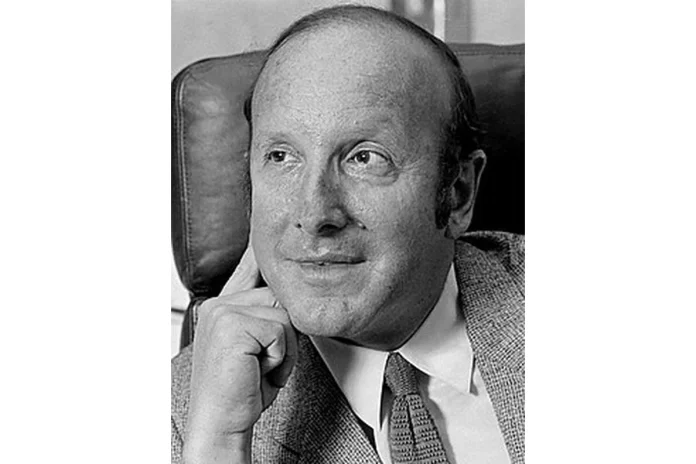
Clive Davis Bio
Clive Jay Davis (April 4, 1932 – June 22, 2026) was an American record producer, A&R executive, record executive, and lawyer whose career reshaped popular music over six decades. He is widely credited with discovering and guiding some of the most important recording artists of the twentieth century, including Whitney Houston, Bruce Springsteen, Barry Manilow, and Aretha Franklin. Davis led Columbia Records, founded Arista Records and J Records, and ultimately served as Chief Creative Officer of Sony Music Entertainment, leaving a permanent mark on the modern recording industry.
Early Life and Background
Clive Jay Davis was born on April 4, 1932, in Brooklyn, New York City, to Jewish parents Herman and Florence Davis. His father worked as an electrician and salesman, and the family lived in the Crown Heights neighborhood of Brooklyn. Davis attended Erasmus Hall High School, where he first showed the academic discipline that would carry him through college and law school. Tragedy struck during his teenage years when his mother died at the age of 47, followed by the death of his father the following year, leaving Davis to move in with his married sister in Bayside, Queens.
Davis attended New York University College of Arts & Science, graduating magna cum laude with a degree in political science and earning induction into the Phi Beta Kappa honor society in 1953. He then received a full scholarship to Harvard Law School, from which he graduated in 1956. His legal training would prove essential when he transitioned from private law practice into the corporate side of the music business later that decade.
Path to Record Production
After graduating from Harvard, Davis practiced law at a small firm in New York before joining the firm of Rosenman, Colin, Kaye, Petschek, and Freund, where partner Ralph Colin represented CBS as a client. A former colleague at the firm, Harvey Schein, hired Davis to serve as assistant counsel of CBS subsidiary Columbia Records at the age of 28, and he was promoted to general counsel the following year. This entry into the corporate music world positioned him at the center of an industry on the cusp of major cultural change.
As part of a 1965 reorganization of Columbia Records Group, group president Goddard Lieberson elevated Davis to administrative vice president and general manager. In 1966, CBS formed the Columbia-CBS Group to consolidate its recorded music operations into CBS Records, and Davis was placed in charge of the new unit. The following year, he was appointed president of the company, setting the stage for one of the most consequential tenures in American recorded music history.
Clive Davis Career
Early Career (1965–1973)
Davis’s first major signing at Columbia was the British folk-rock musician Donovan, who enjoyed a string of successful hit singles and albums on the Epic Records label. In 1967, he hired 23-year-old recording artist Tony Orlando as general manager of Columbia publishing subsidiary April-Blackwood Music; Orlando later signed Barry Manilow in 1969. After attending the 1967 Monterey Pop Festival at the urging of his associate Lou Adler, Davis signed Janis Joplin with Big Brother and the Holding Company, and Columbia went on to sign Bruce Springsteen, Chicago, Billy Joel, Blood, Sweat & Tears, Aerosmith, and Pink Floyd, among others.
One of the most commercially successful recordings released during Davis’s tenure at Columbia was Lynn Anderson’s single Rose Garden in late 1970, which Davis personally selected as the artist’s next release. The song reached No. 1 in sixteen countries and remained the biggest-selling album by a female country artist for twenty-seven years. In 1973, Davis was fired from CBS Records amid allegations regarding the use of company funds, though he denied that his dismissal was related to any wrongdoing.
Breakthrough (1974–2000)
After his firing from CBS, Columbia Pictures hired Davis as a consultant for the company’s Bell Records label, and he took time to write his memoirs before founding Arista Records in 1974. The company was named after the New York City secondary school honor society of which Davis had been a member. At Arista, he signed Barry Manilow, followed by Aretha Franklin, Dionne Warwick, Patti Smith, Kenny G, the Bay City Rollers, Ace of Base, and many others, while bringing Carly Simon, the Grateful Dead, The Kinks, and Lou Reed to the label. In 1989, Davis co-founded Arista Nashville with Tim DuBois, which became home to Alan Jackson, Brooks & Dunn, and Brad Paisley.
Davis co-founded LaFace Records with L.A. Reid and Babyface, the label that launched TLC, Usher, Outkast, and Toni Braxton, and he assisted Sean Combs with the creation of Bad Boy Records. His most celebrated discovery came after he saw Whitney Houston perform at a New York City nightclub and signed her to Arista, where she became one of the best-selling artists in music history. In 1998, Davis signed LFO, who became best known for their 1999 hit single Summer Girls. He was ultimately fired from Arista in 2000.
J Records, RCA, and Sony Years (2000–2026)
Following his departure from Arista, Davis started J Records in 2000 with financial backing from Arista parent Bertelsmann Music Group, naming the label with the middle initial of himself and his four children. BMG purchased a majority stake in J Records in 2002, and Davis became president and CEO of the larger RCA Music Group. HitQuarters recognized him as the world’s No. 1 A&R of 2001 based on worldwide chart data. When BMG merged with Sony Music Entertainment in 2004 to form Sony BMG, Davis was named chief creative officer of the joint venture in 2008, a title he retained as the company restructured into Sony Music Entertainment. He held that position until his death in 2026. Arista Records and J Records, both founded by Davis, were dissolved in October 2011 through the restructuring of RCA Records.
Notable Works and Milestones
Among the signature achievements of Davis’s career were the signing of Whitney Houston, the elevation of Bruce Springsteen and Aretha Franklin, the launch of Arista Nashville, and the founding of LaFace Records. The New York Times called him a Hitmaking Titan of the Music Industry and one of the few non-performers in the music industry to become a household name. The BBC regarded him as one of the most influential music executives in the history of rock and pop. He was also a significant benefactor of New York University, with the recorded music division of its Tisch School of the Arts named in his honor as the Clive Davis Institute of Recorded Music.
Clive Davis Award Nominations
Over the course of his long career, Clive Davis received numerous award nominations from the Recording Academy and other major music institutions, recognizing his extraordinary work as a producer and executive. His nominations spanned decades and reflected the consistent commercial and critical success of the artists he signed and developed. The Grammy Awards recognized his enduring contribution to recorded music through repeated nominations across multiple categories.
Clive Davis Awards Won
Clive Davis won five Grammy Awards over the course of his career, along with the Grammy Trustees Award in 2000 and the President’s Merit Award at the 2009 Grammys. He was inducted into the Rock and Roll Hall of Fame in 2000 in the non-performer category and received the Golden Plate Award of the American Academy of Achievement the same year. In 2011, the 200-seat theater at the Grammy Museum was named the Clive Davis Theater in his honor. In 2015, he was recognized by Equality Forum as one of the 31 Icons of LGBT History Month, and in 2018, he was honored at The New Jewish Home’s Eight Over Eighty Gala.
| Award | Wins | Year |
|---|---|---|
| Grammy Awards | 5 | Career total |
| Rock and Roll Hall of Fame (Non-Performer) | 1 | 2000 |
| Grammy Trustees Award | 1 | 2000 |
| Grammy President’s Merit Award | 1 | 2009 |
| Golden Plate Award (American Academy of Achievement) | 1 | 2000 |
Clive Davis Family
Clive Davis was married to Helen Cohen from 1956 to 1965, and the couple had two children, Fred (born 1960) and Lauren (born 1962). He was then married to Janet Adelberg from 1965 to 1985, with whom he had two more children, Mitchell (born 1970) and Doug (born 1974). His son Doug Davis became a music executive and Grammy Award-winning record producer, continuing the family connection to the recording industry.
Personal Life
Both of Davis’s marriages ended in divorce, and he had four children and eight grandchildren. In 2013, at the age of 80, Davis publicly came out as bisexual in his autobiography The Soundtrack of My Life, telling host Katie Couric on the daytime talk show Katie that he hoped his revelation would lead to greater understanding of bisexuality. The autobiography was the basis for the two-hour documentary Clive Davis: The Soundtrack of Our Lives. Davis was portrayed by Stanley Tucci in the 2022 Sony Pictures biopic Whitney Houston: I Wanna Dance with Somebody, on which he also served as a producer. He died at his home in Manhattan on June 22, 2026, at the age of 94, following a brief hospitalization for respiratory problems.