
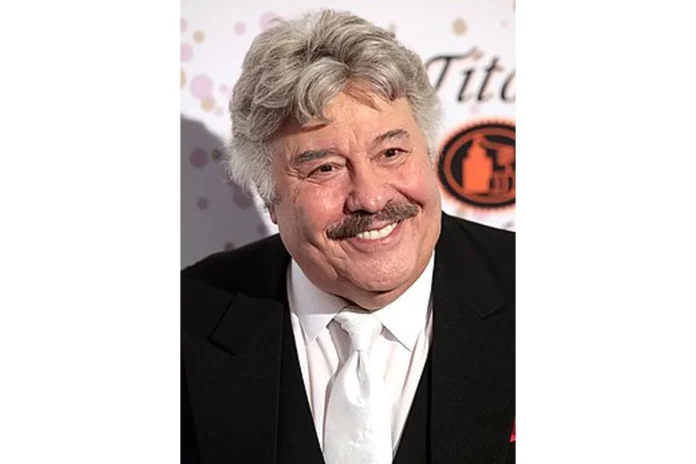
Tony Orlando Bio
Michael Anthony Orlando Cassavitis, known professionally as Tony Orlando, is an American pop and rock singer, songwriter, and music executive whose career has spanned nearly seven decades. Born on April 3, 1944, in New York City, he first rose to international fame as the lead voice of Tony Orlando and Dawn, a group that produced the chart-topping singles “Candida,” “Knock Three Times,” and the 1973 anthem “Tie a Yellow Ribbon Round the Ole Oak Tree.” Beyond the recording studio, Orlando built a parallel career as a producer, a Las Vegas headliner, a television host, and a tireless advocate for United States military veterans. In 2024, he retired from performing on the road after sixty-four years in show business, closing a chapter that began when he was a teenager in New York.
Early Life and Background
Michael Anthony Orlando Cassavitis was born on April 3, 1944, in New York City, the son of a Greek father and a Puerto Rican mother, Ruth Schroeder. He spent his earliest years in the Chelsea neighborhood of Manhattan, on West 21st Street, where his family lived during the immediate post-war years. As a teenager, the family relocated to Union City, New Jersey, and later to Hasbrouck Heights, New Jersey, where he came of age and first began performing in school and neighborhood groups.
Music reached him early, and by his early teenage years he was already organizing singing groups with neighborhood friends. The rhythms of the Brill Building songwriters and the doo-wop groups on New York radio shaped his taste and gave him a clear model for a professional life in entertainment. Those influences pointed him directly toward the music publishing world that would launch his recording career.
Path to Music
Orlando’s professional path began in 1958, when, at age fifteen, he co-founded a doo-wop group called The Five Gents. With that group he cut demo tapes that reached the desk of music publisher and producer Don Kirshner, who was assembling a stable of young songwriters across from the famous Brill Building in New York. Kirshner hired Orlando to write and record demos, placing him among future stars such as Carole King, Neil Sedaka, Toni Wine, Barry Mann, and a young duo then known as Tom and Jerry.
Orlando’s first commercial success came at sixteen, when his solo singles “Bless You” and “Halfway to Paradise” charted in both North America and the United Kingdom. He performed at the Brooklyn Paramount Theater with disc jockey Murray the K, one of the era’s most influential radio personalities, and continued to release singles through the early 1960s. He also built a parallel career as a songwriter and producer, rising through the late 1960s to become vice president of CBS Music, where he signed and produced artists including Barry Manilow, James Taylor, the Grateful Dead, and Blood, Sweat & Tears. Those years of behind-the-scenes work set the stage for the vocal turn that would make him a household name.
Tony Orlando Career
Early Career (1958–1969)
Orlando’s earliest years in the business centered on songwriting, demo recording, and steady session work in New York. His first charting singles, “Bless You” and “Halfway to Paradise,” made him one of the youngest American artists of the early 1960s to register hits in both the United States and the United Kingdom. A version of “Beautiful Dreamer,” written for him by Gerry Goffin and Jack Keller, was later picked up by the Beatles and included in their live set lists during the 1963 Helen Shapiro tour.
By the late 1960s he had stepped away from performing to focus on the executive side of the music business. He joined April-Blackwood Music, the Columbia Records publishing subsidiary, and rose to vice president of CBS Music, where he signed and produced major artists of the era. That executive post gave him the resources and connections that would allow him to step back in front of the microphone when the moment was right.
Breakthrough (1970–1977)
Orlando’s breakthrough came almost by accident. In 1969, his friends and producers Hank Medress and Dave Appel asked him to sing lead on a song they were cutting under the group name Dawn, a stage name borrowed from the middle name of Bell Records executive Steve Wax’s daughter. Columbia president Clive Davis declined to interfere, and the resulting single, “Candida,” became a worldwide number-one hit in 1970. A follow-up, “Knock Three Times,” repeated the success at number one, and the touring version of the group came to be billed as “Dawn featuring Tony Orlando,” then simply Tony Orlando and Dawn.
With session singers Telma Hopkins and Joyce Vincent Wilson alongside him, Tony Orlando and Dawn produced a string of major hits, including “Tie a Yellow Ribbon Round the Ole Oak Tree” in 1973, the best-selling single of that year and one of the best-selling singles of all time, and “He Don’t Love You (Like I Love You)” in 1975. The group also headlined The Tony Orlando and Dawn Show on CBS, a variety program that ran for three seasons from 1974 to 1976 and welcomed guests such as Jackie Gleason and Jerry Lewis. After the group disbanded in 1977, Orlando continued as a solo performer, charting with “Don’t Let Go” in 1978 and “Sweets for My Sweet” in 1979.
Notable Works and Milestones
The signature work of Tony Orlando and Dawn, “Tie a Yellow Ribbon Round the Ole Oak Tree,” became a cultural touchstone and, in time, an unofficial anthem for American service members returning from overseas. The group’s earlier singles “Candida” and “Knock Three Times” remain radio standards, and the CBS variety show cemented Orlando’s image as a warm, family-friendly entertainer during the mid-1970s. In 1990, Orlando received a star on the Hollywood Walk of Fame at 6385 Hollywood Boulevard in recognition of his contributions to recording.
Tony Orlando Award Nominations
Publicly verifiable nominations for Tony Orlando are not detailed in the available record, and the absence of a confirmed list of nominations is significant. His career has been measured primarily by the awards he has actually received, including industry honors for live performance and recognition for his work on behalf of United States military veterans, rather than by formal nominations. As a result, this section reflects only the verified record available.
Tony Orlando Awards Won
Tony Orlando has received several of the entertainment industry’s most enduring honors for live performance and public service. He has been named Casino Entertainer of the Year and has won the Best All Around Entertainer – Las Vegas award four times, having previously won the same honor three times in Atlantic City. He has also been honored as Jukebox Artist of the Year by the Amusement and Music Owners Association of New York.
Beyond the entertainment industry, Orlando received the Ellis Island Medal of Honor and was bestowed the Bob Hope Award for excellence in entertainment by the Congressional Medal of Honor Society, the latter in recognition of his longtime advocacy on behalf of United States military veterans. He has also been honored by the Pacific Pioneer Broadcasters, who presented him with the Art Gilmore Career Achievement Award in 2015.
| Award | Wins | Year |
|---|---|---|
| Best All Around Entertainer – Las Vegas | 4 | — |
| Casino Entertainer of the Year | 1 | — |
| Jukebox Artist of the Year (AMOA of New York) | 1 | — |
| Art Gilmore Career Achievement Award (Pacific Pioneer Broadcasters) | 1 | 2015 |
Tony Orlando Family
Orlando was raised in a multicultural household shaped by his Greek father and his Puerto Rican mother, Ruth Schroeder, who later made her home in Hollister, Missouri, where she died in 2013. He married his first wife, Elaine, in 1965, and the couple had one son, Jon, before divorcing in 1984. On April 29, 1990, he married Francine Amormino, and the couple has one child together.
Personal Life
Beyond his music career, Orlando has long been recognized as a leading advocate for United States military veterans. He serves on the board of directors of the Eisenhower Foundation and is honorary chairman of Snowball Express, an organization that serves the children of fallen military heroes. He also hosts the annual Congressional Medal of Honor dinner in Dallas and has served as master of ceremonies at the Secretary of Defense Freedom Awards at the Pentagon in Washington, D.C.
Orlando has been a born-again Christian since 1978, a faith he has spoken about publicly, and he co-authored the memoir Halfway to Paradise with Patsi Bale Cox in 2002. He retired from performing on the road in 2024 after sixty-four years in show business, with plans to focus on movies, Broadway, streaming projects, and his next book.