
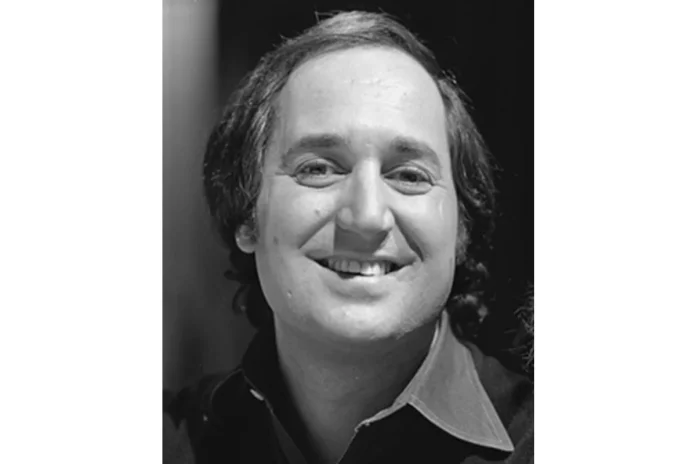
Neil Sedaka Bio
Neil Sedaka (March 13, 1939 – February 27, 2026) was an American singer, songwriter, and pianist whose career in popular music stretched from 1957 to 2026. Beginning his professional life in the late 1950s, he sold millions of records worldwide and wrote or co-wrote more than 500 songs for himself and other artists, most often partnering with lyricist Howard Greenfield and later with Phil Cody. He became a defining voice of the Brill Building era, and his catalog of hits includes “Oh! Carol,” “Calendar Girl,” “Happy Birthday Sweet Sixteen,” and “Breaking Up Is Hard to Do.”
After his popularity faded in the mid-1960s, Sedaka mounted a major comeback in the mid-1970s with chart-topping singles “Laughter in the Rain” and “Bad Blood.” Inducted into the Songwriters Hall of Fame in 1983, he continued recording and performing for decades, including a series of online mini-concerts during the COVID-19 pandemic. Sedaka died in Los Angeles on February 27, 2026, at the age of 86, only two weeks before his 87th birthday.
Early Life and Background
Neil Sedaka was born on March 13, 1939, in Brooklyn, New York. His father, Mordechai “Mac” Sedaka, was a taxi driver of Lebanese Jewish descent whose parents had come to the United States from Istanbul in 1910. His mother, Eleanor (née Appel), was an Ashkenazi Jew of Polish and Russian descent. Sedaka grew up in the Brighton Beach neighborhood of Brooklyn, where he lived across the street from a young Neil Diamond and dated Carole King during his teenage years.
Sedaka showed musical aptitude in his second-grade choral class, and his teacher recommended piano lessons. His mother took a part-time job at an Abraham & Straus department store for six months to buy a second-hand upright piano. In 1947, he auditioned successfully for a piano scholarship to the Juilliard School of Music’s Preparatory Division for Children, where he studied on Saturdays. His mother hoped he would become a classical pianist, a path similar to that of his contemporary, Van Cliburn.
At the same time, Sedaka was discovering pop music. When he was 13, a neighbor heard him playing piano and introduced him to her 16-year-old son, Howard Greenfield, an aspiring poet and lyricist. The pair began writing songs together, eventually becoming two of the prolific Brill Building composers of their generation. Sedaka attended Abraham Lincoln High School in Brooklyn, graduating in 1956 at the age of 17.
Path to Music
Sedaka and Greenfield wrote songs together throughout their young lives, drawing early inspiration from Broadway show tunes before rock and roll became popular. After graduating from Abraham Lincoln High School, Sedaka and some of his classmates formed a band called the Linc-Tones, which had minor regional hits including “While I Dream” and “Don’t Go.” The group was later renamed the Tokens, and after Sedaka launched a solo career in 1957, the Tokens went on to record four top-40 hits of their own.
Sedaka’s first three solo singles, “Laura Lee,” “Ring-a-Rockin’,” and “Oh, Delilah!,” failed to chart, although “Ring-a-Rockin’” earned him his first appearance on Dick Clark’s American Bandstand. He was then signed to RCA Victor, where his debut single “The Diary” reached the top 15 on the Billboard Hot 100 in 1958, peaking at No. 14. The success of “The Diary” established Sedaka as a recording artist in his own right, on the strength of songs he and Greenfield had written together.
The turning point came in 1959, when Sedaka studied the biggest hit singles of the day, analyzing their chord progressions, lyrics, and harmonies. The result was “Oh! Carol,” his first domestic top-10 hit, which reached No. 9 on the Hot 100 in the United States, No. 1 in Italy, and No. 3 in the United Kingdom. From that point forward, Sedaka became a consistent presence on the pop charts.
Neil Sedaka Career
Early Career (1957–1962)
Following the success of “Oh! Carol,” Sedaka produced a steady run of top-30 hits through 1962, including “Stairway to Heaven” (No. 9, 1960), “Calendar Girl” (No. 4, 1961), “Little Devil” (No. 11, 1961), “Happy Birthday Sweet Sixteen” (No. 6, 1961), and “Next Door to an Angel” (No. 5, 1962). RCA Victor issued four LPs of his work in the United States and Great Britain during this period and produced Scopitone and Cinebox videos for “Calendar Girl,” “Breaking Up Is Hard to Do,” and “The Dreamer.” Sedaka also made regular appearances on television programs including American Bandstand and Shindig!.
Sedaka’s signature song, “Breaking Up Is Hard to Do,” reached No. 1 on the Billboard Hot 100 for two weeks in August 1962, cementing his place as one of the leading pop performers of the early 1960s. In addition to his own recordings, he and Greenfield wrote hits for other performers, most notably Connie Francis’s “Stupid Cupid” and the “Theme from Where the Boys Are,” as well as songs for Jimmy Clanton. Sedaka also contributed session piano work during this period, including the piano part on Bobby Darin’s 1959 hit “Dream Lover.”
Breakthrough (1962–1975)
The year 1962 was one of the most important of Sedaka’s career, with “Breaking Up Is Hard to Do” at No. 1 and “Next Door to an Angel” at No. 5. However, his popularity began to wane in 1963, and by 1964 the arrival of the Beatles and the British Invasion had a sharp negative effect on his chart performance. From 1964 to 1966, only three of his singles cracked the Hot 100, and RCA Victor did not renew his contract when it expired in 1966, leaving Sedaka without a record label and forcing him into retirement as a performing artist.
Sedaka’s commercial comeback began in Australia, where “Star-Crossed Lovers” reached No. 1 nationally in April 1969, his first charting single anywhere in four years. He recorded a new LP in Sydney and toured the United Kingdom cabaret circuit before reuniting with RCA in 1971 for the album Emergence. In 1972, he recorded the Solitaire album at Strawberry Studios in Stockport with the four future members of 10cc, and the title track was successfully covered by Andy Williams and the Carpenters. That collaboration marked the beginning of his songwriting partnership with Phil Cody.
Sedaka’s true return to American stardom came in 1974, when Elton John suggested he sign with the Rocket Record Company. His single “Laughter in the Rain” topped the Billboard Hot 100 on February 1, 1975, becoming his second No. 1 single. He followed it with “Bad Blood,” which hit No. 1 in October 1975, was certified Gold by the RIAA, and became the most commercially successful individual single of his career, with Elton John providing uncredited backing vocals. Sedaka and Greenfield also co-wrote “Love Will Keep Us Together,” a No. 1 hit for Captain & Tennille and the biggest hit of the entire year of 1975.
Notable Works and Milestones
Sedaka is widely recognized for the dual achievement of recording two completely different versions of “Breaking Up Is Hard to Do,” with both the 1962 original and the 1976 ballad remake reaching the Billboard Top 10, making him the only artist to accomplish that feat with the same song. In 1985, songs composed by Sedaka were adapted for the Japanese anime series Mobile Suit Zeta Gundam, and a biographical musical titled Laughter in the Rain premiered in London in 2010 with Sedaka in attendance. The Songwriters Hall of Fame inducted him in 1983, he received a star on the Hollywood Walk of Fame, and in 2013 Pacific Pioneer Broadcasters honored him with the Art Gilmore Career Achievement Award.
Neil Sedaka Award Nominations
Publicly verifiable specific award nomination counts for Neil Sedaka are not detailed in the available sources. Sedaka was widely recognized across his career, but the available records do not provide a complete list of nominations at a sufficient level of certainty to summarize here.
Neil Sedaka Awards Won
Neil Sedaka was inducted into the Songwriters Hall of Fame in 1983 and received a star on the Hollywood Walk of Fame. In October 2006, he was inducted into the Long Island Music Hall of Fame, and on November 15, 2013, Pacific Pioneer Broadcasters in Los Angeles presented him with the Art Gilmore Career Achievement Award. In April 2006, he was honored with a Guinness World Records award for composing “(Is This the Way to) Amarillo,” recognized at the time as the most successful UK single of the 21st century.
| Award | Wins | Year |
|---|---|---|
| Songwriters Hall of Fame (Inducted) | 1 | 1983 |
| Long Island Music Hall of Fame (Inducted) | 1 | 2006 |
| Art Gilmore Career Achievement Award | 1 | 2013 |
Neil Sedaka Family
Neil Sedaka married Leba Strassberg in 1962, and the couple remained together for more than 60 years until his death in 2026. They had a daughter, Dara Sedaka, and a son. Dara later collaborated musically with her father, most notably on the duet “Should’ve Never Let You Go” from the 1980 album In the Pocket, which became Sedaka’s last top-40 pop hit to date. Through his marriage to Leba, Sedaka’s nephew is CNN Politics writer Harry Enten.
Personal Life
Sedaka’s father, Mordechai “Mac” Sedaka, died on June 6, 1981, of metastatic colon cancer, with Neil at his bedside singing his father’s favorite song, “Pictures From The Past.” Sedaka re-recorded the song that same year. He settled in Los Angeles later in life, and his last public appearance was on February 25, 2026, when he was dining at a local restaurant showing no signs of ill health. On the morning of February 27, 2026, he was hospitalized in Los Angeles after a medical emergency and died later the same day at the age of 86. He is buried at Hollywood Forever Cemetery.