
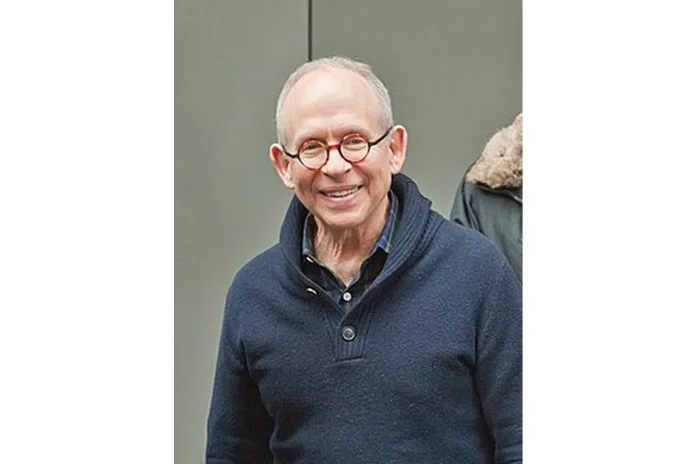
Bob Balaban Bio
Robert Elmer Balaban, known professionally as Bob Balaban, is an American actor, director, producer, and author. Born on August 16, 1945, in Chicago, Illinois, he has built a long and varied career across stage, film, and television over more than five decades. He is recognized both for his on-screen performances in works by directors such as Christopher Guest and Wes Anderson, and for his behind-the-camera work as a feature film director and producer. Balaban is also a published author of children’s novels and a memoir about his experience working on a major Hollywood science fiction film.
He first drew wide attention with a small role in the 1969 drama Midnight Cowboy, and later became a familiar face in ensemble comedies and prestigious dramas alike. As a producer, he shared an Academy Award nomination for Best Picture for the 2001 period mystery Gosford Park. Throughout his career, he has moved comfortably between acting, directing, and producing, while also contributing to theater, audiobooks, and literature.
Early Life and Background
Bob Balaban was born on August 16, 1945, in Chicago, Illinois, into a Jewish family with deep roots in the entertainment business. He is the son of Eleanor Pottasch Balaban and Elmer Balaban. His mother, who acted under the name Eleanor Barry, came from a family with German, Russian, and Romanian origins, while his paternal grandparents had emigrated from Moldova and Ukraine to Chicago. Growing up in this environment, Balaban was surrounded from an early age by people who ran movie theaters and worked in the film industry.
His father, Elmer Balaban, owned several movie theaters and later became a pioneer in cable television. His uncles were dominant figures in the Chicago theater business, having founded the Balaban and Katz Theatre circuit, a chain that included the famous Chicago and Uptown Theatres. Elmer and his uncle Harry also founded the H & E Balaban Corporation, which operated movie palaces such as the Esquire Theatre in Chicago. Another uncle, Barney Balaban, served as president of Paramount Pictures for nearly thirty years, from 1936 to 1964, and his maternal grandmother’s second husband, Sam Katz, became a vice president at Metro-Goldwyn-Mayer in 1936.
This family legacy gave Balaban a direct connection to the world of cinema and theater long before he ever stepped in front of a camera. He began his college studies at Colgate University, where he joined Phi Kappa Tau fraternity, before transferring to New York University. He also studied acting at HB Studio under the renowned teacher Uta Hagen, an experience that shaped his approach to craft. He eventually completed his New York University degree by writing a long paper on the sociology of the set of Close Encounters of the Third Kind.
Path to Acting
Balaban’s first notable professional role was on stage, when he originated the role of Linus in the original off-Broadway production of the musical You’re A Good Man, Charlie Brown in 1967. This early theater success helped him establish a foothold in New York’s professional acting scene. He followed it with a small but memorable film appearance in the 1969 drama Midnight Cowboy, which became one of the most celebrated American films of its era.
Throughout the 1970s, Balaban built his résumé with steady work in film and television. He appeared in episodes of series such as Room 222, played Orr in the film Catch-22, and portrayed the organizer Elliot in The Strawberry Statement. In 1977, he took on the role of the interpreter David Laughlin in Steven Spielberg’s science fiction landmark Close Encounters of the Third Kind, a part that introduced him to a global audience. In 1979, he earned a Tony Award nomination for his performance in the play The Inspector General, signaling his growing reputation on Broadway.
Bob Balaban Career
Early Career (1965–1989)
Balaban’s professional career began in 1965, and he spent the next two decades steadily working in film, television, and theater. His early film work included supporting roles in major productions of the 1970s, most notably Close Encounters of the Third Kind, where he played the interpreter who first decodes the alien signals. He balanced these larger film appearances with work in politically engaged dramas, such as The Strawberry Statement, and on episodic television.
During the 1980s, he expanded his range with parts in ambitious genre films, including Ken Russell’s Altered States in 1980 and the science fiction sequel 2010 in 1984, in which he played Dr. Chandra, the creator of the HAL 9000 computer. He also began moving behind the camera, directing the horror comedy Parents, which starred Randy Quaid, and the drama The Last Good Time in 1994, both of which showed his interest in character-driven storytelling.
Breakthrough (1990–2010)
The 1990s marked a turning point in Bob Balaban’s career, as he became a recognizable presence in both independent films and major studio productions. He appeared in acclaimed movies such as Absence of Malice, Bob Roberts, Deconstructing Harry, Ghost World, and The Majestic, often in distinctive supporting roles. On television, he played reporter Ira Stone on Miami Vice, had a recurring role as NBC executive Russell Dalrymple on the fourth season of Seinfeld in 1992, and guest-starred on Friends as Phoebe Buffay’s father Frank in 1999.
He also became closely associated with director Christopher Guest, appearing in the ensemble comedies Waiting for Guffman in 1996, Best in Show in 2000, A Mighty Wind in 2003, and For Your Consideration in 2006. These films, known for their improvised performances and affectionate look at eccentric subcultures, gave Balaban some of his most beloved roles. He further expanded his directing work with the 2006 film Bernard and Doris, starring Susan Sarandon, and the 2009 biopic Georgia O’Keeffe, starring Joan Allen and Jeremy Irons.
His most significant career achievement of this period came as a producer. Balaban co-produced the 2001 period mystery Gosford Park, directed by Robert Altman, and shared an Academy Award nomination for Best Picture for his work on the film. He also acted in Gosford Park, playing the Hollywood producer Morris Weissman, blending his producing and performing talents in a single project.
Notable Works and Milestones
Bob Balaban’s signature works include his early appearance in Midnight Cowboy, his role in Close Encounters of the Third Kind, and his producer credit on Gosford Park, which earned an Academy Award nomination for Best Picture. He is also widely recognized for his collaborations with Christopher Guest and Wes Anderson, appearing in films such as Waiting for Guffman, Best in Show, A Mighty Wind, Moonrise Kingdom, The Grand Budapest Hotel, Isle of Dogs, The French Dispatch, and Asteroid City. Other notable performances include roles in Altered States, 2010, Deconstructing Harry, and Capote.
Bob Balaban Award Nominations
Bob Balaban has earned recognition from major awards bodies across his long career in entertainment. His most prominent nomination came from the Academy Awards in 2002, when he was nominated for Best Picture as a producer of the 2001 period mystery Gosford Park. He has also been nominated for a Tony Award, receiving a nomination in 1979 for his performance in the play The Inspector General. Additional nominations and honors have reflected his steady presence across film, television, and theater.
Bob Balaban Awards Won
Bob Balaban’s career has been defined more by consistent critical recognition and long-term collaboration than by a long list of major award wins. The verified award nominations in his record include his 2002 Academy Award nomination for Best Picture for Gosford Park and his 1979 Tony Award nomination for The Inspector General. While specific wins in major categories are not comprehensively documented in the verified record, his work as a producer, director, and actor has been widely respected within the industry.
Bob Balaban Family
Bob Balaban comes from one of the most prominent families in the history of American movie theaters and film exhibition. His father, Elmer Balaban, owned several movie theaters in Chicago and later became a pioneer in cable television. His mother, Eleanor Pottasch Balaban, also known by her stage name Eleanor Barry, was an actress.
His uncles founded the Balaban and Katz Theatre circuit in Chicago, a chain that included the Chicago and Uptown Theatres, and his uncle Barney Balaban served as president of Paramount Pictures for nearly thirty years. His extended family also includes the cousin Burt Balaban, who was a director, as well as other relatives such as Red Balaban and Judy Balaban, and his uncle A. J. Balaban. This deep family connection to the entertainment industry helped shape his path into acting, directing, and producing.
Personal Life
Bob Balaban has been married to Lynn Grossman since 1977, and the couple has two daughters. The family resides on the Upper West Side of Manhattan. Beyond his work in film and television, Balaban serves on the board of the Exoneration Initiative, a charity dedicated to exonerating wrongfully convicted people in New York.