
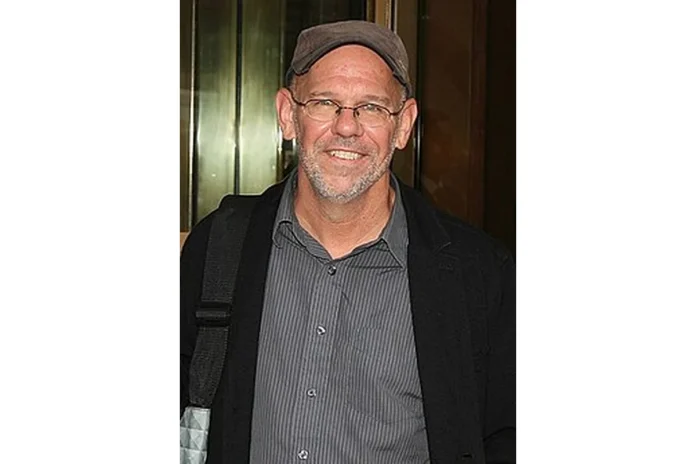
Charles Martin Smith Bio
Charles Martin Smith (born October 30, 1953) is an American actor, director, and screenwriter who has built a versatile career spanning more than five decades in film and television. He first became widely known for his portrayal of Terry “The Toad” Fields in George Lucas’s American Graffiti and went on to take memorable roles in projects ranging from The Buddy Holly Story and Starman to Deep Impact. After moving to British Columbia in the mid-1980s, he expanded into directing and writing, earning nominations for Genie Awards, a BAFTA Scotland Award, and multiple Leo Awards.
Across his career, Smith has balanced character-driven acting with thoughtful behind-the-camera work, including directing the family hits Air Bud, Dolphin Tale, and Dolphin Tale 2. His collaborations with Canadian storytellers, especially on adaptations of Farley Mowat’s work, reflect a long-standing connection to northern landscapes and character-driven narratives. Today he remains active as a performer, writer, and director based in British Columbia.
Early Life and Background
Charles Martin Smith was born on October 30, 1953, in Van Nuys, California. He grew up in a creative household, as his father, Frank Smith, was a film cartoonist and animator. His uncle Paul Smith also worked as an animator and directed projects at the Walter Lantz Studios, giving the young Smith an early familiarity with the world of animation and visual storytelling.
During his youth, Smith spent three years in Paris, where his father managed the English-language branch of a French animation studio. The experience abroad broadened his perspective before the family returned to the United States and settled in the San Fernando Valley. He attended Grover Cleveland High School in Reseda, California, where he graduated, and went on to earn a Bachelor of Arts degree in Theatre from California State University, Northridge. Those early years nurtured both his curiosity for performance and his lifelong interest in visual media.
While at California State University, Northridge, Smith was discovered by a talent agent while performing in a school production of Man of La Mancha. The encounter led to early television and film opportunities, setting him on a professional path while he was still a student.
Path to Acting
Smith began building his on-screen résumé with small roles in film and television during the early 1970s. His breakout arrived with the role of Terry “The Toad” Fields in George Lucas’s American Graffiti, a performance that earned him immediate recognition. He went on to appear in the 1974 Western The Spikes Gang alongside Lee Marvin and Ron Howard, and to reunite with Howard for Cotton Candy in 1978.
He also explored other casting opportunities in the era, including an audition for the role of Luke Skywalker in Lucas’s Star Wars, which ultimately went to Mark Hamill. By the end of the decade, Smith had demonstrated a range that stretched from ensemble nostalgia pieces to dramatic and comedic roles, establishing him as a dependable and recognizable screen presence.
Charles Martin Smith Career
Early Career (1971–1982)
Smith started his professional career in 1971 with early television and film appearances that gave him on-set experience. His work in George Lucas’s American Graffiti (1973) became his first major feature credit and quickly made him a recognizable face of the era. The role led to a string of supporting and starring parts in the 1970s, including The Spikes Gang (1974) and the musical biopic The Buddy Holly Story (1978), in which he played one of Buddy Holly’s bandmates.
During this same period, Smith took on a variety of other projects that displayed his range, including Disney’s Herbie Goes Bananas and a leading role in Norman Lear’s short-lived television series concept McGurk: A Dog’s Life. These early projects gave him experience across genres and helped him transition from promising newcomer to established character actor.
Breakthrough (1983–1999)
Smith’s career reached a turning point with the 1983 film Never Cry Wolf, an adaptation of Farley Mowat’s memoir about a Canadian environmentalist studying wolves in the Arctic. Smith devoted nearly three years to the production, which was filmed in Canada’s Yukon and in Nome, Alaska. Director Carroll Ballard asked Smith to help write much of the film’s narration, deepening his involvement and marking his first major writing contribution to a feature film.
His work on Never Cry Wolf inspired him to relocate to Vancouver, British Columbia, a place he has called home since the mid-1980s. He followed the film with memorable supporting roles, including the sympathetic SETI scientist Mark Shermin in Starman (1984) and the principled accountant Oscar Wallace in The Untouchables (1987). Additional highlights of the era included the western The Hot Spot, the crime thriller Deep Cover (1992), the HBO film And the Band Played On (1993), and supporting parts in Speechless (1994) and Deep Impact (1998).
Notable Works and Milestones
Among Smith’s most recognized works are American Graffiti (1973), Never Cry Wolf (1983), Starman (1984), and The Untouchables (1987). His long association with Farley Mowat led to a friendship that lasted until Mowat’s death in 2014 and directly inspired his later directorial effort The Snow Walker (2003). Smith’s transition from on-screen performer to writer-director became a defining chapter of his career.
Charles Martin Smith Award Nominations
Smith has earned multiple nominations across his career for his work both in front of and behind the camera. In 2003, he received two Genie Award nominations, for Best Director and Best Screenplay, for his work on the Canadian feature film The Snow Walker. Five years later, in 2008, he was nominated for a BAFTA Scotland Award for Best Feature Film for his direction of Stone of Destiny. He has additionally been nominated for seven Leo Awards, reflecting his ongoing contributions to Canadian film and television.
Charles Martin Smith Awards Won
Smith’s verified recognition to date has come primarily through nominations, including his Genie Award nods for The Snow Walker and his BAFTA Scotland nomination for Stone of Destiny. His sustained body of work across American and Canadian productions has been acknowledged by industry peers, and his repeated nominations for the Leo Awards reflect his continued influence on regional filmmaking.
Charles Martin Smith Family
Smith’s father, Frank Smith, was a film cartoonist and animator, and his uncle Paul Smith worked as both an animator and a director at the Walter Lantz Studios. A second uncle, Hank Smith, is also listed among his relatives. The family’s deep connection to animation gave Charles Martin Smith an early window into creative production and influenced his eventual move into writing and directing.
Personal Life
Smith was married to Ursula Martin, though the couple later divorced. The two share one child. Since the mid-1980s, Smith has made his home in British Columbia, Canada, where he continues to write, direct, and act across American and Canadian productions.