
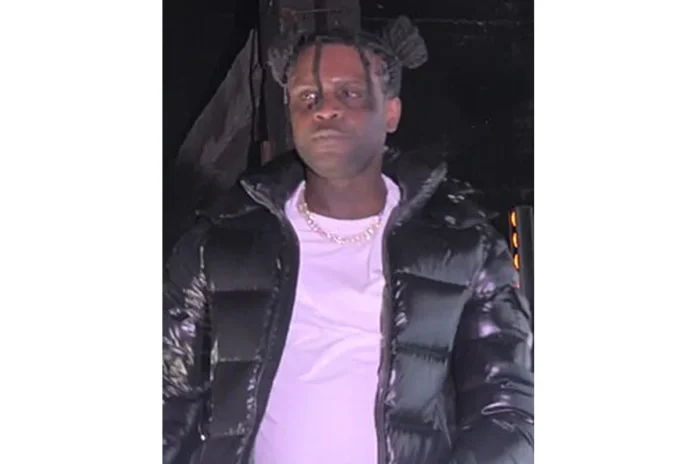
Chief Keef Bio
Keith Farrelle Cozart (born August 15, 1995), known professionally as Chief Keef, is an American rapper, singer, songwriter, and record producer. He first gained attention as a teenager on the South Side of Chicago, where his early mixtapes helped introduce Chicago drill music to mainstream listeners. Signed by Interscope Records after a competitive label bidding war, he released his major-label debut album Finally Rich in 2012 and continued releasing music independently for more than a decade.
Chief Keef is widely regarded as a progenitor and popularizer of drill music, and his melodic delivery, slurred cadence, and distinctive ad-libs have shaped the work of a generation of hip-hop artists. Beyond music, he founded the Glory Boyz Entertainment (GBE) and Glo Gang collectives and, in 2022, launched the label 43B in partnership with RBC Records and BMG Rights Management. He currently resides in Los Angeles, California.
Early Life and Background
Keith Farrelle Cozart was born on August 15, 1995, in Chicago, Illinois, to Lolita Carter. He was named after his deceased uncle, Keith Carter, who was known as Big Keef. Chief Keef has been estranged from his biological father, Alfonso Cozart, since he was about one year old, and was raised primarily by his grandmother and legal guardian, Margaret Carter, a school bus driver.
He grew up in the Parkway Garden Homes, a public housing complex in the Washington Park neighborhood on Chicago’s South Side, an area long associated with the Black Disciples street gang. Chief Keef has been described by sociologists and journalists as a member of that organization, with his neighborhood environment shaping both his worldview and his music.
Chief Keef began rapping at the age of five, recording himself on his mother’s karaoke machine. He attended Dulles Elementary School and later Dyett High School, where he dropped out during his freshman year. During his teenage years he met Japanese immigrant producer DJ Kenn through his uncle, and together they began recording the earliest songs that would form the foundation of his catalog and the Glory Boyz Entertainment (GBE) collective.
Path to Music
Chief Keef started rapping in 2008 and released his debut mixtape, UF Overload, in 2009. By 2011, his mixtapes The Glory Road and Bang had attracted local attention across Chicago’s South Side, establishing his reputation within the city’s emerging drill scene. That December, he was arrested for firing a gun from his car in Washington Park and was placed under house arrest at his grandmother’s residence.
While confined to his grandmother’s home, Chief Keef posted numerous videos to YouTube, helping pioneer the visual style associated with Chicago drill music. His single “I Don’t Like,” featuring Lil Reese, became a local hit and eventually caught the attention of Kanye West, who remixed the track with Pusha T, Jadakiss, and Big Sean. The exposure triggered a bidding war among major labels, ultimately leading to a $6 million deal with Interscope Records in 2012 and the creation of his own imprint, Glory Boyz Entertainment.
Chief Keef Career
Early Career (2008–2011)
Chief Keef began his recording career in 2008 at the age of 13, releasing his debut mixtape UF Overload the following year. Working closely with producer DJ Kenn, he built a grassroots following through local performances, social media clips, and a steady stream of online releases. By 2011, his mixtapes The Glory Road and Bang had made him one of the most talked-about young rappers on Chicago’s South Side.
His early career was also marked by personal and legal setbacks, including a 2011 arrest that resulted in a 30-day house arrest followed by 30 days of home confinement. Despite these challenges, his prolific output during this period laid the creative foundation for the drill subgenre that he would soon popularize nationally.
Breakthrough (2012–2013)
Chief Keef’s breakthrough arrived with his fifth mixtape, Back from the Dead (2012), which spawned the single “I Don’t Like” featuring Lil Reese. The track became his first entry on the Billboard Hot 100, and a remix by Kanye West further amplified its reach. Its follow-up single “Love Sosa” later received quintuple platinum certification from the Recording Industry Association of America (RIAA).
Both singles served as lead singles for his major-label debut studio album Finally Rich, released on December 18, 2012. The album featured guest appearances from 50 Cent, Wiz Khalifa, Young Jeezy, Rick Ross, and Lil Reese. In 2013, Chief Keef was featured on “Hold My Liquor,” the fifth track on Kanye West’s album Yeezus, earning praise from musician Lou Reed for his poignant vocal contribution.
Notable Works and Milestones
Chief Keef’s signature works include the mixtape Back from the Dead (2012), the studio album Finally Rich (2012), and singles “I Don’t Like” and “Love Sosa,” the latter of which achieved quintuple platinum certification. His later albums Bang 3 (2015), Bang 3, Pt. 2 (2015), 4Nem (2021), and Almighty So 2 (2024) each entered the Billboard 200 as self-releases. He has also earned guest features on Lil Uzi Vert’s “Bean (Kobe)” and Drake’s “All the Parties,” both of which peaked within the top 40 of the Billboard Hot 100.
Chief Keef Family
Chief Keef was raised by his grandmother Margaret Carter, who served as his legal guardian throughout his childhood in Chicago. His mother, Lolita Carter, and his estranged biological father, Alfonso Cozart, were minimally present during his upbringing. Several of his cousins were closely involved in his music career, including rapper Fredo Santana and fellow Glo Gang member Tadoe, both of whom were signed to Glory Boyz Entertainment.
His cousin Mario Hess, known professionally as Big Glo or Blood Money, was signed to Interscope Records but was shot and killed in Chicago’s Englewood neighborhood on April 9, 2014, just two weeks after his signing. Chief Keef later reflected on the loss in an interview with Billboard, describing it as the moment he realized he needed to grow up. In August 2015, he named his newborn son Sno “FilmOn Dot Com” to promote his record label FilmOn Music, though the label later retracted naming rights following a paternity dispute.
Personal Life
Chief Keef has nine children, including daughters and sons. He became a father for the first time at the age of 16, and in 2013, DNA documents confirmed he had fathered a 10-month-old daughter with a woman twenty years his senior, leading to a court-ordered child support arrangement. In September 2014, he announced the birth of his third child, his first son.
After being evicted from his Highland Park, Illinois, home in June 2014, Chief Keef relocated to Los Angeles, California, where he has since resided. In interviews, he has spoken about how the move allowed him to step away from trouble in Chicago and focus on his career. He has also developed an interest in art collecting, particularly the work of Bill da Butcher, whom he first encountered while in rehab. Chief Keef has been known by several nicknames throughout his career, including Sosa, BigGucci Sosa, Almighty So, Turbo, and Otto, with “Sosa” referencing the drug kingpin Alejandro Sosa from the film Scarface.