
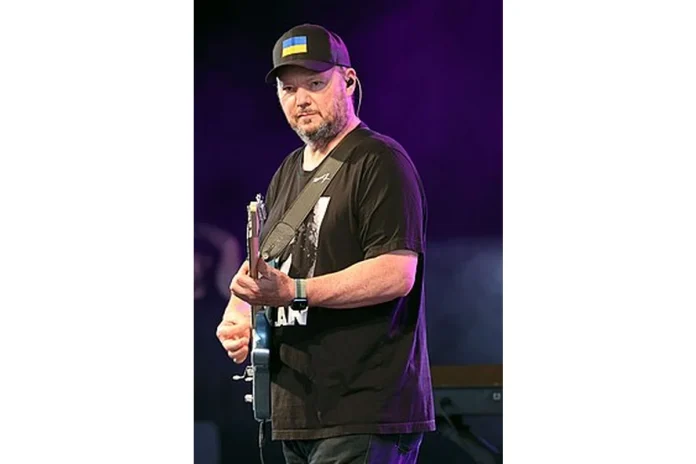
Christopher Cross Bio
Christopher Cross (born Christopher Charles Geppert; May 3, 1951) is an American singer, songwriter, and guitarist who became one of the most celebrated soft-rock artists of the early 1980s. He gained international recognition with his 1979 self-titled debut album, which produced the chart-topping singles “Ride Like the Wind” and “Sailing” and earned him five Grammy Awards at the 23rd Annual Grammy Awards in 1980. Cross is also widely known for co-writing and performing “Arthur’s Theme (Best That You Can Do),” which won the Academy Award for Best Original Song in 1982. Known for his smooth vocals and skilled guitar work, he has continued recording and touring steadily since the late 1970s.
Early Life and Background
Christopher Charles Geppert was born on May 3, 1951, in San Antonio, Texas, and grew up in a military family. A self-described “army brat,” Cross is the son of a U.S. Army pediatrician who was stationed at Walter Reed Army Hospital in Washington, D.C., in the mid-1950s and acted as a physician for President Dwight Eisenhower’s grandchildren. He was raised Catholic and spent his formative years in San Antonio, where he attended Alamo Heights High School, graduating in 1969. At Alamo Heights, he played football and participated in track and field while also developing an early interest in music.
As a seventh grader, Cross received a drum kit and began performing in a local band called the Psychos, which played church events and junior high school dances. Initially serving as the group’s drummer, he also took on vocal duties due to the absence of another singer, and he has cited Buddy Holly, Ritchie Valens, and Dave Brubeck as early influences. During high school, he shifted his primary focus to guitar, which he found more conducive to songwriting, and became influenced by Frank Zappa for his instrumental approach and innovative rhythmic ideas.
Path to Music
Cross, bassist Andy Salmon, and keyboardist Rob Meurer met in San Antonio when they were still teenagers. Cross and Salmon became bandmates in Flash, with Cross on guitar, and together they formed Christopher Cross as a band before relocating to Austin. In Austin, they added drummer Tommy Taylor and played covers for cash while recording demo versions of original songs at Odyssey Sound, which later became Pecan Street Studio. They shipped these recordings to record labels in hopes of securing a deal, and although they considered themselves a band, Warner Bros. signed Christopher Cross as a solo artist in early 1979.
Although best known for his vocals and songwriting, Cross had also earned a reputation as a skilled guitarist. Donald Fagen and Walter Becker of Steely Dan invited Cross to play on their albums, but Cross declined because he was intimidated by the opportunity. He also substituted for Ritchie Cross also substituted for Ritchie Blackmore during a Deep Purple concert in 1970 when Blackmore fell ill. Cross was the original owner of fellow Austin guitarist Stevie Ray Vaughan’s “Number One” 1962/1963 hybrid Fender Stratocaster, having traded the instrument for a Gibson Les Paul one day before Vaughan purchased it in 1974.
Christopher Cross Career
Early Career (1971–1978)
Cross began his professional music career in 1971, performing with various bands in and around San Antonio and Austin. He played with Flash and other local groups while continuing to develop his songwriting and guitar skills, eventually forming the band Christopher Cross with childhood friends. Throughout the 1970s, the group performed covers at local venues and recorded demos that would eventually catch the attention of major labels. These formative years of constant gigging and refinement laid the foundation for the polished soft-rock sound that would soon bring Cross to international attention.
Breakthrough (1979–1983)
Cross released his self-titled debut album, Christopher Cross, on December 27, 1979. The album produced four Billboard Hot 100 top 20 hits, including “Ride Like the Wind” (featuring backing vocals by Michael McDonald), “Sailing,” “Never Be the Same,” and “Say You’ll Be Mine” (featuring backing vocals by Nicolette Larson). “Ride Like the Wind” reached number two on the U.S. Hot 100, while “Sailing” topped the chart for one week, and “Never Be the Same” went number one on the Adult Contemporary chart. The album, Cross, and “Sailing” were nominated for six Grammy Awards in 1980 and won five.
Cross became the first artist in Grammy history to win all four general field awards in a single ceremony at the 23rd Annual Grammy Awards, taking home Record of the Year (“Sailing”), Album of the Year (Christopher Cross), Song of the Year (“Sailing”), and Best New Artist. This feat was not replicated for 39 years, until Billie Eilish won all four awards at the 62nd Annual Grammy Awards in 2020. “Sailing” additionally won for Best Arrangement Accompanying Vocalist(s), and the album has been certified platinum five times in the U.S., selling over 5 million copies.
Later in 1981, Cross released “Arthur’s Theme (Best That You Can Do),” co-written with Burt Bacharach, Carole Bayer Sager, and Peter Allen, which served as the main theme for the 1981 film Arthur. The song won the Academy Award for Best Original Song in 1982 and was nominated for three Grammys. In the U.S., it reached number one on the Billboard Hot 100 and on the Hot Adult Contemporary charts in October 1981, remaining at the top of the Hot 100 for three weeks while also becoming a top-ten hit in several other countries. The song became the second and last American number-one hit by Christopher Cross.
Cross’s second album, Another Page (1983), produced “All Right,” “No Time for Talk,” and “Think of Laura.” “All Right” was used by CBS Sports for its highlights montage following the 1983 NCAA Division I men’s basketball tournament, while “Think of Laura” was used by ABC’s General Hospital, a placement Cross felt was inappropriate. Another Page sold well and earned Gold certification. Cross also co-wrote and sang “A Chance For Heaven” for the 1984 Summer Olympic Games.
Notable Works and Milestones
Christopher Cross’s signature work remains his 1979 self-titled debut album and its hit singles “Sailing” and “Ride Like the Wind,” songs that helped define the soft-rock sound of the early 1980s. His historic sweep of all four general field Grammy Awards in 1980 remains one of the most celebrated achievements in Grammy history, and his Academy Award-winning “Arthur’s Theme (Best That You Can Do)” further cemented his reputation as a premier songwriter of his era.
Later Career (1984–Present)
After 1984, Cross’s commercial success faded as MTV’s rise made his style of adult contemporary music a poor fit for the network. His 1985 album Every Turn of the World and 1988’s Back of My Mind did not produce any top 40 hits or reach Gold or Platinum status, though “Charm the Snake” from Every Turn of the World reached No. 68 on the Billboard Hot 100. He placed “Swept Away” in the TV show Growing Pains and released four more albums in the 1990s, including Rendezvous (1992), Window (1994), Walking In Avalon (1998), and Red Room (1999), touring and opening for various acts during the decade.
The year 2002 saw the release of The Very Best of… album, and in 2007 he completed a Christmas album titled A Christopher Cross Christmas, followed in 2008 by the acoustic album The Cafe Carlyle Sessions. In 2011, Cross released Doctor Faith, and in 2013, he released A Night in Paris, a 2-CD live album recorded in April 2012 at the Theatre Le Trianon in Paris, France. The song “Ride Like the Wind” was featured on the Anchorman 2: The Legend Continues original movie soundtrack in 2013, and he released Secret Ladder in September 2014 and Take Me as I Am in November 2017. In 2017, he played a concert at the Tobin Center in his hometown of San Antonio, Texas, and in 2018, he joined with other musicians in Austin to form the band Freedonia, releasing two full-length albums, Freedonia (2018) and Firefly (2019), as well as the EP Bring Back The Dinosaurs (2021).
During 2021–2022, Cross played his 40th anniversary tour, which had been rescheduled due to the COVID-19 pandemic. In 2025, Christopher Cross joined Toto as the special guest on the Dogz of Oz tour, performing across the U.K. and Europe in early 2025, further solidifying a partnership that began with a shared stage appearance at the Hollywood Bowl on September 1, 2024.
Christopher Cross Award Nominations
Christopher Cross received nominations across the most prominent music and film awards bodies during the height of his early career. His 1979 debut album and its singles earned six Grammy Award nominations in 1980, of which five resulted in wins. “Arthur’s Theme (Best That You Can Do)” earned three additional Grammy nominations and won the Academy Award for Best Original Song in 1982.
Christopher Cross Awards Won
Christopher Cross has won five Grammy Awards and one Academy Award. At the 23rd Annual Grammy Awards in 1980, he became the first artist to win all four general field awards in a single ceremony, including Record of the Year, Album of the Year, Song of the Year, and Best New Artist, along with Best Arrangement Accompanying Vocalist(s) for “Sailing.” In 1982, he won the Academy Award for Best Original Song for “Arthur’s Theme (Best That You Can Do).”
Christopher Cross Family
Christopher Cross is the son of a U.S. Army pediatrician who served at Walter Reed Army Hospital in Washington, D.C., in the mid-1950s. He has two children, Madison and Rain, from his marriages.
Personal Life
Cross was married to Roseanne Harrison from 1973 to 1982, and the couple later divorced. He was married to Jan Bunch from 1988 to 2007, when that marriage also ended in divorce. On April 3, 2020, Cross confirmed through his Facebook page that he had tested positive for the COVID-19 virus, and he later reported that the illness triggered an episode of Guillain–Barré syndrome that affected the nerves in his legs, leaving him temporarily unable to walk. By October 2020, he was able to walk with a cane, though he noted that his memory and speech had also been affected, and he continued to perform on his rescheduled 40th anniversary tour in 2021 and 2022.