
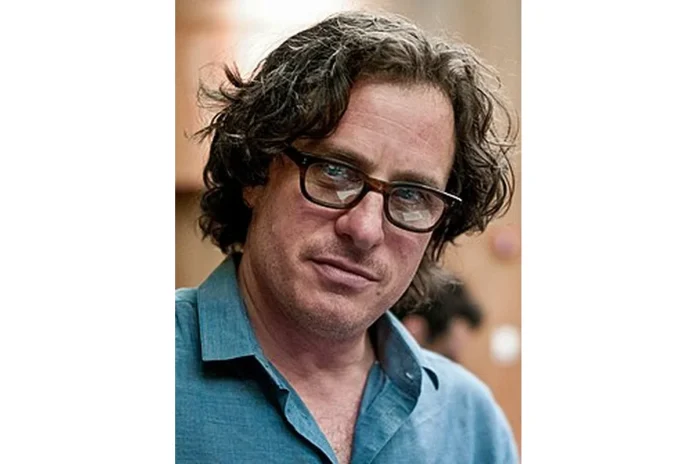
Davis Guggenheim Bio
Philip Davis Guggenheim, known professionally as Davis Guggenheim, is an American screenwriter, director, and producer whose work has shaped both prestige television and contemporary documentary cinema. Active in the entertainment industry since the early 1990s, he built his early reputation directing episodes of acclaimed drama series before reinventing himself as one of the most influential documentary filmmakers of his generation. Three of his documentaries rank among the top-grossing nonfiction films of all time, and his projects have earned multiple honors, including an Academy Award for Best Documentary Feature.
Born on November 3, 1963, in St. Louis, Missouri, Guggenheim has spent more than three decades moving between scripted television, political filmmaking, and feature-length documentaries that explore politics, education, music, and humanitarian causes. His filmography reflects a sustained focus on stories that combine cultural relevance with cinematic craft, and he continues to produce work through his own company, Concordia Studio, which he co-founded in 2020.
Early Life and Background
Philip Davis Guggenheim was born in St. Louis, Missouri, the son of Marion Davis, whose maiden name was Streett, and the documentary filmmaker Charles Guggenheim. His father had a long and distinguished career in nonfiction filmmaking, an environment that gave Davis Guggenheim early and direct exposure to the craft of visual storytelling. The family background in film helped shape his eventual decision to pursue a career behind the camera.
He grew up in the greater Washington, D.C., area, attending the Potomac School and later Sidwell Friends School, both of which are known for combining rigorous academics with strong arts programming. He then went on to attend Brown University, where he continued his formal education and developed the intellectual foundation that would inform his later work as a director and writer.
Coming from a family with deep ties to documentary filmmaking, Guggenheim was exposed to the rhythms of production and storytelling from a young age. His father’s work, in particular, offered a model of how film could illuminate real events and real people, an influence that would surface repeatedly in his own career choices and the subjects he chose to explore on screen.
Path to Directing
After completing his studies at Brown University, Davis Guggenheim moved into the television industry, where he began building a reputation as a capable and reliable episodic director. His early career was rooted in the late 1990s and early 2000s, a period when he worked steadily on hour-long dramas, learning the discipline of working with casts, crews, and tight production schedules. This apprenticeship in scripted television gave him a strong technical foundation before he transitioned to documentary work.
His earliest directing credits included episodes of several high-profile network dramas, including NYPD Blue, ER, 24, Alias, and The Shield. He joined HBO’s Western drama Deadwood in 2004, serving as a producer and director during the show’s first season and directing episodes such as Deep Water, Reconnoitering the Rim, Plague, and Sold Under Sin. Working on Deadwood placed him alongside some of the most respected talent in television and helped him refine his visual style.
The pivot to documentary filmmaking came in 2006, when he directed An Inconvenient Truth, a film centered on former U.S. Vice President Al Gore and his international presentation on global warming. The film became a cultural phenomenon, reaching wide audiences and setting the stage for Guggenheim’s emergence as a major voice in documentary cinema.
Davis Guggenheim Career
Early Career (1991–2003)
Beginning his professional career in 1991, Davis Guggenheim spent more than a decade working in television, where he earned a reputation for handling complex dramatic material across a range of popular series. His work on NYPD Blue, ER, 24, Alias, and The Shield established him as a steady and trusted director of network television at a time when hour-long dramas were at the height of their cultural influence.
During this period, he developed the technical versatility and on-set authority that would later support his move into feature filmmaking. Although he had not yet achieved widespread public recognition, his television credits placed him inside the world of major Hollywood productions and allowed him to collaborate with experienced showrunners, writers, and actors.
Breakthrough (2004–2010)
Guggenheim’s breakthrough arrived with his 2004 work on Deadwood, where his direction of multiple episodes of the HBO Western marked him as a filmmaker capable of handling prestige cable drama at the highest level. The show, created by David Milch, was widely praised for its writing and performances, and Guggenheim’s visual approach contributed to its distinctive atmosphere.
His true career-defining moment came with An Inconvenient Truth in 2006, a documentary he both produced and directed. Featuring former Vice President Al Gore, the film won the Academy Award for Best Documentary Feature in 2007, cementing Guggenheim’s reputation in feature documentary work. The film’s success also demonstrated that documentaries could reach broad commercial audiences.
He followed that success with It Might Get Loud in 2008, a documentary that brought together guitarists Jimmy Page, The Edge, and Jack White in a meditation on the instrument and its players. In 2008, he also directed a biographical film about then-candidate Barack Obama that aired during the Democratic National Convention, and on October 29, 2008, he directed a related broadcast that The New York Times praised for its high cinematographic standards. In 2010, he released Waiting for “Superman,” a documentary about the failures of American public education that sparked national debate and received the Audience Award for Best Documentary at the 2010 Sundance Film Festival.
Notable Works and Milestones
Among Guggenheim’s most significant works, An Inconvenient Truth stands as his signature project, having won the Academy Award for Best Documentary Feature and helped establish documentary filmmaking as a commercially and culturally viable form. He Named Me Malala, a 2015 documentary about Pakistani activist Malala Yousafzai, earned the Critics’ Choice Movie Award for Best Documentary Feature and further demonstrated his ability to handle stories of global humanitarian importance.
Davis Guggenheim Award Nominations
Across his career in both scripted television and documentary filmmaking, Davis Guggenheim has earned multiple nominations from major awards bodies, including two nominations at the Primetime Emmy Award for Outstanding Directing for a Documentary or Nonfiction Program, as well as nominations tied to his work in television drama. His documentary Still: A Michael J. Fox Movie, released in 2023, received seven Emmy nominations, further reflecting the breadth of industry recognition his recent work has received.
Davis Guggenheim Awards Won
Among the honors Davis Guggenheim has received, the most prominent is the Academy Award for Best Documentary Feature, awarded in 2007 for An Inconvenient Truth. He has also won the Critics’ Choice Movie Award for Best Documentary Feature for He Named Me Malala, and his documentary Waiting for “Superman” earned the Audience Award for Best Documentary at the 2010 Sundance Film Festival.
| Award | Wins | Year |
|---|---|---|
| Academy Awards (Best Documentary Feature for An Inconvenient Truth) | 1 | 2007 |
| Sundance Film Festival (Audience Award for Best Documentary for Waiting for Superman) | 1 | 2010 |
Davis Guggenheim Family
Davis Guggenheim was born into a family with a strong connection to the arts, particularly to documentary filmmaking. His father, Charles Guggenheim, was a respected filmmaker whose career offered an early model of how nonfiction storytelling could be shaped for the screen. His mother is Marion Davis, whose maiden name was Streett. The family background gave Guggenheim direct, personal exposure to the discipline and craft of filmmaking long before he began his own professional career.
Personal Life
Davis Guggenheim married actress Elisabeth Shue in 1994, and the couple has three children together. He is the first cousin of actress Patty Guggenheim. His family life has run alongside a career that has frequently taken him between Hollywood productions and documentary projects focused on public issues, allowing him to balance personal commitments with a demanding professional schedule.