
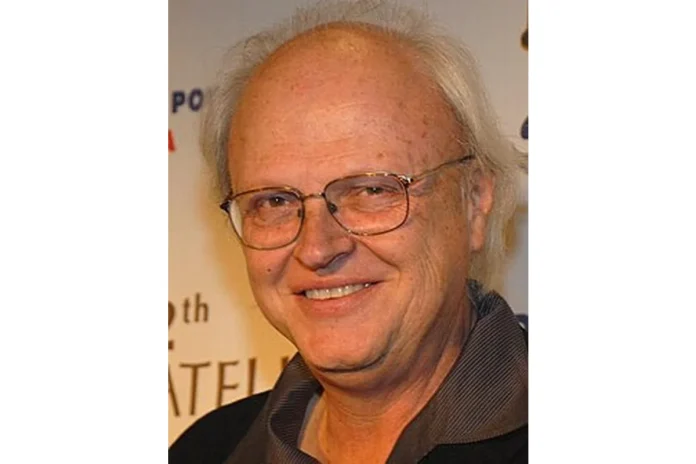
Dennis Muren Bio
Dennis Muren, A.S.C., born November 1, 1946, in Glendale, California, is an American visual effects artist and supervisor whose career has shaped the look of modern cinema. Working primarily with Industrial Light & Magic (ILM), he has contributed to landmark films directed by George Lucas, Steven Spielberg, and James Cameron. Across more than five decades, Muren has earned nine Academy Awards in total, including eight for Best Visual Effects and a Technical Achievement Academy Award, more than any other living person. The Visual Effects Society has described him as “a perpetual student, teacher, innovator, and mentor,” reflecting both his technical achievements and his influence on generations of effects artists.
Often identified as a pioneer who opened new doors for filmmakers, Muren helped integrate practical effects with the earliest computer-generated imagery, allowing directors to tell stories that had never been possible on screen. His early experiments with motion-control photography and his later leadership of ILM’s Computer Graphics Division set new standards for realism and collaboration in visual effects. Steven Spielberg has noted that Muren “set the example at Industrial Light & Magic for visual effects excellence with effects that add strong, appropriate emotion to a shot and fit seamlessly into a movie.” Today, Muren is widely regarded as one of the most influential figures in the history of motion picture effects.
Early Life and Background
Dennis Muren was born in 1946 in Glendale, California, the son of Elmer Ernest Muren and Charline Louise Clayton. Growing up in Southern California during the post-war boom, he found his calling at an early age through photography and amateur filmmaking. At eight years old, Muren began shooting model spaceships and dinosaurs with a home camera, sparked by a deep curiosity about how movies created the impossible. He credits this boyhood hobby with pointing him toward a future career in special and visual effects.
As a teenager, Muren studied the work of pioneering effects artists, including John Fulton, Ray Harryhausen, and Howard Lydecker, breaking down the techniques he saw in theaters and trying to recreate them at home. He also studied the artwork of painters John Singer Sargent and Frank Frazetta, training his eye for composition, light, and texture. He never attended film school; instead, he was largely self-taught and learned alongside other young Los Angeles effects enthusiasts, including Jim Danforth and David Allen, whose friendships sharpened his craft.
Muren graduated from John Muir High School in Pasadena, California, in 1965. During a summer at Pasadena City College, where he studied business, he raised $6,500 to produce a short supernatural film called The Equinox. The 71-minute project incorporated the stop-motion and matte techniques he had admired as a child. Producer Jack Harris later bought the film and hired director Jack Woods to add footage that extended it to 82 minutes, and the movie was released in May 1970. Despite mixed reviews, The Equinox recouped its budget and has since developed a small cult following.
Path to Visual Effects
After earning an associate’s degree, Muren spent several years struggling to find steady work as a visual effects cameraman in Hollywood. The independent film industry offered occasional opportunities, but stable employment in feature effects proved elusive. The Equinox and related short projects kept his skills sharp, even as the broader industry took little notice of him. It was a lean period that taught him persistence and the value of constant self-improvement.
His break came in 1976, when he was hired as a second cameraman at Industrial Light & Magic, the young visual effects studio founded by George Lucas to produce Star Wars. Muren joined the team photographing miniatures and motion-control shots, work that demanded precision and collaboration. Star Wars, released in 1977, became one of the most successful films of its era and established ILM as the industry’s leading effects house. With a weekend off during production, Muren also worked on Steven Spielberg’s Close Encounters of the Third Kind, photographing the Mothership sequence under the supervision of Douglas Trumbull.
Dennis Muren Career
Early Career (1965-1979)
Dennis Muren’s earliest professional credit came with The Equinox in 1970, a film he largely directed and for which he created the special effects, although he was credited as a producer. He spent the next several years freelancing on low-budget projects and sharpening his craft in motion-control photography and matte work. His big break came in 1976, when he joined ILM as a second cameraman on Star Wars, quickly establishing himself as a reliable visual effects cameraman on one of the most ambitious productions of the decade. Following Star Wars, Muren contributed to Spielberg’s Close Encounters of the Third Kind and then worked briefly on the television series Battlestar Galactica under John Dykstra.
By the end of the 1970s, Muren had earned a reputation as one of Hollywood’s most precise effects cinematographers. He moved to Marin County, California, to help build a new ILM facility, where he was promoted to effects director of photography. His earliest Academy recognition came as part of the team behind the groundbreaking effects of Star Wars and its sequel, The Empire Strikes Back, setting the stage for a long string of Oscar nominations and wins.
Breakthrough (1980-1993)
Muren’s first major breakthrough arrived when he was named visual effects supervisor on landmark productions throughout the 1980s. He collaborated with George Lucas and ILM’s newly formed Computer Graphics Division on Young Sherlock Holmes, directing the creation of the first CGI stained-glass swordsman in a feature film, which earned an Oscar nomination. He then led ILM’s efforts on a series of visually groundbreaking films, including Willow (1988), The Abyss (1989), and Terminator 2: Judgment Day (1991), each of which pushed the boundaries of computer-generated imagery and practical effects integration.
The most celebrated milestone of his career came with Jurassic Park (1993). Originally, Steven Spielberg intended to use go-motion for the dinosaurs, but a CG test of a walking Tyrannosaurus rex skeleton, produced by ILM’s Steve Williams and Mark Dippe, convinced Universal to fund a fully computer-generated creature. Working with cinematographer Dennis Muren as his guide, the ILM team spent three months adding organically moving flesh, muscle, and skin to the digital skeleton. The result, a photoreal walking T-Rex, marked a turning point for the industry and convinced George Lucas that technology had advanced enough to produce the Star Wars prequels.
Notable Works and Milestones
Across his career, Dennis Muren has been a key contributor to a remarkable run of films, including Star Wars (1977), The Empire Strikes Back, Willow, The Abyss, Terminator 2: Judgment Day, and Jurassic Park. He directed ILM’s first major CGI morphing sequences in Willow and helped bring the liquid-metal T-1000 of Terminator 2 to the screen. In addition to his eight Best Visual Effects Oscars, he received a Technical Achievement Academy Award for innovations in motion-control photography. In June 1999, he became the first visual effects artist to be honored with a star on the Hollywood Walk of Fame.
Dennis Muren Award Nominations
Dennis Muren has accumulated numerous Academy Award nominations across his decades-long career, reflecting the consistent recognition of his contributions by the Academy of Motion Picture Arts and Sciences. His nominations include recognition for his groundbreaking work on Star Wars, the first computer-generated character in a feature film in Young Sherlock Holmes, and many of the visually ambitious films that followed. These nominations trace the evolution of visual effects from model photography to the earliest days of digital imagery, with Muren at the center of nearly every major leap forward.
Dennis Muren Awards Won
Dennis Muren has won nine Academy Awards in total, more than any other living person. Eight of those wins are for Best Visual Effects, awarded for his work on films such as The Empire Strikes Back, Return of the Jedi, Indiana Jones and the Temple of Doom, Innerspace, The Abyss, Terminator 2: Judgment Day, and Jurassic Park. He has also received a Technical Achievement Academy Award for his contributions to motion-control photography, recognizing his long-standing influence on the craft of visual effects.
| Award | Wins | Year |
|---|---|---|
| Academy Award for Best Visual Effects | 8 | Throughout career |
| Academy Technical Achievement Award | 1 | Throughout career |
Dennis Muren Family
Dennis Muren was raised in Glendale, California, by his parents, Elmer Ernest Muren and Charline Louise Clayton. He attended John Muir High School in Pasadena, California, and later studied at Pasadena City College. His early family environment encouraged curiosity and hands-on creativity, traits that shaped his lifelong interest in photography and filmmaking.
Personal Life
Dennis Muren is married to Zara Muren, a British documentary filmmaker and landscape architect who produced and directed Dream of The Sea Ranch and The Landscape Architecture of Roberto Burle Marx. The couple has two children and lives in California. Muren has occasionally appeared on screen in small cameo roles, including a non-speaking part as a Nazi spy in Raiders of the Lost Ark and a brief appearance in the Star Tours theme-park attraction.