
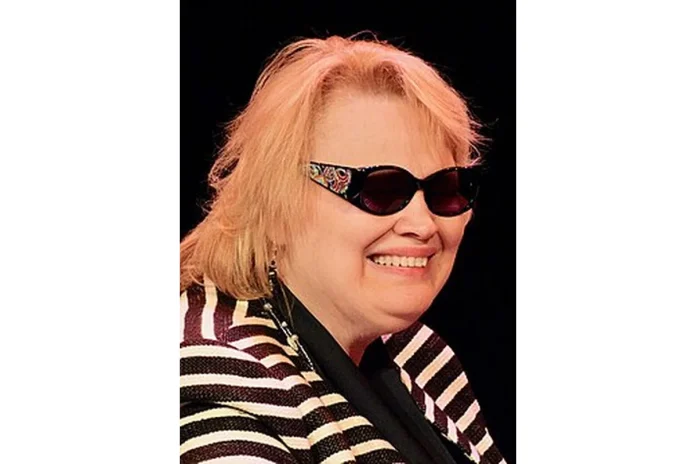
Diane Schuur Bio
Diane Joan Schuur (born December 10, 1953), nicknamed “Deedles,” is an American jazz singer and pianist recognized for her crystal-clear vocal tone and absolute pitch. Blind from birth due to retinopathy of prematurity, she has built a distinguished career since 1979, releasing more than twenty albums and earning two Grammy Awards for best female jazz vocal performance in 1986 and 1987. Her collaborative album with the Count Basie Orchestra topped the Billboard jazz chart for thirty-three consecutive weeks.
Schuur has performed at Carnegie Hall, the Kennedy Center, and the White House, and has shared the stage with artists including Ray Charles, B.B. King, Frank Sinatra, and Quincy Jones. Co-performers on her records have included Barry Manilow, José Feliciano, Stan Getz, Vince Gill, and Alison Krauss, reflecting her wide-ranging collaborations across jazz, pop, gospel, country, and Latin music. She is regarded as one of the most versatile vocalists of her generation.
Early Life and Background
Diane Joan Schuur was born on December 10, 1953, in Tacoma, Washington, two months premature and weighing less than three pounds. Complications of prematurity resulted in her total loss of vision, a condition later linked to high levels of oxygen in neonatal incubators. Her twin brother, David, had normal vision at birth but experienced some hearing loss, and she also has a younger sister.
Schuur grew up in Auburn, Washington, a southern suburb of Seattle, in a household filled with music. Her mother, who died of cancer when Schuur was thirteen, loved jazz and maintained a Duke Ellington record collection, while her father, a police captain, was an amateur musician who often played piano at home. Schuur began singing around age four, often retreating to a closet to practice, and later learned to play piano by ear. Her early musical idols included Sarah Vaughan and Dinah Washington, and she developed a distinctive crystal-clear vocal tone in her teenage years.
From age four to eleven, Schuur attended the Washington School for the Blind in Vancouver, where she commuted home on the train by herself despite being blind. She later transferred to public school, where teachers’ aides helped her keep up with classroom work. Her mother affectionately called her “Deedle-Babes,” “Deeds,” and other variations, and the nickname “Deedles” eventually stuck and became the title of one of her early albums.
Path to Singing
Schuur’s first major public performance came at age ten, when her aunt arranged for her to sing country music at Tacoma’s Holiday Inn. Even while attending the Washington School for the Blind, she would return home on weekends to perform on Friday and Saturday nights before taking the train back to school. At age fifteen, her father took her to Lake Tahoe to audition as a lounge singer at Harrah’s hotel and casino, but the offer had to be declined because her widowed father could not leave his police work to chaperone her.
At eighteen, country music singer and actor Jimmy Wakely noticed Schuur at an Elks Club in 1971 and arranged a recording session in California. Accompanied by her sister, Schuur took her first airplane trip to Burbank and recorded a 45 rpm single called “Dear Mommy and Daddy.” She continued performing locally throughout her late teens, sharpening the vocal style that would later define her career.
In 1975, at age twenty-two, Schuur auditioned for drummer and bandleader Ed Shaughnessy backstage after a concert in Seattle. Shaughnessy hired her as the vocalist in his orchestra, Energy Force. Four years later, jazz trumpeter Dizzy Gillespie heard her and invited her to sit in at the Monterey Jazz Festival in 1979, where her performance created what writer Dave Gelly described as “a minor sensation.” She also recorded her first album, Pilot of my Destiny, in 1981 in Seattle on the independent Great American Records label, with Stan Getz performing on it.
Diane Schuur Career
Early Career (1979-1985)
After her appearance at the Monterey Jazz Festival in 1979, Schuur spent several years performing in clubs and refining her craft. Jazz saxophonist Stan Getz, impressed when he heard her sing “Amazing Grace” at Monterey, became her advisor and coach, teaching her that “less is more.” Despite an unsuccessful audition with bandleader Doc Severinsen for a guest spot on The Tonight Show, she persisted in building her reputation on the live circuit.
Her early work on the independent Great American Records label was followed by a contract with GRP Records, where veteran producer Dave Grusin supervised her first three albums. Her GRP debut, Deedles, reached number thirty-five on the Billboard jazz charts and became her first record released internationally. Her follow-up, Schuur Thing (1985), featured guest artist José Feliciano and climbed to number ten on the Billboard jazz charts. That same year, she was invited to perform on the 28th Annual Grammy Awards Show, broadcast on CBS, marking her first major national television exposure.
Breakthrough (1986-1994)
Schuur’s fourth album, Timeless (1986), earned her first Grammy Award for best female jazz vocal performance. The recording featured arrangements by Billy May, Johnny Mandel, Jeremy Lubbock, and Patrick Williams, and was supported by producer Dave Grusin and guest performances by Stan Getz. The following year, she won her second Grammy in the same category for Diane Schuur & the Count Basie Orchestra, which remained at the top of Billboard’s Traditional Jazz Charts for thirty-three weeks. The Basie Band on the album was led by Frank Foster, who won a Grammy for best arrangement accompanying a vocal for his work on the same recording. The session also included Freddie Green, Basie’s longtime guitarist, in what became the final performance of his career at age seventy-six.
In 1985, while on tour in the Far East, Schuur met B.B. King when they both performed at a music festival in Tokyo. The two artists later recorded Heart to Heart, released in May 1994, which entered the Billboard Jazz Charts at number one. In 1988, Frank Sinatra phoned Schuur to fill in for Liza Minnelli at a benefit concert in Palm Springs, conducted by Quincy Jones, and she became a guest at the Sinatra home. Years later, she released I Remember You: Love to Stan and Frank as an homage to her late friends Sinatra and Getz.
Schuur continued releasing albums through the 1990s and 2000s, sometimes experimenting with other genres. Schuur Fire (2005) featured Caribbean Jazz Project musicians and Brazilian guitarist Oscar Castro-Neves, while Talkin’ ‘Bout You, named after the Ray Charles song, moved into the pop category and earned additional Grammy nominations. In 2003, she released Midnight, featuring original songs by Barry Manilow, who also produced and performed on the album alongside guests Brian McKnight and Karrin Allyson. Her second live album, Diane Schuur: Live In London, was recorded at the historic Ronnie Scott’s jazz club.
Notable Works and Milestones
Schuur’s signature album, Diane Schuur & the Count Basie Orchestra (1987), spent thirty-three weeks atop the Billboard jazz chart and earned her second Grammy Award. Other signature recordings include Timeless (1986), which produced her first Grammy, and Heart to Heart (1994) with B.B. King, which debuted at number one on the Billboard Jazz Charts. She appeared as a guest performer on Sesame Street in 1996, was a guest on “Ray Charles in Concert” in 1998, and performed a Kennedy Center Honors tribute to Stevie Wonder in 1999, singing “I Just Called to Say I Love You” accompanied by Herbie Hancock. She was a guest on NBC’s The Tonight Show with Johnny Carson eleven times.
Diane Schuur Award Nominations
Across her recording career, Diane Joan Schuur has received a total of three additional Grammy Award nominations beyond her two wins. Her 1990s and 2000s pop and crossover projects, including Talkin’ ‘Bout You, brought further Grammy recognition in pop categories. She was also a frequent guest on major televised awards and tribute broadcasts, including the 28th Annual Grammy Awards Show, the Kennedy Center Honors, and the White House performances spanning three U.S. presidential administrations.
Diane Schuur Awards Won
Diane Joan Schuur has won two Grammy Awards, both in the category of best female jazz vocal performance, for her albums Timeless in 1986 and Diane Schuur & the Count Basie Orchestra in 1987. In 2000, she received the Helen Keller Achievement Award from the American Foundation for the Blind in recognition of her contributions as a blind performer.
| Award | Wins | Year |
|---|---|---|
| Grammy Award for Best Female Jazz Vocal Performance (Timeless) | 1 | 1986 |
| Grammy Award for Best Female Jazz Vocal Performance (Diane Schuur & the Count Basie Orchestra) | 1 | 1987 |
| Helen Keller Achievement Award (American Foundation for the Blind) | 1 | 2000 |
Diane Schuur Family
Diane Joan Schuur was born to a family shaped by music and by the early loss of her mother. Her mother, who introduced her to jazz through a Duke Ellington record collection, died of cancer at age thirty-one, when Schuur was thirteen. Her father was a police captain and amateur musician who often played piano with his daughter at his side. She has a twin brother, David, who had normal vision at birth but some hearing loss, and a younger sister who accompanied her on her first airplane trip to a recording session in California.
Personal Life
In 1996, at age forty-three, Diane Joan Schuur married Les Crockett, a retired space engineer she affectionately called “Rocket.” The couple later divorced after Crockett developed Parkinson’s disease, prostate cancer, and dementia requiring institutional care, a situation compounded by Schuur’s blindness. Schuur has openly discussed her struggles with weight, drug and alcohol addiction in the late 1980s, and past attempts at self-harm, and has credited twelve-step programs with sustaining her sobriety for several decades. In February 2024, she announced the cancellation of an upcoming tour and her decision to step back from performing due to Ménière’s disease. A voracious reader and dedicated cat owner, Schuur is an ardent fan of The Young and the Restless, having visited the set at least three times.