
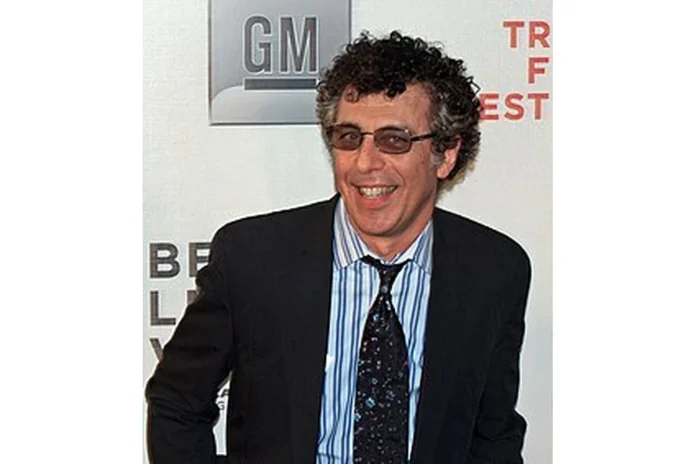
Eric Bogosian Bio
Eric Michael Bogosian (born April 24, 1953) is an American actor, playwright, monologuist, novelist, and historian. Descended from Armenian-American immigrants, he is best known for his one-man stage shows, the play and film Talk Radio, and a long list of supporting roles in acclaimed films and television dramas. Over a career that began in 1983, he has earned three Obie Awards, a Drama Desk Award, and a Silver Bear from the Berlin Film Festival.
Bogosian has also built a parallel career as a writer of novels and historical nonfiction, including Operation Nemesis (2015), an account of the assassination program that avenged the Armenian genocide. He continues to act in major television productions and remains an influential voice in American theater.
Early Life and Background
Eric Michael Bogosian was born in Boston, Massachusetts, the son of Edwina Jamgochian, a hairdresser and instructor, and Henry Bogosian, an accountant. He spent his earliest years in the nearby city of Watertown, Massachusetts, a hub of Armenian-American life where his grandparents, survivors of the Armenian genocide, had settled after fleeing their homeland.
In 1960, his family relocated to Woburn, Massachusetts, where he attended Woburn Memorial High School. It was during these teenage years that Bogosian became interested in theater, an awakening that would later shape his artistic path. He drew on his memories of the Four Corners neighborhood in Woburn when writing his play subUrbia decades later.
After high school, Bogosian enrolled at the University of Chicago before transferring to Oberlin College, where he completed his Bachelor of Arts degree. These formative years in Chicago and Ohio deepened his engagement with literature, performance, and political thought, setting the stage for his move into professional theater.
Path to Acting
After graduating from Oberlin College, Bogosian committed to a life in the theater and relocated to New York City. He began writing and performing his own material, and by 1980, he had produced his first solo stage works. His early one-man shows, including Men Inside and funHouse, were presented at the New York Shakespeare Festival, where they attracted critical attention for their sharp, confrontational style.
Through the 1980s, Bogosian developed a signature voice as a monologuist, releasing a series of acclaimed Off-Broadway solos such as Drinking in America, Sex, Drugs, Rock & Roll, Pounding Nails in the Floor with My Forehead, and Wake Up and Smell the Coffee. These productions earned him three Obie Awards and a Drama Desk Award, establishing him as one of the most original performance artists of his generation.
He also became a producer and curator of new dance, founding the dance series at The Kitchen in New York, where he presented the first New York concerts by Bill T. Jones and Arnie Zane, Karole Armitage, and Molissa Fenley. This blend of writing, performing, and producing gave him a wide range of experience that translated directly into his later film and television work.
Eric Bogosian Career
Early Career (1983–1987)
Bogosian’s professional career is generally dated from 1983, the same year he appeared in the music video for Jim Capaldi’s song “That’s Love.” During this period he was primarily focused on the stage, building his reputation with a string of solo performances Off-Broadway. His plays and monologues tackled subjects ranging from addiction and celebrity to politics and urban decay, and he quickly became a fixture of the New York downtown theater scene.
By the mid-1980s, Bogosian had matured into a leading voice in American drama. His 1987 play Talk Radio became a major critical event, addressing the rise of conservative talk radio and earning a finalist position for the 1987 Pulitzer Prize for Drama. The play eventually lost the prize to Alfred Uhry’s Driving Miss Daisy, but it cemented Bogosian’s reputation as a serious playwright.
Breakthrough (1988–2000)
In 1988, Oliver Stone adapted Talk Radio into a feature film, with Bogosian writing the screenplay and starring as the late-night host Barry Champlain. The performance was widely praised and earned Bogosian the Silver Bear at the 1989 Berlin Film Festival, an international breakthrough that introduced his work to a much wider audience.
Throughout the 1990s, Bogosian balanced stage, film, and television work. He wrote and produced additional solo shows, and his play subUrbia was directed by Robert Falls at Lincoln Center Theater in 1994 before being adapted into a 1996 film by Richard Linklater. His one-man show Sex, Drugs, Rock & Roll was also adapted to film in 1991. He appeared in supporting roles in major studio pictures such as Under Siege 2: Dark Territory and Wonderland, and worked with directors including Woody Allen, Robert Altman, Taylor Hackford, Atom Egoyan, and Agnieszka Holland.
On television, he created the ABC series High Incident with Steven Spielberg in 1994 and appeared in Larry Sanders Show, The Caine Mutiny Court Martial, and Scrubs. These projects broadened his range and laid the groundwork for the steady stream of television work that would mark his later career.
Notable Works and Milestones
Signature Works include Talk Radio (1988), subUrbia (1996), Uncut Gems (2019), Law & Order: Criminal Intent (2006–2010), Billions (2017–2018), Succession (2018–2023), and Interview with the Vampire (2022–present). Major Awards include the Berlin Film Festival Silver Bear for Talk Radio in 1989, three Obie Awards, a Drama Desk Award, a 2004 Guggenheim Fellowship, and two fellowships from the National Endowment for the Arts. Career-defining moments include his 2007 Broadway revival of Talk Radio starring Liev Schreiber, his starring role as Captain Danny Ross in Law & Order: Criminal Intent, and his casting as journalist Daniel Molloy in AMC’s Interview with the Vampire, a role he has called a long-held dream.
Eric Bogosian Award Nominations
Eric Bogosian’s play Talk Radio was a finalist for the 1987 Pulitzer Prize for Drama, marking one of the most prominent nominations of his career, although the prize ultimately went to Driving Miss Daisy by Alfred Uhry. Beyond the Pulitzer finalist listing, detailed public records of additional nominations are limited.
Eric Bogosian Awards Won
Eric Bogosian has won three Obie Awards and a Drama Desk Award for his Off-Broadway solo work between 1980 and 2000. He received the Silver Bear at the 1989 Berlin Film Festival for his work on the film Talk Radio. He was named a Guggenheim Fellow in 2004, and he has received two fellowships from the National Endowment for the Arts.
Eric Bogosian Family
Eric Bogosian was born to Henry Bogosian, an accountant, and Edwina Jamgochian Bogosian, a hairdresser and instructor. His grandparents were survivors of the Armenian genocide, an experience that would later inspire his nonfiction book Operation Nemesis. He is the uncle of YouTuber Nisa Thompson, known professionally as Nisipisa.
Personal Life
In 1980, Bogosian married director and collaborator Jo Anne Bonney, and the couple has two sons, Harry and Travis Bogosian. Travis has collaborated with his father on the 100monologues.com series with Good Baby Films since 2016. In a 2025 interview with Nerdist, Bogosian spoke openly about his experiences in the 1970s and his proximity to queer artistic communities in New York. He continues to live and work in the United States.