
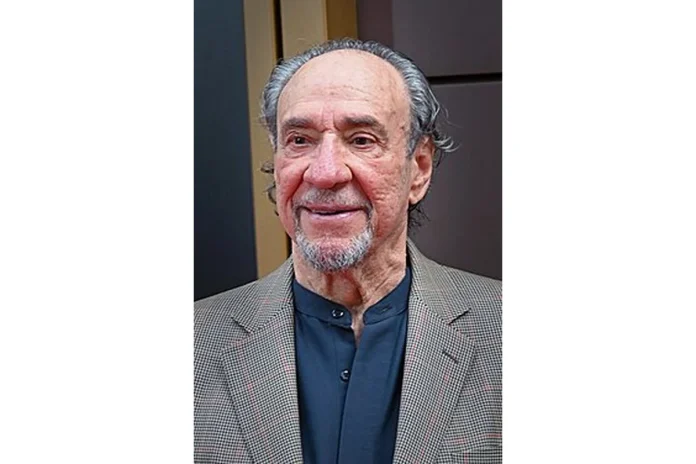
F. Murray Abraham Bio
F. Murray Abraham (born Murray Abraham; October 24, 1939) is an American actor whose career has unfolded across Broadway, film, and television for more than six decades. He first gained worldwide attention for his portrayal of Antonio Salieri in the drama Amadeus (1984), a performance that earned him the Academy Award for Best Actor. Abraham is equally admired for his deep body of stage work, which has earned him Obie Awards and a place in the American Theater Hall of Fame.
Although many remember him first for Amadeus, Abraham has built a remarkable catalog of supporting and leading roles in features such as Scarface (1983), The Name of the Rose (1986), Inside Llewyn Davis (2013), and The Grand Budapest Hotel (2014). His later television work on Homeland, Mythic Quest, Moon Knight, and The White Lotus has introduced his craft to new generations of viewers.
Early Life and Background
F. Murray Abraham was born Murray Abraham on October 24, 1939, in Pittsburgh, Pennsylvania. He is the son of Fahrid Abraham, an automotive mechanic, and Josephine Stello, an Italian American whose father had immigrated from Italy to work in the coal mines of Western Pennsylvania. His father emigrated with his family from Muqlus, a small village in the Valley of the Christians in Ottoman Syria, when he was five years old. Abraham’s paternal grandfather had served as a priest in the Greek Orthodox Church of Antioch, and the family kept close ties to that tradition as he grew up.
Abraham was raised in El Paso, Texas, where he and his two younger brothers, Robert and Jack, served as altar boys at the St. George Antiochian Orthodox Church. He attended Vilas Grammar School and graduated from El Paso High School in 1958. Before pursuing acting, he worked in the Farah Clothing factory owned by a Lebanese American family. He later added the initial “F.” to his stage name in honor of his father, Fahrid, explaining that the framed initial gave the name a presence he felt “Murray Abraham” alone did not have.
Path to Acting
Abraham’s introduction to performance came at Texas Western College, now the University of Texas at El Paso, where he was given the best actor award by Alpha Psi Omega for his portrayal of the Indian Nocona in Comanche Eagle during the 1959 to 1960 season. He continued his studies at the University of Texas at Austin before moving to New York City to study acting under Uta Hagen at HB Studio. To support himself, he took a series of backstage jobs while preparing for auditions in the early 1960s.
His professional debut came in 1965 with a Los Angeles stage production of Ray Bradbury’s The Wonderful Ice Cream Suit. Three years later, he made his Broadway debut in the 1968 play The Man in the Glass Booth. Through the early 1970s, Abraham built his resume with small film parts, including an usher in They Might Be Giants (1971) and a police officer in All the President’s Men (1976), while also earning steady work in television commercials and voice-overs, most famously as one of the costumed Fruit of the Loom characters.
F. Murray Abraham Career
Early Career (1965-1978)
During his first decade in the profession, Abraham concentrated on the stage, supplementing his theater income with character work in television and film. He appeared in the Broadway play The Man in the Glass Booth in 1968 and went on to take supporting parts in films such as The Prisoner of Second Avenue (1975), The Sunshine Boys (1975), The Ritz (1976), and The Big Fix (1978). He also took a role alongside Al Pacino in Sidney Lumet’s Serpico (1973) and guest-starred in series including Kojak.
Frustrated by the lack of substantial parts, Abraham gave up his commercial work in 1978. His wife, Kate Hannan, took a job as an assistant while he cared for their home, a period he has described as a humbling turning point that sharpened his resolve to pursue serious dramatic roles. The decision set the stage for the defining chapter of his career.
Breakthrough (1983-1986)
Abraham’s profile rose sharply when he played drug dealer Omar Suárez opposite Al Pacino in the gangster film Scarface (1983). The following year, he took the role of envious composer Antonio Salieri in Miloš Forman’s Amadeus (1984), a performance that won him the Academy Award for Best Actor as well as the Golden Globe Award for Best Actor in a Motion Picture, Drama. He was also nominated for the BAFTA Award for Best Actor in a Leading Role for the same film.
After his Oscar win, Abraham joined The Mirror Theater Ltd’s Mirror Repertory Company, where he worked with Geraldine Page in The Madwoman of Chaillot. He continued with a wide range of stage work, including productions of Uncle Vanya, Othello, Richard III, and Waiting for Godot. His next major film role was Bernardo Gui in Jean-Jacques Annaud’s The Name of the Rose (1986), playing opposite Sean Connery in a critical and commercial success.
Notable Works and Milestones
Beyond Amadeus, Abraham is widely recognized for The Name of the Rose (1986), Scarface (1983), and his later ensemble turns in The Grand Budapest Hotel (2014) and Inside Llewyn Davis (2013). His television work as black ops specialist Dar Adal on Showtime’s Homeland (2012-2018) brought him two Primetime Emmy nominations, while his portrayal of Bert Di Grasso in the second season of HBO’s The White Lotus (2022) earned Golden Globe and Emmy nominations. In 2015, he was inducted into the American Theater Hall of Fame, honoring decades of work on the New York stage.
F. Murray Abraham Award Nominations
Across his career, F. Murray Abraham has received nominations from every major American and British awards body. He earned a BAFTA Award nomination and a Golden Globe nomination in addition to his Oscar win for Amadeus, and he has been nominated four times for the Primetime Emmy Award, including for Homeland, The White Lotus, and a Screen Actors Guild Award ensemble nod. He has also received a Grammy Award nomination, four Screen Actors Guild Award nominations, and a Drama Desk Award nomination for Outstanding Featured Actor in a Play for It’s Only a Play.
F. Murray Abraham Awards Won
Abraham’s most celebrated honor is the Academy Award for Best Actor, which he won in 1985 for his performance in Amadeus. He also won the Golden Globe Award for Best Actor in a Motion Picture, Drama, for the same role. For his stage work, he received two Obie Awards, for Uncle Vanya in 1984 and for The Merchant of Venice in 2011. In 2015, he was inducted into the American Theater Hall of Fame, and in 2004 he received the Premio per gli Italiani nel Mondo from the Italian government.
F. Murray Abraham Family
Abraham was married to Kate Hannan for 60 years, from 1962 until her death on November 19, 2022. The couple had two children, and Abraham has spoken of his deep involvement in their upbringing, including a stretch in which he served as a house husband while his wife worked. He was raised alongside two younger brothers, Robert and Jack, both of whom died in separate car accidents. His father, Fahrid Abraham, was a Syrian immigrant and automotive mechanic, while his mother, Josephine Stello Abraham, was an Italian American whose own father had worked in the Western Pennsylvania coal mines.
Personal Life
Outside of acting, Abraham has long been involved in teaching, including a tenure as a theater instructor at Brooklyn College. He is known for his faith, having grown up as an Orthodox Christian and served as an altar boy in his youth, and he has spoken warmly of his later involvement with Quaker meetings and the First Presbyterian Church of New York. In his leisure time, he has narrated episodes of the PBS series Nature and the Richard Wagner Ring Cycle broadcasts from the Metropolitan Opera, roles that reflect his deep affinity for classical music and storytelling.