
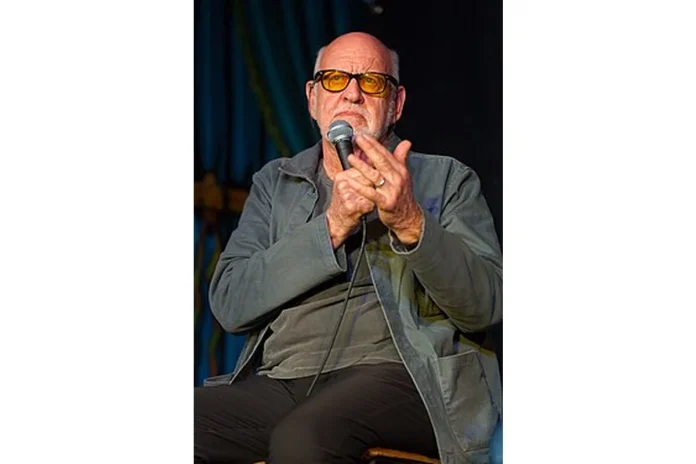
Frank Oz Bio
Frank Richard Oznowicz, known professionally as Frank Oz, is a British-born Belgian-American puppeteer, filmmaker, and actor. Born on May 25, 1944, in Hereford, Herefordshire, England, Oz became one of the most influential puppeteers in entertainment history. He is best known for his longtime collaboration with Jim Henson, bringing to life iconic Muppet characters including Miss Piggy, Fozzie Bear, Animal, and Sam Eagle on The Muppet Show, as well as Cookie Monster, Bert, and Grover on Sesame Street. His distinctive voice work also brought the Jedi Master Yoda to life in the Star Wars film series.
Beyond puppeteering, Oz established himself as a respected director in Hollywood. His directorial credits span both family entertainment and adult comedy, including The Dark Crystal, Little Shop of Horrors, Dirty Rotten Scoundrels, What About Bob?, In & Out, Bowfinger, and The Stepford Wives. His career has evolved from puppet performance to filmmaking and acting, making him a multifaceted talent in the entertainment industry for over six decades.
Early Life and Background
Frank Oznowicz was born to parents who were both professional puppeteers. His father, Isadore Oznowicz, was of Dutch-Polish Jewish heritage, while his mother, Frances Ghevaert, was ethnically Flemish Catholic. The family had moved to England when his father joined the Royal Netherlands Motorized Infantry Brigade. During World War II, some of his parents’ puppets, including one created to mock Adolf Hitler, survived and were later exhibited at the Contemporary Jewish Museum and the Dutch National Archives.
The Oznowicz family left England when Frank was just six months old, first living in his mother’s native Belgium until he was five years old. In 1951, the family relocated to the United States, settling briefly in Montana before permanently moving to Oakland, California. This international upbringing in Europe and America exposed Oz to diverse cultural influences that would later inform his creative work in puppetry and film.
During his teenage years in Oakland, Oz developed his puppetry skills at Children’s Fairyland, working as an apprentice puppeteer with the Vagabond Puppets. This production, run by the Oakland Recreation Department, was where he first met Jim Henson. Under the mentorship of Lettie Connell, Oz honed his craft and developed the foundational skills that would launch his career. He attended Oakland Technical High School and later Oakland City College, though his growing passion for puppetry would soon take precedence over other academic pursuits.
Path to Celebrity
Oz began his professional career in 1961 while still a teenager, performing with the Vagabond Puppets at Children’s Fairyland in Oakland. This early experience provided him with valuable hands-on training in puppet performance and character development. His talent caught the attention of Jim Henson, and at the age of 19, Oz moved to New York in 1963 to join the Jim Henson Company. This opportunity marked the beginning of a creative partnership that would define his early career and revolutionize puppetry on television.
Working alongside Henson, Oz quickly became one of the primary creative forces behind the Muppets. He developed and performed several iconic characters that became beloved by generations of viewers. On Sesame Street, which premiered in 1969, Oz brought Cookie Monster, Bert, and Grover to life. His chemistry with Jim Henson in performances became legendary, with the two often pairing their characters in memorable duets and sketches. This collaborative relationship extended beyond performance to include creative development of new characters and storylines.
The success of Sesame Street led to the creation of The Muppet Show in 1976, where Oz’s characters Miss Piggy, Fozzie Bear, Animal, and Sam Eagle became central to the program’s appeal. Oz performed in over 75 productions throughout his Muppet career, including television specials, feature films, and countless public appearances. Although he eventually transitioned to focus on directing, Oz continued to perform his Sesame Street characters on a yearly basis through 2012, demonstrating his enduring commitment to the art form that launched his career.
Frank Oz Career
Early Career (1961–1981)
After joining Jim Henson in 1963, Oz spent nearly two decades as one of the principal Muppet performers. His early work included appearances on The Tonight Show, The Ed Sullivan Show, and various television commercials. As Sesame Street gained popularity in the 1970s, Oz’s characters became household names. Cookie Monster became one of the show’s most recognizable figures, while Bert and Grover provided comic relief and educational content for young viewers. This period established Oz as a master puppeteer with an exceptional ability to create distinct personalities through voice and movement.
The success of the Muppets led to opportunities in feature film production. Oz performed in The Muppet Movie (1979) and The Great Muppet Caper (1981), helping to bring the Muppets to theatrical audiences. During this time, George Lucas approached Jim Henson about performing the character of Yoda for The Empire Strikes Back. Henson, occupied with other projects, recommended Oz for the role. Oz became both the puppeteer and voice of Yoda, beginning a collaboration with the Star Wars franchise that would span more than four decades and include multiple films across the original prequel and sequel trilogies.
Breakthrough (1982–2001)
Oz made his directorial debut with The Dark Crystal in 1982, co-directing the film with Jim Henson. This fantasy film featured the most advanced puppets ever created for a movie and demonstrated Oz’s ability to handle complex, large-scale productions. He also performed as Aughra and the Skeksis Chamberlain in the film. The Dark Crystal established Oz as a filmmaker capable of creating immersive worlds through puppetry and visual storytelling, setting the stage for his transition from performer to director.
In 1984, Oz directed The Muppets Take Manhattan, his first solo directorial effort for which he also received a screenwriting credit. The following year, he directed Little Shop of Horrors, a musical adaptation of the off-Broadway hit. This film marked Oz’s first directorial project that did not involve Jim Henson directly and showcased his ability to work with live actors. The production featured a complex animatronic plant that required up to 60 puppeteers to operate at its full size. Little Shop of Horrors demonstrated Oz’s versatility as a director and opened doors to projects beyond the Muppet universe.
Notable Works and Milestones
Throughout the late 1980s and 1990s, Oz directed a series of successful comedies that solidified his reputation in Hollywood. Dirty Rotten Scoundrels (1988) starred Steve Martin and Michael Caine in a con-artist comedy that became a commercial success. What About Bob? (1991) featured Bill Murray and Richard Dreyfuss in a comedy about a manipulative patient and his therapist. In & Out (1997) starred Kevin Kline in a story about a high school teacher whose sexual orientation is revealed before his wedding. The film addressed social issues while maintaining a comedic tone, showcasing Oz’s ability to balance entertainment with meaningful content.
Oz continued his directorial work into the 2000s with Bowfinger (1999), a Hollywood satire starring Steve Martin and Eddie Murphy; The Score (2001), a heist film featuring Robert De Niro, Edward Norton, and Marlon Brando; The Stepford Wives (2004), a remake of the 1975 thriller; and Death at a Funeral (2007), a black comedy. These films demonstrated Oz’s range across different genres and his skill in working with ensemble casts of accomplished actors. His semi-retirement from puppet performance in 2001 allowed him to focus entirely on his filmmaking career.
Frank Oz Award Nominations
Throughout his distinguished career, Frank Oz has received recognition from various industry organizations for his contributions to film, television, and puppetry. His work across multiple disciplines has garnered acknowledgment from peers and critics alike. While specific nomination totals vary by source and award body, Oz’s innovative approach to puppetry and his successful transition to directing have earned him consideration from major industry institutions including the Academy of Science Fiction, Fantasy & Horror Films, the Directors Guild of America, and various film critics associations.
Frank Oz Awards Won
Frank Oz has received several prestigious awards honoring his creative achievements. His film The Dark Crystal earned a Saturn Award for Best Fantasy Film. Little Shop of Horrors received multiple accolades for its innovative blend of musical theater and film. Oz’s contributions to puppetry and entertainment have been recognized by organizations such as the Television Academy and various international film festivals. His documentary Muppet Guys Talking: Secrets Behind the Show the Whole World Watched (2017) provided an intimate look at the creative process behind the Muppets and has been celebrated by fans and industry professionals for preserving an important chapter of entertainment history.
Frank Oz Family
Frank Oz was born to Isadore Oznowicz and Frances Ghevaert, both of whom were puppeteers. His father was of Dutch-Polish Jewish heritage and worked as a window trimmer after the family settled in the United States. His mother was of Flemish Catholic background. The family’s puppetry tradition influenced Oz’s career path from an early age, and some of his parents’ original puppets from World War II have been preserved and displayed in museums. Oz has four children from his marriages, though he maintains privacy regarding details about his family life.
Personal Life
Oz married Robin Garsen in 1979, and the couple divorced in 2005. In 2011, he married Victoria Labalme, a performing artist and the daughter of historian Patricia Hochschild Labalme and designer George Labalme Jr. Throughout his adult life, Oz has maintained residences in both England and the United States, living in England for nine years before settling in Manhattan, New York, where he currently resides. Despite his decades-long career in the public eye, Oz has kept his personal life relatively private, focusing public attention on his creative work rather than his private affairs.