
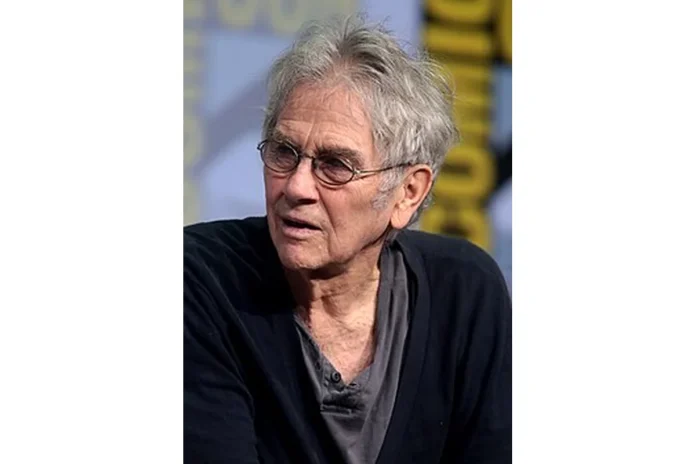
Hampton Fancher Bio
Hampton Lansden Fancher, born on July 18, 1938, is an American actor, screenwriter, producer, and director whose career in film and television has spanned more than six decades. He is best known for co-writing the landmark 1982 science fiction film Blade Runner and its long-awaited sequel Blade Runner 2049, released in 2017. Fancher also wrote and directed the 1999 drama The Minus Man, which won the Special Grand Prize of the Jury at the Montreal World Film Festival. In addition to his work behind the camera, he has acted in more than fifty films and television productions.
Early Life and Background
Hampton Lansden Fancher was born in East Los Angeles, California. His mother was of Mexican heritage, and his father was an English-American physician. Growing up in this vibrant Southern California community gave him early exposure to storytelling and performance traditions from multiple cultures.
At the age of fifteen, Fancher ran away to Spain with the dream of becoming a flamenco dancer, and during this period he adopted the alias Mario Montejo. The adventurous spirit of his youth carried over into his later work in Hollywood, where he would once again reinvent himself as a writer and filmmaker.
Path to Celebrity
Fancher’s entertainment career began in 1959 with a guest appearance in the ABC Western television series The Rebel, in an episode titled “Misfits.” He soon became a familiar face on American television, playing Deputy Lon Gillis in seven episodes of the ABC Western Black Saddle alongside Peter Breck. Throughout the early 1960s, he made guest appearances on a wide range of popular Westerns, including Have Gun, Will Travel, Maverick, Cheyenne, and Bonanza.
He also appeared in feature films such as the 1961 drama Parrish and the 1962 romance Rome Adventure, both starring Troy Donahue. In 1965, he played Hamp Fisher in the long-running courtroom series Perry Mason. These early television and film roles established Fancher as a reliable character actor before he transitioned into screenwriting in the late 1970s.
Hampton Fancher Career
Early Career (1959-1976)
Fancher’s earliest screen credit came in 1959 with his appearance on The Rebel, marking the beginning of a busy period in television Westerns. He built a steady résumé through recurring and guest roles on series such as Black Saddle, Stagecoach West, Outlaws, Lawman, and Temple Houston, and he appeared in two early 1960s Troy Donahue films. Over time, he acted in more than fifty movies and television shows, gradually developing a serious interest in the craft of screenwriting.
Although Fancher showed an interest in writing for the screen during this period, the transition did not happen quickly. It was not until 1977 that he moved fully into screenwriting, setting the stage for the project that would define his career.
Breakthrough (1977-1999)
In 1975, Fancher attempted to option Philip K. Dick’s 1968 science fiction novel Do Androids Dream of Electric Sheep? but was initially unable to secure the rights. He eventually sent his friend Brian Kelly to negotiate directly with the author, and Dick agreed. Fancher was then brought on to write the screenplay, with Michael Deeley later joining as producer. This work made Fancher the executive producer of what would become Blade Runner (1982).
Creative disagreements soon surfaced between Fancher and the film’s eventual director, Ridley Scott, who felt that the original script did not sufficiently explore the film’s dystopian world. The production crew nicknamed Fancher “Happen Faster” because his rewriting process was too slow. Despite these tensions, the film was released in 1982 as Blade Runner and became a defining entry in the science fiction genre.
Following Blade Runner, Fancher wrote the screenplay for The Mighty Quinn (1989), a thriller starring Denzel Washington. He later wrote and directed The Minus Man (1999), starring Owen Wilson, which won the Special Grand Prize of the Jury at the Montreal World Film Festival. He also appeared in a cameo role in the 2009 independent film Tonight at Noon, directed by Michael Almereyda and starring Rutger Hauer.
Notable Works and Milestones
Fancher’s signature contribution to cinema is the screenplay for Blade Runner (1982), a neo-noir science fiction classic that has influenced generations of filmmakers. He later co-wrote, with Michael Green, the screenplay for Blade Runner 2049 (2017), the critically acclaimed sequel directed by Denis Villeneuve. In 2019, Fancher published The Wall Will Tell You, a screenwriting manual drawn from his decades of experience in the film industry.
Hampton Fancher Award Nominations
There is limited publicly verified information regarding specific award nominations for Hampton Fancher. His most widely recognized recognition came in the form of festival prizes rather than traditional nominations.
Hampton Fancher Awards Won
Hampton Fancher won the Special Grand Prize of the Jury at the Montreal World Film Festival for his 1999 film The Minus Man, which he both wrote and directed. This festival award stands as one of the most prominent honors of his career, recognizing the film as a distinctive directorial debut.
Hampton Fancher Family
Hampton Fancher was born to a Mexican mother and an English-American father who worked as a physician. He had a sister, and the family lived in East Los Angeles, California, where he spent his early years before embarking on his artistic path. Limited public information is available regarding his parents’ full names and any additional family members.
Personal Life
Fancher was married to Joann McNabb, and the couple later divorced. He was then married to actress Sue Lyon from 1963 to 1965. During his early acting years, he had relationships with several women in the entertainment industry, including Barbara Hershey and Teri Garr. In the early 1980s, he lived outside of Los Angeles in Topanga Canyon. His life was the subject of the documentary Escapes, directed by Michael Almereyda and executive-produced by Wes Anderson.