
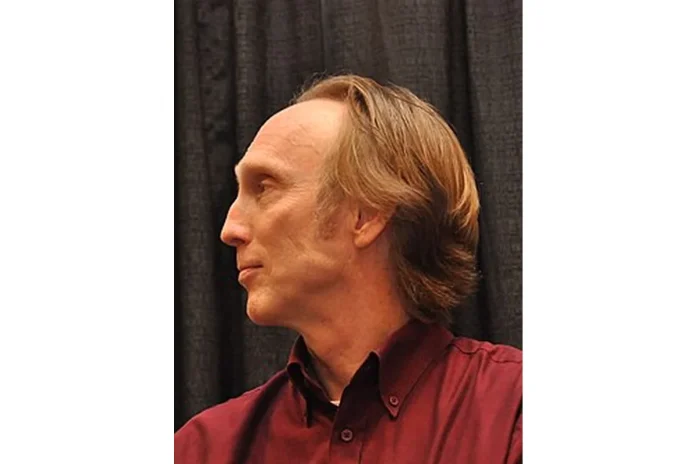
Henry Selick Bio
Charles Henry Selick Jr., known professionally as Henry Selick, is an American filmmaker and stop-motion animator celebrated for his imaginative, hand-crafted feature films. Born on November 30, 1952, in Glen Ridge, New Jersey, he has built a distinctive body of work that blends whimsical storytelling with darker, more atmospheric imagery. Selick is best known for directing The Nightmare Before Christmas (1993), James and the Giant Peach (1996), Monkeybone (2001), Coraline (2009), and Wendell & Wild (2022). His 2009 film Coraline earned him an Academy Award nomination for Best Animated Feature, cementing his reputation as a leading voice in contemporary stop-motion animation.
Throughout a career spanning from the mid-1970s to the present, Selick has worked across commercials, studio features, and independent productions. He has collaborated with designers and voice talents including Joe Ranft, helping shape a recognizable visual style that mixes fairy-tale charm with gothic sensibility. His influence reaches well beyond his own films, having mentored and inspired animators who continue to push the boundaries of the medium.
Early Life and Background
Charles Henry Selick Jr. was born on November 30, 1952, in Glen Ridge, New Jersey. He is the son of Melanie Molan and Charles H. Selick. After his birth, the family settled in Rumson, where Selick spent much of his childhood. From a young age he filled notebooks with drawings, finding an early outlet for the visual imagination that would later define his career.
His fascination with animation sparked during childhood screenings of Lotte Reiniger’s stop-motion film The Adventures of Prince Achmed and the animated creatures Ray Harryhausen created for The 7th Voyage of Sinbad. Those viewings left a lasting impression, pointing him toward a future in moving pictures rather than the sciences he initially studied. Selick graduated from Rumson-Fair Haven Regional High School in 1970, ready to pursue art on a larger stage.
Selick began his higher education studying science at Rutgers University in New Brunswick for a year before switching to an art major at Syracuse University. He later enrolled at the California Institute of the Arts, becoming one of the first students in the new Disney character animation program. At CalArts he studied experimental animation techniques under Jules Engel, and his student films Phases and Tube Tales both won awards before he graduated in 1977.
Path to Stop-Motion Direction
After completing his studies, Selick joined Walt Disney Studios as an in-betweener and animator trainee, contributing to films such as Pete’s Dragon and The Small One. Working at Disney introduced him to a circle of talented filmmakers and animators, including a young Tim Burton, with whom he would later collaborate. His time in the studio system gave him a foundation in traditional animation craft before he turned his attention fully toward stop-motion work.
Selick cut his teeth on commercial projects, including stop-motion animation for several Pillsbury Doughboy advertisements. That commercial experience sharpened his ability to manage tight production schedules and meticulous puppet work, skills that would prove essential when he transitioned to feature films. His growing reputation for inventive visual storytelling soon caught the attention of producers willing to back ambitious stop-motion projects.
Henry Selick Career
Early Career (1975–1992)
Henry Selick’s professional career began in 1975, soon after his training at CalArts. He took on animation and design duties at Disney before moving into commercial work, where his stop-motion animation for the Pillsbury Doughboy became a calling card of sorts. Throughout the late 1970s and 1980s he built a portfolio of short films and commercial pieces, including the preserved works Phases, Seepage, and Tube Tales.
By the late 1980s, Selick was preparing his first feature-length directorial effort. His growing relationship with Tim Burton, then a rising creative force at Disney, set the stage for a collaboration that would introduce Selick to a global audience and reframe the possibilities of stop-motion storytelling.
Breakthrough (1993–1999)
Selick’s breakthrough arrived with The Nightmare Before Christmas in 1993, a Disney-produced stop-motion feature with Tim Burton serving as producer. The film became a cultural phenomenon, praised for its dark whimsy, memorable characters, and pioneering animation. Selick’s command of puppet performance and atmospheric lighting established him as a major directorial talent in a medium few studios had attempted at that scale.
Building on that success, Selick directed James and the Giant Peach in 1996, a hybrid of live action and stop-motion based on the beloved Roald Dahl novel. The film further demonstrated his flair for blending storytelling techniques and visual textures. A planned follow-up, the Disney-produced stop-motion project Toots and the Upside Down House, was cancelled after the box-office disappointment of James and the Giant Peach, redirecting Selick’s career toward new studios and collaborators.
Mid-Career (2000–2009)
In 2001 Selick released Monkeybone, a live-action and stop-motion adaptation of the underground comic Dark Town by Kaja Blackley, produced by 20th Century Fox. The film underperformed commercially and critically, and Selick later expressed dissatisfaction with the final product, pledging never to direct another live-action feature again. He also contributed creature animation to Wes Anderson’s The Life Aquatic with Steve Zissou and signed on as animation director for Fantastic Mr. Fox before departing to pursue another opportunity.
That opportunity was Coraline, released in 2009 through the Portland-based studio Laika. Adapted from Neil Gaiman’s novella, the film was the first-ever stereoscopic 3D stop-motion animated feature and earned widespread critical praise. Coraline was nominated for Best Animated Feature at the Academy Awards, the BAFTA Awards, and the Golden Globe Awards, marking the highest-profile recognition of Selick’s career to that point.
Recent Work (2010–Present)
Selick left Laika in 2009 and soon signed a long-term deal with Pixar and The Walt Disney Company to produce stop-motion features exclusively through his new studio, Cinderbiter Productions. His first project under that deal, originally titled ShadeMaker and later renamed The Shadow King, was canceled by Disney in 2012 after significant development spending. In 2022 Selick revealed he had reacquired the rights to the project and may revive it in another form.
After parting ways with Disney, Selick turned to other adaptations, including a planned live-action take on Adam Gidwitz’s children’s novel A Tale Dark and Grimm. In 2015 it was reported that he was developing Wendell & Wild, an original stop-motion feature with Jordan Peele and Keegan-Michael Key. Netflix picked up the film in 2018 and released Wendell & Wild on October 28, 2022. Selick has continued exploring new material, with a stop-motion adaptation of Neil Gaiman’s The Ocean at the End of the Lane announced in June 2024.
Notable Works and Milestones
Selick’s signature works include The Nightmare Before Christmas, James and the Giant Peach, Coraline, and Wendell & Wild, each of which expanded the vocabulary of stop-motion feature animation. His Academy Award nomination for Coraline remains a defining milestone, reflecting both critical respect and audience affection for his singular style.
Henry Selick Award Nominations
Henry Selick has earned prominent nominations across his career, most notably for his stop-motion feature Coraline in 2010. That year, Coraline was nominated for Best Animated Feature at the Academy Awards and for Best Animated Film at the BAFTA Awards, recognizing Selick’s leadership on one of the era’s most distinctive animated films.
Henry Selick Awards Won
Henry Selick’s verified major award wins are limited in number. His student films Phases and Tube Tales won awards during his time at CalArts, and several of his short films were preserved by the Academy Film Archive in 2012, a mark of institutional recognition for his contributions to animation history.
Upcoming Projects
Looking toward 2025 and beyond, Selick is developing a stop-motion adaptation of Neil Gaiman’s 2013 novel The Ocean at the End of the Lane, announced in June 2024. He has also spoken publicly about reviving The Shadow King, the long-gestating project he reacquired from Disney, potentially as a graphic novel. Additional reported work includes a Little Nightmares television adaptation for which he was attached to direct the pilot and additional episodes.
Henry Selick Family
Henry Selick is the son of Melanie Molan and Charles H. Selick. He was raised in Rumson, New Jersey, after his birth in nearby Glen Ridge, in a household that nurtured his early interest in drawing and visual storytelling.
Personal Life
Selick has kept much of his personal life private, and limited verified public details are available about his partners or family beyond his parents. His professional focus has remained squarely on stop-motion animation, where he continues to be regarded as one of the form’s most inventive contemporary practitioners.