Ian McKellen Bio
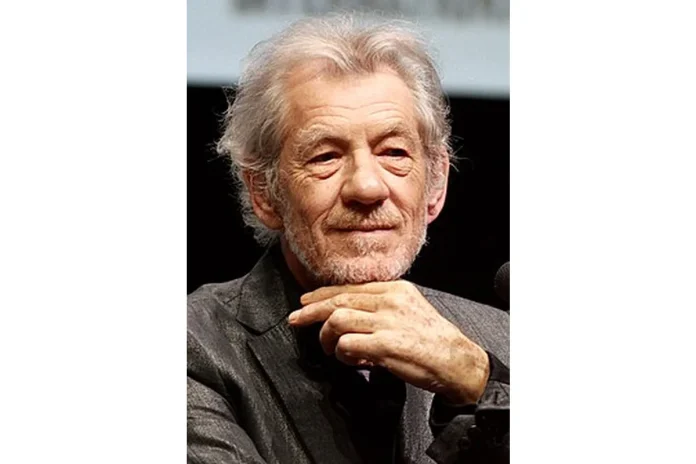
Sir Ian Murray McKellen, born on 25 May 1939 in Burnley, Lancashire, England, is one of the most celebrated English actors of his generation. Over a career that has stretched across more than six decades, he has built a remarkable reputation on both stage and screen, moving easily between Shakespearean drama, classic theatre, popular fantasy, and modern blockbusters. He is widely regarded as a British cultural icon and was knighted by Queen Elizabeth II in 1991 for his contributions to the performing arts. His film work has introduced him to global audiences through memorable roles in major franchises, while his stage performances have set a benchmark for classical acting.
Beyond his acting career, McKellen is well known as a prominent advocate for LGBT rights and equality, a cause he has championed publicly since coming out in 1988. He co-founded Stonewall, one of the United Kingdom’s leading LGBT rights organizations, and continues to support a wide range of charities and cultural institutions. With two Academy Award nominations, a Tony Award, and multiple Olivier Awards to his name, he stands among the most honored British actors of the modern era.
Early Life and Background
Ian Murray McKellen was born on 25 May 1939 in Burnley, Lancashire, the son of Margery Lois and Denis Murray McKellen. He had an older sister named Jean, who later became involved in amateur theatre. When he was four months old, shortly before the Second World War began, his family moved to Wigan, where they lived until Ian was twelve. The family later relocated to Bolton in 1951 after his father received a promotion. His father was a civil engineer and lay preacher of Protestant Irish and Scottish descent, and both of his grandfathers were preachers, giving McKellen a strongly Christian, though non-orthodox, upbringing.
McKellen’s early years were shaped by both hardship and creative encouragement. His mother died of breast cancer when he was twelve, and his father passed away when he was twenty-five. Despite these losses, his parents nurtured his early interest in theatre, taking him to see a production of Peter Pan at the Manchester Opera House when he was only three years old. A year later he received a fold-away Victorian toy theatre as a Christmas gift, complete with cardboard scenery and figures. His sister Jean later introduced him to his first Shakespeare play, Twelfth Night, performed by the amateurs of Wigan Little Theatre, sparking a lifelong devotion to the stage.
McKellen attended Bolton School, where he first discovered acting through the Bolton Little Theatre. By the age of nine he was already performing, and he became deeply involved in local productions. In 1958, at eighteen, he won a scholarship to the University of Cambridge, where he studied English literature at St Catharine’s College. While at Cambridge he joined the Marlowe Society and appeared in twenty-three plays over three years, giving early performances that have since become legendary, including Justice Shallow in Henry IV alongside Trevor Nunn and Derek Jacobi.
Path to Acting
McKellen made his first professional stage appearance in 1961 at the Belgrade Theatre in Coventry, playing Roper in A Man for All Seasons. He spent four years working in regional repertory theatres before making his West End debut in A Scent of Flowers in 1965. That same year, he joined Laurence Olivier’s National Theatre Company at the Old Vic, an experience that opened the door to leading roles at the Chichester Festival Theatre. In 1969, his breakthrough Shakespearean performances arrived when he played the title roles in Richard II and Christopher Marlowe’s Edward II at the Edinburgh Festival, the latter stirring considerable debate for its bold portrayal of the homosexual king.
During the 1970s, McKellen became a central figure at both the Royal Shakespeare Company and the Royal National Theatre. He played leading Shakespearean roles including Macbeth, Iago, Romeo, and King Leontes, often working alongside celebrated directors such as Trevor Nunn and actors such as Judi Dench. In 1979, he transferred to Broadway in Peter Shaffer’s Amadeus, taking on the role of Antonio Salieri opposite Tim Curry as Mozart and Jane Seymour as Constanze. His performance earned widespread praise and led to his first Tony Award win in 1981.
Throughout this period, McKellen also began building his film career with appearances in A Touch of Love (1969), Alfred the Great (1969), Priest of Love (1981), The Keep (1983), and Plenty (1985). Although his film work was modest at first, his growing reputation on the British stage set the stage for his eventual rise to international film stardom.
Ian McKellen Career
Early Career (1961–1985)
McKellen’s earliest professional years were anchored in the British theatre. From his 1961 debut at the Belgrade Theatre through the late 1960s, he built a reputation as a thoughtful and commanding performer. His West End debut in 1965 and his invitation to join Laurence Olivier’s National Theatre Company that same year marked his arrival as a major talent. One of his earliest television appearances came in 1966, when he played the title role in the BBC’s adaptation of David Copperfield, a production that drew twelve million viewers at the time of its original broadcast.
During this era, he won early Olivier Awards for his roles in Pillars of the Community (1977), The Alchemist (1978), Bent (1979), and Wild Honey (1984), confirming his standing as one of Britain’s leading stage actors. His first leading film role came in 1980 as the writer D. H. Lawrence in Priest of Love, and he continued to take on diverse projects through the mid-1980s, including the horror film The Keep (1983) and the drama Plenty (1985), the latter co-starring Meryl Streep.
Breakthrough (1986–2000)
McKellen’s transition from respected stage actor to global film star gathered momentum in the 1990s. In 1995, he co-wrote and starred in a striking modern reimagining of Shakespeare’s Richard III, set against a 1930s fascist backdrop. The performance earned him BAFTA and Golden Globe nominations for Best Actor, a European Film Award for Best Actor, and a BAFTA nomination for Best Adapted Screenplay. The same year, he earned an Olivier Award for Best Actor for his touring stage version of Richard III.
In 1996, he portrayed Tsar Nicholas II in the HBO film Rasputin: Dark Servant of Destiny, winning the Golden Globe Award for Best Supporting Actor in a Series, Miniseries, or Television Film and earning a Primetime Emmy nomination. His career reached a defining moment in 1998 when he starred as James Whale in Gods and Monsters, a performance that brought him his first Academy Award nomination for Best Actor. He followed this success with his casting as the supervillain Magneto in the 2000 film X-Men, opening the door to major Hollywood franchises.
Throughout this breakthrough period he also played roles in Six Degrees of Separation (1993), The Ballad of Little Jo (1993), Last Action Hero (1993), Restoration (1995), and Apt Pupil (1998), demonstrating a remarkable range across drama, comedy, thriller, and historical film.
2000–2011: International Stardom
The early 2000s cemented McKellen’s place among the most recognizable actors in the world. He returned as Magneto in X2: X-Men United (2003) and X-Men: The Last Stand (2006), while also taking on the role of Gandalf in Peter Jackson’s epic trilogy The Lord of the Rings: The Fellowship of the Ring (2001), The Lord of the Rings: The Two Towers (2002), and The Lord of the Rings: The Return of the King (2003). For The Fellowship of the Ring, he won the Screen Actors Guild Award for Best Supporting Actor and received an Academy Award nomination for Best Supporting Actor.
Alongside these blockbusters, he continued working across genres. He played Sir Leigh Teabing in The Da Vinci Code (2006), lent his voice to Iorek Byrnison in The Golden Compass (2007), narrated Stardust (2007), and made a memorable cameo as himself in Ricky Gervais’s Extras, earning an Emmy nomination. On stage, he returned to Broadway in The Dance of Death (2001) alongside Helen Mirren and later starred in productions of King Lear and The Seagull with the Royal Shakespeare Company. In August 2012, he appeared as Prospero from The Tempest during the opening ceremony of the London Paralympic Games.
Notable Works and Milestones
McKellen’s signature works include his portrayal of Gandalf across The Lord of the Rings and The Hobbit trilogies, his role as Magneto in the X-Men film series, and his acclaimed performance as James Whale in Gods and Monsters. His theatrical milestones include a Tony Award for Amadeus, multiple Olivier Awards for Shakespearean and modern roles, and celebrated stage productions of King Lear and Waiting for Godot alongside Patrick Stewart.
Since 2012: Career Expansion
McKellen reprised his role as Gandalf in Peter Jackson’s Hobbit trilogy, beginning with The Hobbit: An Unexpected Journey (2012) and continuing through The Hobbit: The Battle of the Five Armies (2014). He returned once more as Magneto in The Wolverine (2013) and X-Men: Days of Future Past (2014). On British television, he co-starred with Derek Jacobi in the ITV sitcom Vicious from 2013 to 2016, playing an elderly gay couple navigating later life together.
His film work during this period included a starring role as an aging Sherlock Holmes in Mr. Holmes (2015), a performance that drew wide critical praise. He played Cogsworth in Disney’s live-action Beauty and the Beast (2017), which grossed 1.2 billion dollars worldwide, and reunited with director Bill Condon for the mystery thriller The Good Liar (2019) opposite Helen Mirren. On stage, he returned to King Lear at the Chichester Festival Theatre in 2017 and toured a celebrated one-man show, Ian McKellen on Stage: With Tolkien, Shakespeare, Others and YOU, to celebrate his 80th birthday in 2019.
Ian McKellen Award Nominations
Ian McKellen has received numerous award nominations throughout his career, reflecting his standing as one of the most respected actors of his generation. He earned two Academy Award nominations: one for Best Actor for Gods and Monsters (1999) and another for Best Supporting Actor for The Lord of the Rings: The Fellowship of the Ring (2001). He has also received multiple nominations at the Primetime Emmy Awards, including for Outstanding Supporting Actor in a Limited Series or Movie for Rasputin: Dark Servant of Destiny (1996). Additional nominations include BAFTA recognition for his film work and recognition from the Olivier Awards for his stage performances across several decades.
Ian McKellen Awards Won
McKellen has won several of the most prestigious awards in film, stage, and television. He received a Tony Award for Best Actor in a Play for his portrayal of Antonio Salieri in Amadeus in 1981. He has also won multiple Laurence Olivier Awards for his stage work, including one for Best Actor for Richard III in 1991. On television, he won the Golden Globe Award for Best Supporting Actor in a Series, Miniseries, or Television Film for Rasputin: Dark Servant of Destiny (1996). He also received the Screen Actors Guild Award for Best Supporting Actor in a Motion Picture for The Lord of the Rings: The Fellowship of the Ring.
Ian McKellen Family
McKellen was born to Margery Lois and Denis Murray McKellen. His father worked as a civil engineer and lay preacher, while his mother died of breast cancer when Ian was twelve years old. His father passed away when McKellen was twenty-five. He had an older sister, Jean, who was active in amateur theatre throughout her life and introduced him to his first Shakespeare play as a child.
Personal Life
McKellen came out as gay in 1988 during a BBC Radio programme, motivated in part by his opposition to Section 28. He has since been a leading advocate for LGBT rights, co-founding Stonewall and serving as a patron of multiple LGBT organizations. He was in a relationship with Brian Taylor from 1964 to 1972 and with director Sean Mathias from 1978 to 1988. As of recent records, he has resided in Narrow Street, Limehouse, in England for more than twenty-five years. He is an atheist, follows a mainly pescetarian diet, and was diagnosed with prostate cancer in 2006, which has remained contained without need for treatment.