
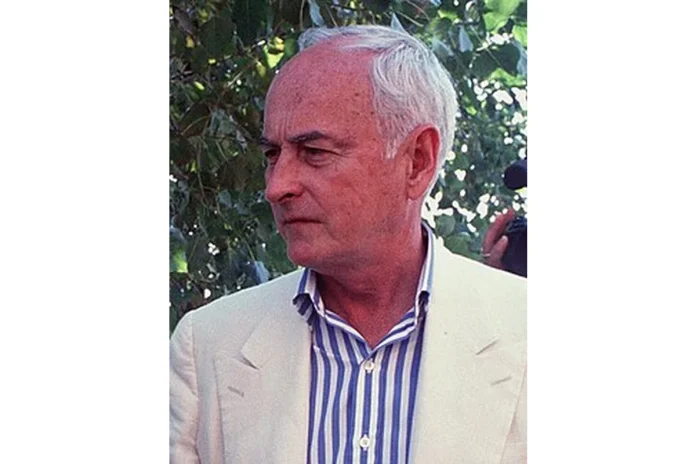
James Ivory Bio
James Francis Ivory (born Richard Jerome Hazen on June 7, 1928) is an American film director, screenwriter, and producer. He co-founded Merchant Ivory Productions with Indian film producer Ismail Merchant and worked alongside screenwriter Ruth Prawer Jhabvala, forming one of the most celebrated creative partnerships in independent cinema. The trio became known for elegant literary adaptations and refined period dramas that brought classic novels to the screen with sophistication and depth. Over a career spanning more than six decades, Ivory has earned widespread critical acclaim, multiple Academy Award nominations, and an Academy Award for Best Adapted Screenplay.
Early Life and Background
James Ivory was born Richard Jerome Hazen on June 7, 1928, in Berkeley, California. He was adopted shortly after birth by Hallie Millicent de Loney and Edward Patrick Ivory, a sawmill operator, and the couple renamed him James Francis Ivory. Ivory grew up in Klamath Falls, Oregon, where he spent his childhood and adolescence in a small-town setting that would later inform his autobiographical film Mr. and Mrs. Bridge. His early years in the Pacific Northwest shaped his quiet observational style and his appreciation for the emotional textures of everyday life.
Ivory attended the University of Oregon, where he earned a degree in fine arts in 1951. The university later honored him with the Lawrence Medal, its College of Design’s highest honor for graduates, and his personal papers are held by the UO Libraries’ Special Collections and University Archives. In 2019, the university also recognized him as an honorary degree recipient. His education in the arts laid the foundation for his move into filmmaking and visual storytelling.
Following his undergraduate studies, Ivory enrolled at the University of Southern California School of Cinematic Arts, where he directed the short film Four in the Morning in 1953. He went on to write, photograph, and produce Venice: Theme and Variations, a half-hour documentary that served as his master’s thesis film in cinema. The New York Times named Venice: Theme and Variations one of the ten best non-theatrical films of 1957, and Ivory graduated from USC in 1957 with a master’s degree.
Path to Filmmaking
Ivory’s early career in the 1950s centered on documentary work, including the film The Sword and the Flute, which would eventually lead him to his most important professional partnership. In 1959, he met Indian film producer Ismail Merchant at a screening of that documentary in New York City, and the two recognized a shared creative sensibility. In May 1961, Ivory and Merchant formally established Merchant Ivory Productions, beginning a collaboration that would last until Merchant’s death in 2005.
The early years of Merchant Ivory Productions were shaped by modestly budgeted films made in India, including The Householder (1963), Shakespeare Wallah (1965), and Bombay Talkie (1970). These films allowed Ivory to develop his distinctive approach to literary adaptation and character-driven storytelling. His work during this period earned notice from international critics and laid the groundwork for the company’s transition to larger productions adapted from classic novels.
Ivory’s professional and personal partnership with Merchant has been recognized by the Guinness Book of World Records as the longest partnership in independent cinema history. Together with Ruth Prawer Jhabvala, who wrote the screenplays for twenty-two of their productions, they became known as a three-person creative team. Their body of work, including literary adaptations of authors such as E. M. Forster and Henry James, established a new standard for intelligent, beautifully crafted cinema.
James Ivory Career
Early Career (1953-1978)
James Ivory’s first notable film was the short Four in the Morning (1953), made while he was a student at the University of Southern California. His master’s thesis documentary Venice: Theme and Variations was named one of the ten best non-theatrical films of 1957 by The New York Times, marking an early critical achievement. During this period Ivory also produced The Sword and the Flute, the documentary that would introduce him to Ismail Merchant.
From 1961 to 1978, Ivory directed a series of films through Merchant Ivory Productions, beginning with The Householder and including Shakespeare Wallah, Bombay Talkie, and The Europeans (1979). These early projects earned international festival recognition and helped the company build a reputation for thoughtful, literary filmmaking. The success of these modest productions set the stage for Merchant Ivory’s breakthrough into larger adaptations of classic novels.
Breakthrough (1979-1993)
Ivory’s breakthrough came with the 1985 film A Room with a View, an adaptation of the classic E. M. Forster novel starring Helena Bonham Carter, Julian Sands, Maggie Smith, Judi Dench, and Daniel Day-Lewis. The film received eight Academy Award nominations, including Best Director for Ivory, and won three Oscars, including Best Adapted Screenplay for Ruth Prawer Jhabvala. Critics praised the film for its intelligence and emotional depth, with Roger Ebert awarding it four out of four stars.
The following year, Ivory directed Maurice (1987), a romantic drama about a gay love story in Edwardian England, adapted once again from E. M. Forster. The film starred James Wilby and Hugh Grant in their first major film roles and won the Silver Lion for Best Director at the Venice Film Festival. Ivory has spoken about the lasting personal impact of Maurice on audiences, noting that many gay men have told him the film changed their lives.
In 1990, Ivory directed Mr. and Mrs. Bridge, adapted by Jhabvala from the novels by Evan S. Connell. Ivory has described the film as the most personal of his career, calling it the only film he made about his own childhood and adolescence. The film received an Oscar nomination for Best Actress for Joanne Woodward and two New York Film Critics Circle awards.
Ivory returned to E. M. Forster for Howards End (1992), starring Emma Thompson, Helena Bonham Carter, Anthony Hopkins, and Vanessa Redgrave. The film premiered at the 1992 Cannes Film Festival and won three Academy Awards, including Best Actress for Emma Thompson. It also earned Ivory his second Academy Award nomination for Best Director, along with eleven BAFTA nominations and four Golden Globe nominations.
The following year, Merchant Ivory released The Remains of the Day (1993), a period drama adapted from Kazuo Ishiguro’s novel and starring Anthony Hopkins and Emma Thompson. The film received eight Academy Award nominations, including Best Director for Ivory, his third in that category. In 1999, the British Film Institute ranked The Remains of the Day the 64th-greatest British film of the 20th century.
Notable Works and Milestones
Among James Ivory’s signature works are A Room with a View, Maurice, Howards End, The Remains of the Day, and Call Me by Your Name, the last of which earned him the Academy Award for Best Adapted Screenplay at the age of 89, making him the oldest competitive Oscar winner. He has also received three BAFTA Awards, a Writers Guild of America Award, three Golden Globe nominations, and the Directors Guild of America Lifetime Achievement Award in 1995.
James Ivory Award Nominations
James Ivory has received numerous award nominations across his distinguished career, including three Academy Award nominations for Best Director for A Room with a View (1986), Howards End (1993), and The Remains of the Day (1994). He has also earned multiple BAFTA nominations, including a Best Director nomination for Howards End (1993), and three Golden Globe Award nominations. His screenplay for Call Me by Your Name brought additional nominations from organizations including the Critics’ Choice Awards and the Gotham Independent Film Awards.
James Ivory Awards Won
James Ivory has won several major awards throughout his career, including the Academy Award for Best Adapted Screenplay for Call Me by Your Name in 2018, making him the oldest competitive Academy Award winner at the age of 89. He also won the Writers Guild of America Award for Best Adapted Screenplay for the same film, as well as the BAFTA Award for Best Adapted Screenplay and the USC Scripter Award. In 1995, he received the Directors Guild of America Lifetime Achievement Award, and in 2022, he was honored with the Lifetime Achievement Award at the 17th Rome Film Festival. Earlier in his career, he won the Silver Lion for Best Director at the Venice Film Festival for Maurice in 1987.
| Award | Wins | Year |
|---|---|---|
| Academy Award for Best Adapted Screenplay (Call Me by Your Name) | 1 | 2018 |
| Writers Guild of America Award for Best Adapted Screenplay (Call Me by Your Name) | 1 | 2018 |
| Silver Lion for Best Director, Venice Film Festival (Maurice) | 1 | 1987 |
| Directors Guild of America Lifetime Achievement Award | 1 | 1995 |
| Rome Film Festival Lifetime Achievement Award | 1 | 2022 |
James Ivory Family
James Ivory was born to his adoptive parents, Edward Patrick Ivory, a sawmill operator, and Hallie Millicent de Loney, who raised him in Klamath Falls, Oregon. His biological birth name was Richard Jerome Hazen, and he was renamed James Francis Ivory shortly after his adoption. Ivory has spoken of his upbringing in a small Oregon town as a formative influence on his storytelling sensibility, particularly evident in his 1990 film Mr. and Mrs. Bridge.
Personal Life
James Ivory is gay. From 1961 until Ismail Merchant’s death in 2005, he shared both a personal and professional life with the Indian film producer, forming a partnership that lasted 44 years. His memoir, Solid Ivory: Memoirs (2021), provides additional details about his relationships with Merchant, the composer Richard Robbins, and the writer Bruce Chatwin. Ivory has owned several homes over the years, including the Jacob Rutsen Van Rensselaer House and Mill Complex in Claverack, New York. He continues to live and work in the United States.