
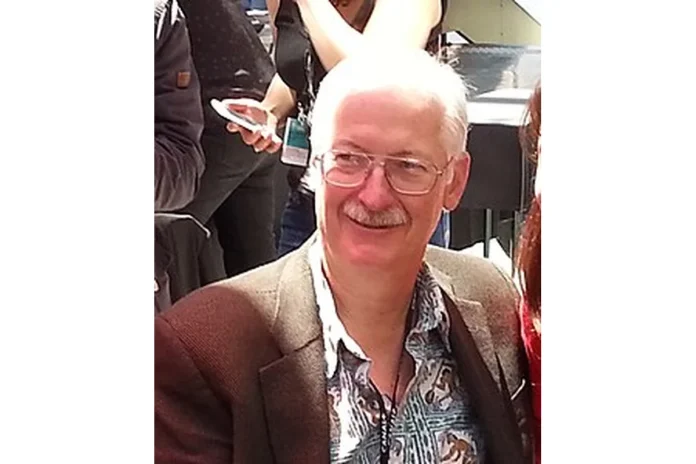
John Musker Bio
John Edward Musker (born November 8, 1953) is an American animator and filmmaker best known for writing and directing beloved Disney animated classics. Working in close partnership with fellow director Ron Clements, he helped shape the modern era of Walt Disney Animation Studios through films such as The Little Mermaid, Aladdin, Hercules, and Moana. Across a career that began in the late 1970s, Musker has contributed as an animator, story artist, director, and producer, celebrated for blending humor, emotion, and musical storytelling in family-friendly adventures.
Early Life and Background
John Edward Musker was born on November 8, 1953, in Chicago, Illinois, the second oldest of eight children in an Irish Catholic family. His father, Robert J. Musker, worked for more than forty years at Illinois Bell Telephone, and his mother, Joan T. Musker (née Lally), raised the large family in the Chicago area. Musker grew up surrounded by siblings, including sisters Patricia, Colleen, Kathleen, Maureen, and Terri, and younger brothers Robert and Martin.
He attended Loyola Academy, a Jesuit preparatory school in Illinois, where his interest in storytelling and visual humor first took shape. He later enrolled at Northwestern University, graduating from the Weinberg College of Arts and Sciences with a Bachelor of Arts in English while drawing cartoons for the student newspaper, the Daily Northwestern. These college years combined his love of writing with his growing passion for animation.
After completing his undergraduate studies, Musker pursued a Master of Fine Arts at the California Institute of the Arts (CalArts) in Santa Clarita. There he completed a two-year apprenticeship under legendary Disney animator Frank Thomas, who had supervised animation on classic films such as Peter Pan, Lady and the Tramp, and The Aristocats. This mentorship gave Musker a firm grounding in the craft of character animation and prepared him for a career at Walt Disney Animation Studios.
Path to Director
Musker began his professional career at Walt Disney Animation Studios in 1977, working as an animator on feature productions during a quieter period for the studio. He met Ron Clements in 1981 during production of The Fox and the Hound, where he served as a character animator under Clements and Cliff Nordberg. The two quickly discovered a shared sensibility and soon joined forces as story artists on The Black Cauldron, although they were eventually removed from that troubled project.
Their directing opportunity arrived when Clements pitched an adaptation of Eve Titus’s children’s book series Basil of Baker Street as an animated feature. Musker and fellow story artist Burny Mattinson were originally assigned to direct the picture, later titled The Great Mouse Detective, with Dave Michener joining as an additional director. Due to a compressed production schedule and multiple story rewrites, the studio reorganized the team, and Musker and Clements emerged as co-directors of the 1986 release, their first official feature as a directing team.
John Musker Career
Early Career (1977-1986)
During his first years at Disney, Musker worked as an animator and story artist on several productions, learning the rhythms of long-form feature animation. His early assignments on films such as The Fox and the Hound and The Black Cauldron sharpened his skills in character movement and narrative structure. These formative projects, though often challenging, helped him build the collaborative instincts that would define his later work with Clements.
The release of The Great Mouse Detective in 1986 marked Musker’s directorial debut alongside Ron Clements. Though modest in budget compared to later Disney releases, the film demonstrated the pair’s flair for combining detective storytelling with cartoon energy and earned respect within the studio. It also set the stage for their next, much larger assignment.
Breakthrough (1989-1997)
After The Great Mouse Detective, Musker and Clements pitched two ideas to new studio leadership: an adaptation of Hans Christian Andersen’s The Little Mermaid and a high-concept reimagining of Treasure Island set in outer space. Studio executives initially rejected both, but Jeffrey Katzenberg soon asked Clements to expand his mermaid treatment. Musker joined Clements in turning the idea into a twenty-page rough script, eventually collaborating with Broadway composers Howard Ashman and Alan Menken on songs and score.
Released in November 1989, The Little Mermaid was hailed as a milestone that reignited Disney animation and earned a domestic gross of $84 million and a worldwide total of $184.2 million. The film’s success transformed Musker and Clements into the studio’s most reliable director duo. They next chose Aladdin from a slate of three projects in development, teaming again with Ashman and Menken and bringing in screenwriters Ted Elliott and Terry Rossio to help restructure the story in a frantic eight-day rewrite.
Released in November 1992, Aladdin received strong reviews and became the first animated film to gross over $200 million domestically. Following that triumph, Musker and Clements returned to their long-dormant space-set Treasure Island idea, now called Treasure Planet, but were asked by the studio to first deliver another commercial hit. They signed on to direct Hercules, drawing on animator Joe Haidar’s pitch and signing a seven-year contract that promised Treasure Planet would follow.
Breakthrough Continued (1997-2009)
Hercules arrived in 1997, offering a fast-paced, gospel-infused take on Greek mythology. While preparing Treasure Planet during production, the directors signed a deal that guaranteed the studio would back their space adventure after Hercules. The 2002 release of Treasure Planet blended hand-drawn characters with pioneering computer backgrounds, and although it did not match earlier commercial highs, it later gained a devoted following.
After a proposed project called Fraidy Cat failed to gain approval, Musker and Clements resigned from Walt Disney Feature Animation in September 2005. The arrival of John Lasseter as chief creative officer in February 2006 brought them back to the studio to oversee production on what became The Princess and the Frog, which they were officially confirmed to direct in July 2006. Released in 2009, the film was widely praised and grossed $267 million worldwide.
Notable Works and Milestones
Musker’s signature works include The Little Mermaid, Aladdin, Hercules, The Princess and the Frog, and Moana, each demonstrating his gift for character-driven musical storytelling. His films have helped define the modern Disney Renaissance and earned lasting cultural impact, with The Little Mermaid and Aladdin standing as benchmarks of commercial and critical success.
John Musker Family
John Edward Musker was raised in a large Irish Catholic family in Chicago as the second oldest of eight children. His parents, Robert J. Musker and Joan T. Musker (née Lally), instilled a close-knit household that included sisters Patricia, Colleen, Kathleen, Maureen, and Terri, and younger brothers Robert and Martin. The size and warmth of his family background helped shape the heartfelt ensemble dynamics that appear across his films.
Personal Life
Musker is married to Gale Musker, and together they have three children: twin sons Jackson and Patrick, and a daughter, Julia. After more than four decades at Disney, he announced his retirement from Walt Disney Animation Studios in March 2018. In 2023, he released the hand-animated short film I’m Hip, a personal project that reflected his lifelong love of traditional animation craft.