
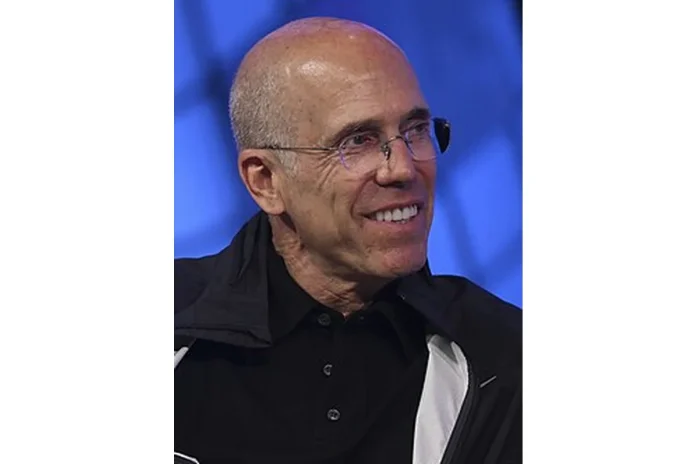
Jeffrey Katzenberg Bio
Jeffrey David Katzenberg (born December 21, 1950) is an American media proprietor and film producer who helped shape modern animation and digital media. He rose to prominence at The Walt Disney Studios in the 1980s, where he revived a struggling animation unit and oversaw a run of landmark films. In 1994 he co-founded DreamWorks SKG with Steven Spielberg and David Geffen, later leading DreamWorks Animation as its chief executive officer. Beyond entertainment, Katzenberg founded the venture capital firm WndrCo in 2016 and launched the short-form streaming platform Quibi in 2020, and he has remained an influential Democratic donor and political fundraiser.
Early Life and Background
Jeffrey David Katzenberg was born on December 21, 1950, in Manhattan, New York City, and grew up in a Jewish family. He is the son of Anne, an artist, and Walter Katzenberg, a stockbroker. He attended the Ethical Culture Fieldston School in New York, graduating in 1969.
As a teenager, Katzenberg developed an early interest in politics and public life. At the age of 14, he volunteered to work on John Lindsay’s successful New York mayoral campaign, quickly earning the nickname “Squirt” and attending as many meetings as he could. After high school, he enrolled at New York University but left after one year to work full-time as an advance man for Lindsay, gaining firsthand experience in political organization.
Path to Entertainment
Katzenberg began his Hollywood career in the early 1970s as an assistant to producer David V. Picker. In 1974 he joined Paramount Pictures as an assistant to Barry Diller, the studio’s chairman, and was later moved into the marketing department. He steadily took on larger assignments, including reviving the Star Trek franchise with Star Trek: The Motion Picture, and eventually rose to president of production under Michael Eisner, overseeing films such as 48 Hrs., Terms of Endearment, and Indiana Jones and the Temple of Doom.
When Eisner was named chief executive officer of The Walt Disney Company in 1984, he brought Katzenberg with him to serve as chairman of Walt Disney Studios. In that role, Katzenberg oversaw all filmed content, including motion pictures, television, Disney Channel, and home video distribution, setting the stage for one of the most influential tenures in modern studio history.
Jeffrey Katzenberg Career
Early Career (1979–1984)
Katzenberg’s early career at Paramount Pictures established him as a sharp production executive with a feel for both creative material and box-office appeal. Working under Barry Diller and Michael Eisner, he helped shepherd a new generation of hits that included Raiders of the Lost Ark and the Indiana Jones sequel Indiana Jones and the Temple of Doom. He became president of production, one of the youngest studio heads in Hollywood at the time.
During this period he also helped revive dormant properties, most notably the Star Trek franchise through Star Trek: The Motion Picture. These early assignments gave him the experience he would later apply to rebuilding Disney’s film division and, eventually, to launching his own studio.
Breakthrough (1984–1994)
At Disney, Katzenberg inherited a studio that ranked last at the box office among the major studios. He quickly focused on adult-oriented comedies through the Touchstone Pictures banner, with successful releases including Down and Out in Beverly Hills, Three Men and a Baby, Good Morning, Vietnam, Dead Poets Society, and Pretty Woman. By 1987, Disney had become the number-one studio at the box office. He also expanded the company’s film operations by co-launching Hollywood Pictures and overseeing the acquisition of Miramax Films in 1993.
His most lasting impact came through Disney’s Feature Animation unit. Under his leadership, the department released The Great Mouse Detective, Who Framed Roger Rabbit, Oliver & Company, The Little Mermaid, Beauty and the Beast, Aladdin, and The Lion King. Beauty and the Beast became the first animated feature nominated for the Academy Award for Best Picture. He also brokered Disney’s deal with Pixar and greenlit Toy Story.
Tensions with Michael Eisner and Roy E. Disney over credit and a possible promotion led Katzenberg to leave Disney in October 1994. He later sued the company over compensation and reached an out-of-court settlement reportedly worth around $250 million in 1999.
DreamWorks and DreamWorks Animation (1994–2016)
Later in 1994, Katzenberg co-founded DreamWorks SKG with Steven Spielberg and David Geffen, taking primary responsibility for the studio’s animation operations. He served as executive producer on a string of animated features, including The Prince of Egypt, Chicken Run, Shrek, Spirit: Stallion of the Cimarron, Shrek 2, and Shark Tale. After the traditional-animated Sinbad: Legend of the Seas underperformed, Katzenberg steered DreamWorks Animation toward computer-generated production, helping to cement the studio’s modern identity.
DreamWorks Animation was spun off as a separate company in 2004, with Katzenberg as chief executive officer, and its initial public offering raised more than $812 million. The studio went on to produce franchises such as Madagascar, Kung Fu Panda, and How to Train Your Dragon. In 2016, NBCUniversal acquired DreamWorks Animation for $3.8 billion, and Katzenberg stepped down as chief executive officer.
Notable Works and Milestones
Katzenberg’s signature works span Who Framed Roger Rabbit, The Little Mermaid, Beauty and the Beast, Aladdin, The Lion King, American Beauty, The Prince of Egypt, Shrek, Kung Fu Panda, and How to Train Your Dragon. Shrek won the inaugural Academy Award for Best Animated Feature in 2002, marking a defining milestone for both his career and the animation industry.
Jeffrey Katzenberg Award Nominations
Across his career in film, television, and philanthropy, Jeffrey Katzenberg has been recognized by some of the most prestigious institutions in the arts. His honors reflect both creative achievement and humanitarian service.
Jeffrey Katzenberg Awards Won
Katzenberg has received major recognition from the film industry, the U.S. government, and the international festival circuit. Among his highest honors are the Academy Award for Best Animated Feature for Shrek, the Jean Hersholt Humanitarian Award, the National Medal of Arts, and an honorary Palme d’Or from the Cannes Film Festival.
| Award | Wins | Year |
|---|---|---|
| Academy Award for Best Animated Feature (Shrek) | 1 | 2002 |
| Jean Hersholt Humanitarian Award | 1 | 2012 |
| National Medal of Arts | 1 | 2013 |
| Cannes Film Festival Honorary Palme d’Or | 1 | 2017 |
Jeffrey Katzenberg Family
Katzenberg married Marilyn Siegel, a kindergarten teacher, in 1975. The couple has twin children, daughter Laura and son David, both born in 1983. Katzenberg and his wife have been active philanthropists, donating the Katzenberg Center to Boston University’s College of General Studies and the Marilyn and Jeffrey Katzenberg Center for Animation at the University of Southern California. In January 2025, the couple donated $5 million to the Motion Picture & Television Fund for Southern California wildfire relief efforts.
Personal Life
Beyond entertainment, Katzenberg has been one of the Democratic Party’s most prominent Hollywood fundraisers. He was an early and major supporter of Barack Obama and Hillary Clinton, organized record-setting fundraisers, and co-chaired Joe Biden’s 2024 re-election campaign before becoming a co-chair of Kamala Harris’s 2024 presidential campaign. He sits on the boards of organizations including the Motion Picture & Television Fund, Geffen Playhouse, Cedars-Sinai Medical Center, California Institute of the Arts, and the USC School of Cinematic Arts, and was estimated to have a net worth of around $900 million in 2016.