
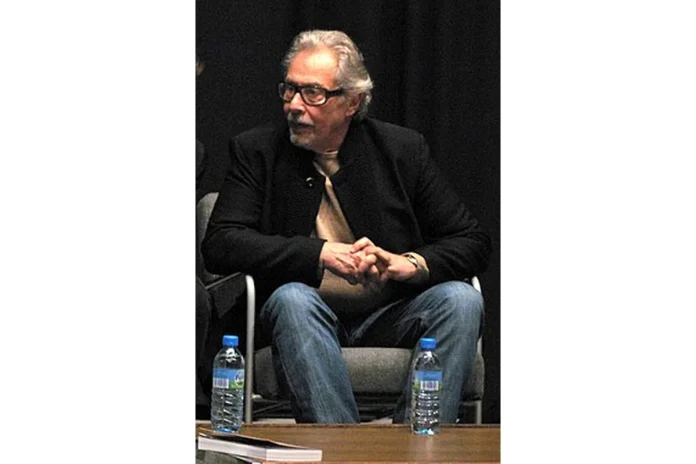
Mark Rydell Bio
Mark Rydell (born Mortimer H. Rydell; March 23, 1929) is an American film director, producer, and actor whose career spans stage, television, and cinema. Born in New York City, he initially trained in acting and worked on early television dramas before turning to directing. Rydell’s first feature film, The Fox (1967), established him as a major studio director, and over the following decades he built a varied body of work that includes comedies, dramas, and westerns. He is also recognized as a mentor and teacher who has worked closely with professional actors, writers, and directors at The Actors Studio.
Early Life and Background
Mortimer H. Rydell was born on March 23, 1929, to a Jewish family in New York City. Growing up in the city during the 1930s and 1940s, he was surrounded by a rich cultural environment that would later shape his interest in performance. As a young man, Rydell was drawn to music and initially wanted to become a conductor. He later explained that he stepped away from music because of the growing presence of drugs among musicians, recognizing in himself the kind of personality that could be drawn into the habit. Deciding to change direction, he returned to his education and enrolled in formal acting training.
Rydell studied acting at the Neighborhood Playhouse School of the Theatre in New York City, an institution known for its rigorous approach to craft. This training gave him a technical foundation in performance and connected him to a generation of stage and screen actors working in the postwar era. It was here that he refined the approach that would later influence both his work in front of the camera and his work behind it.
Path to Directing
After completing his training, Rydell moved into television acting, where he built a steady reputation. His first significant roles were as Walt Johnson on The Edge of Night and as Jeff Baker on the daytime serial As the World Turns, a part he played from December 12, 1956, to 1962. The role of Jeff Baker became a fan favorite and helped establish Rydell as a recognizable television presence. In 1962, he declined to sign another long-term contract with the show, and producers wrote a car crash into the storyline to explain the character’s exit.
Even while acting, Rydell was already moving toward directing. In 1961, he directed the off-Broadway production of Roots, showing an early interest in working on the other side of the camera. He then transitioned into television directing, helming episodes of well-known series such as Mr. Novak, Ben Casey, The Reporter, Slattery’s People, I Spy, The Wild Wild West, The Long Hot Summer, and Gunsmoke. These early directing jobs gave him the experience and confidence to move into feature films.
Mark Rydell Career
Early Career (1952–1966)
Rydell’s professional career began in 1952, and during the 1950s he focused primarily on television acting and stage work. His long run on As the World Turns made him a familiar face to American audiences, and his behind-the-scenes interests were growing at the same time. By the early 1960s, he was splitting his time between acting jobs and small directing projects, including the off-Broadway play Roots in 1961.
This period gave Rydell a balanced view of the entertainment industry, from the rhythm of daytime drama to the controlled pace of stage work. When he decided to leave As the World Turns in 1962, he had already laid the groundwork for a move into television directing. Within a few years, he had built a strong résumé of episodic television work, and major studios were ready to hand him feature film projects.
Breakthrough (1967–1984)
Rydell’s first feature as director was The Fox (1967), a box-office hit that drew attention in part because of its then-rare lesbian content. The success of the film led to a multi-picture contract with its producer, Raymond Stross, though Rydell later found the working relationship difficult and paid to exit the deal. He credits Stross, however, with helping to start his film career. He then directed Steve McQueen in The Reivers (1969) and, along with his friend Sydney Pollack, formed Sanford Productions, signing a six-picture contract with the Mirisch Brothers.
In the early 1970s, Rydell directed John Wayne in The Cowboys (1972) and made the romantic comedy Cinderella Liberty (1973) with James Caan and Marsha Mason. He reunited with Caan on Harry and Walter Go to New York (1976) and directed the pilot episode of the television series Family in 1976. His biggest commercial success of the decade came with The Rose (1979), starring Bette Midler, which became a major hit. He followed this with On Golden Pond (1981), starring Henry Fonda and Katharine Hepburn, which earned Rydell an Academy Award nomination for Best Director. He continued his string of major releases with The River (1984), starring Mel Gibson and Sissy Spacek.
Notable Works and Milestones
Among Rydell’s most recognized directorial achievements are The Fox (1967), The Reivers (1969), Cinderella Liberty (1973), The Rose (1979), and On Golden Pond (1981). On Golden Pond stands as a defining moment of his career, earning him his only Academy Award nomination for Best Director. Beyond directing, Rydell won praise for his acting performance as violent Jewish mob kingpin Marty Augustine in Robert Altman’s The Long Goodbye (1973), and his most recent notable film role was in Woody Allen’s Hollywood Ending (2002). He has also worked as an executive producer on projects such as An Unfinished Life (2005) and the documentary A Coup in Camelot (2015).
Mark Rydell Award Nominations
Mark Rydell has received multiple Academy Award nominations across his career, spanning directing, acting, and producing. He was nominated for Best Director for On Golden Pond (1981), for Best Actor for Born on the Fourth of July (1990) and Jerry Maguire (1997), for Best Supporting Actor for Magnolia (2000), and for Best Picture as a producer on Top Gun: Maverick (2023). He also received a BAFTA Award nomination for Best Actor in a Leading Role for Born on the Fourth of July (1991).
Mark Rydell Awards Won
While Rydell has earned a long list of high-profile nominations, his major wins include directing honors tied to specific performances. His work as a director has helped actors earn Academy Award recognition, and his television movie James Dean (2001) earned actor James Franco a Golden Globe award. No comprehensive list of personal Academy Award or BAFTA wins was verifiable from the available sources.
Mark Rydell Family
Rydell married actress Joanne Linville in 1962, and the couple had two children, Amy and Christopher, both of whom became actors. Rydell and Linville divorced in 1973. He later had a third child, a son named Alexander, from his second marriage to documentary producer Esther Rydell. That marriage ended in divorce in 2007.
Personal Life
Born Mortimer H. Rydell in New York City, Rydell has spent the majority of his life working in the American entertainment industry. Beyond his film and television work, he has been an active teacher and mentor at The Actors Studio, where he has worked alongside actor Martin Landau and screenwriter and playwright Lyle Kessler for many decades. Together, the three have led The Total Picture Seminar, a two-day educational event covering the disciplines of acting, directing, and writing for film. In 2010, he joined the Advisory Board of Openfilm, an online video sharing site created to help aspiring independent filmmakers.