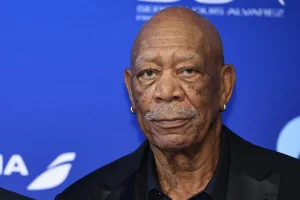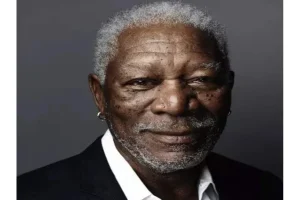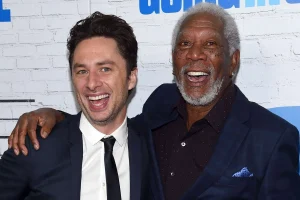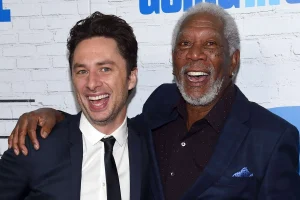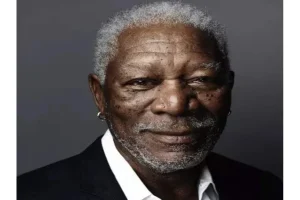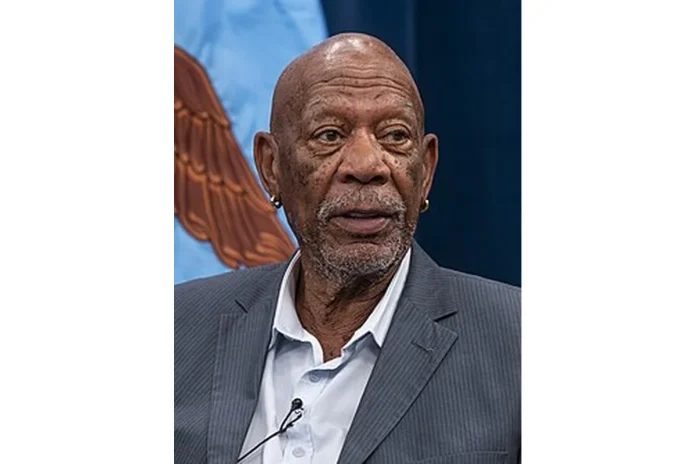
Morgan Freeman Bio
Morgan Freeman (born June 1, 1937) is an American actor, producer, and narrator whose career has spanned more than six decades. Renowned for his distinctive voice and commanding presence, Freeman has built a reputation for thoughtful performances in dramas, historical epics, thrillers, and character-driven comedies. Over the course of his work, he has earned an Academy Award, a Golden Globe Award, a Screen Actors Guild Award, the Kennedy Center Honor, the AFI Life Achievement Award, the Cecil B. DeMille Award, and the Screen Actors Guild Life Achievement Award.
He rose from modest beginnings in the American South to become one of the most respected figures in Hollywood, frequently exploring themes of race, resilience, and humanity. In addition to acting, Freeman co-founded the production company Revelations Entertainment, directed the drama Bopha!, and narrated numerous acclaimed documentaries and television series. A 2022 readers’ poll by Empire later placed him among the 50 greatest actors of all time.
Early Life and Background
Morgan Freeman was born on June 1, 1937, in Memphis, Tennessee. He is the son of Mamie Edna Revere, a teacher, and Morgan Porterfield Freeman, a barber who died of cirrhosis in 1961. Freeman has three older siblings, and family history traces some of his ancestors to North Carolina, where his white maternal great-great-grandfather lived with and was buried beside his black great-great-grandmother in the segregated South.
As an infant, Freeman was sent to his paternal grandmother in Charleston, Mississippi. He moved frequently during his childhood, living in Greenwood, Mississippi, Gary, Indiana, and finally Chicago. He made his acting debut at age nine, playing the lead role in a school play. Freeman attended Broad Street High School in Greenwood, and at the age of 12, he won a statewide drama competition, where his interest in music and theater first took hold.
Freeman graduated from high school in 1955 and turned down a partial drama scholarship from Jackson State University, choosing instead to enlist in the United States Air Force. He served as an Automatic Tracking Radar repairman from 1955 to 1959, rising to the rank of airman first class. After his service, he moved to Los Angeles, where he studied theater arts at Los Angeles City College and took acting classes at the Pasadena Playhouse.
Path to Acting
Freeman launched his professional career in 1964 as a dancer at the World’s Fair and as a member of the Opera Ring musical theater group in San Francisco. He then acted in a touring company version of The Royal Hunt of the Sun and appeared as an extra in Sidney Lumet’s 1965 drama The Pawnbroker. Realizing that acting was his true calling, Freeman made his Off-Broadway debut in 1967 opposite Viveca Lindfors in The Niggerlovers, followed by his Broadway debut in 1968’s all-black version of Hello, Dolly! alongside Pearl Bailey and Cab Calloway.
Beginning in 1971, Freeman starred in the PBS children’s television series The Electric Company, which gave him financial stability and recognition with American audiences. He left the show in 1975 and returned to theater, winning a Drama Desk Award and a Clarence Derwent Award for his 1978 performance in The Mighty Gents. He later earned Obie Awards for his roles in the Shakespearean tragedy Coriolanus and the musical The Gospel at Colonus, establishing himself as a respected stage actor before transitioning to film.
His first credited film role came in 1971 with Who Says I Can’t Ride a Rainbow!, followed by a small part in the 1980 prison drama Brubaker. He went on to play supporting roles in films such as Eyewitness (1981) and Marie (1985), gradually building a reputation for portraying wise, fatherly characters throughout the 1980s.
Morgan Freeman Career
Early Career (1964–1988)
Freeman’s early career was defined by steady work across stage, television, and supporting film roles. He appeared on television programs including Another World from 1982 to 1984, portraying architect Roy Bingham, and he earned an Obie Award for his performance as a preacher in the musical The Gospel at Colonus, as well as for his role as Hoke Colburn in the play Driving Miss Daisy.
His breakthrough moment came in 1987, when he played a violent street hustler in Street Smart, a role that diverged from his earlier characters. Critics praised his performance, with Roger Ebert writing that Freeman created an unforgettable villain. The role earned Freeman his first Academy Award nomination, for Best Supporting Actor, and he later identified Street Smart as his breakthrough role.
Breakthrough (1989–1996)
In 1989, Freeman had four major film releases that established him as a Hollywood leading actor. He starred as Sergeant Major John Rawlins in the Civil War drama Glory, which won three Academy Awards. He then starred as chauffeur Hoke Colburn in the comedy-drama Driving Miss Daisy alongside Jessica Tandy and Dan Aykroyd, a film that grossed $145 million worldwide and earned him a Best Actor Academy Award nomination. He also appeared in the biographical drama Lean on Me, portraying a school principal, and in the crime drama Johnny Handsome.
He went on to play a supporting role in Robin Hood: Prince of Thieves (1991) and appeared in Clint Eastwood’s Best Picture-winning western Unforgiven (1992). In 1993, Freeman made his directorial debut with Bopha!, a drama about apartheid-era South Africa starring Danny Glover. He then starred in The Shawshank Redemption (1994) as Red, the redeemed convict, a performance that earned him another Academy Award nomination and helped the film become a long-lasting audience favorite.
By the mid-1990s, Freeman was a fixture of major Hollywood productions. He starred in Outbreak (1995) and David Fincher’s crime thriller Se7en (1995) alongside Brad Pitt. In 1996, he co-founded Revelations Entertainment with producer Lori McCreary, establishing a company dedicated to exploring challenging issues and revealing hidden truths through film.
Continued Success (1997–2004)
Freeman narrated the Academy Award-winning documentary The Long Way Home (1997) and appeared in Steven Spielberg’s historical epic Amistad that same year. He went on to portray psychologist Alex Cross in Kiss the Girls (1997) and its sequel Along Came a Spider (2001), and he played the President of the United States in the science-fiction disaster film Deep Impact (1998).
He appeared in films including The Sum of All Fears (2002), High Crimes (2002), and Bruce Almighty (2003), where he played God, a role he later reprised in Evan Almighty (2007). His 2004 performance as an elderly former boxer in Clint Eastwood’s Million Dollar Baby earned Freeman his first Academy Award for Best Supporting Actor, along with Golden Globe and Screen Actors Guild Awards in the same category.
Established Actor (2005–2014)
Freeman continued to take on a wide range of roles, including Batman Begins (2005), the first installment of Christopher Nolan’s Dark Knight Trilogy, in which he played Lucius Fox. He narrated the Academy Award-winning documentary March of the Penguins (2005) and starred in films such as Wanted (2008), The Dark Knight (2008), and the biographical drama Invictus (2009), portraying Nelson Mandela opposite Matt Damon.
He went on to appear in Red (2010), The Dark Knight Rises (2012), Now You See Me (2013), Oblivion (2013), and Lucy (2014), and he voiced Vitruvius in The Lego Movie (2014). He also hosted the National Geographic series Through the Wormhole (2010–2017), exploring questions about science and the universe.
Recent Work (2015–2024)
Freeman reprised his role as Allan Trumbull in the action-thrillers London Has Fallen (2016) and Angel Has Fallen (2019), and he returned to the heist franchise with Now You See Me 2 (2016). He took on leading roles in Ben-Hur (2016), Going in Style (2017), and The Nutcracker and the Four Realms (2018). He also took a recurring role as Chief Justice Frawley in the CBS political drama Madam Secretary (2014–2019), which he executive produced.
Since 2023, he has portrayed a United States Secretary of State in the Paramount+ spy thriller series Lioness, created by Taylor Sheridan. In November 2025, Freeman returned to the heist franchise with Now You See Me: Now You Don’t, marking his first theatrical release in several years.
Notable Works and Milestones
Freeman is best known for his performances in Driving Miss Daisy (1989), The Shawshank Redemption (1994), Million Dollar Baby (2004), and Invictus (2009). His work is also defined by his portrayal of Lucius Fox in Christopher Nolan’s Dark Knight Trilogy and his narration of acclaimed documentaries such as March of the Penguins and the series Through the Wormhole.
Morgan Freeman Award Nominations
Morgan Freeman has received a wide range of award nominations across film, television, and theater throughout his career. He earned Academy Award nominations for Best Supporting Actor for Street Smart (1987), Best Actor for Driving Miss Daisy (1989), The Shawshank Redemption (1994), and Invictus (2009), and Best Supporting Actor for Million Dollar Baby (2004). He has also received Golden Globe, Screen Actors Guild, Tony, and Primetime Emmy Award nominations, including a Primetime Emmy nomination for Outstanding Guest Actor in a Comedy Series for his role in the Netflix series The Kominsky Method.
Morgan Freeman Awards Won
Morgan Freeman has earned numerous major awards recognizing his long-standing contributions to film and culture. He received an Academy Award for Best Supporting Actor for Million Dollar Baby (2005), a Golden Globe Award for Best Actor for Driving Miss Daisy (1990), and a Screen Actors Guild Award for Outstanding Performance by a Male Actor in a Supporting Role for Million Dollar Baby (2005). Additional honors include the Kennedy Center Honor (2008), the AFI Life Achievement Award (2011), the Cecil B. DeMille Award (2012), and the Screen Actors Guild Life Achievement Award (2018).
| Award | Wins | Year |
|---|---|---|
| Academy Award for Best Supporting Actor | Million Dollar Baby | 2005 |
| Golden Globe Award for Best Actor | Driving Miss Daisy | 1990 |
| Screen Actors Guild Award for Outstanding Male Actor in a Supporting Role | Million Dollar Baby | 2005 |
Morgan Freeman Family
Morgan Freeman was born to Morgan Porterfield Freeman, a barber, and Mamie Edna Revere, a teacher. He has three older siblings and grew up spending much of his childhood in Charleston, Mississippi, where he was raised by his paternal grandmother.
Freeman has four children: Alfonso, Deena, Morgana, and Saifoulaye. He and his second wife, Myrna Colley-Lee, also raised E’dena Hines, his step-granddaughter from his first marriage, who tragically was murdered in New York City in August 2015.
Personal Life
Morgan Freeman was married to Jeanette Adair Bradshaw from 1967 until their divorce in 1979. He later married Myrna Colley-Lee in 1984; the couple separated in 2007 and finalized their divorce in 2010. Freeman resides in Charleston, Mississippi, and maintains a home in New York City.
Outside of acting, Freeman earned a private pilot’s license at age 65 and has owned multiple private aircraft. He is also a beekeeper who turned his Mississippi ranch into a bee sanctuary in 2014, and he is a supporter of ocean conservation through his work with Oceana.