
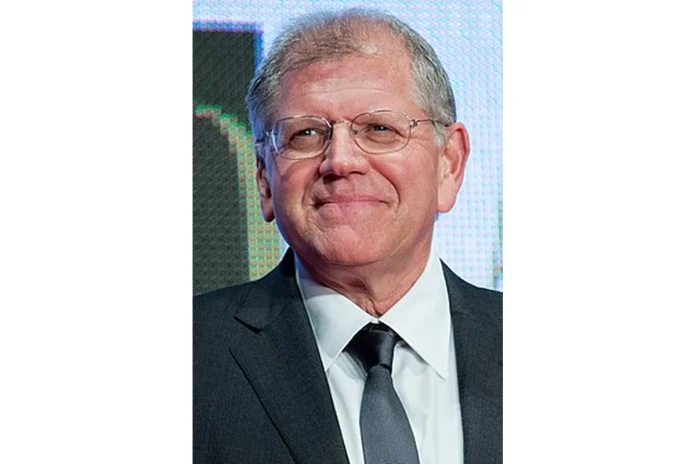
Robert Zemeckis Bio
Robert Lee Zemeckis, sometimes referred to as Bob Zemeckis, is an American filmmaker widely recognized for directing and producing a range of successful and influential films that often blend cutting-edge visual effects with storytelling. Born on May 14, 1952, in Chicago, Illinois, Zemeckis has built a career spanning more than five decades, beginning his professional work in 1972. He has earned two Academy Awards and a Golden Globe Award, along with nominations for five British Academy Film Awards and a Daytime Emmy Award.
Across his filmography, Zemeckis is celebrated for his willingness to experiment with new technology, including motion-capture techniques and the integration of computer-generated imagery with live-action storytelling. His work has ranged from broad comedies and fantasy adventures to dramatic character studies, and he is one of only a few filmmakers to win Academy Awards for both student and professional work.
Early Life and Background
Robert Lee Zemeckis was born in Chicago, Illinois, on May 14, 1952. He grew up in a working-class family on Chicago’s South Side and attended a Catholic grade school before enrolling at Fenger Academy High School. His mother, Rosa, was of Italian-American heritage, while his father, Alphonse Zemeckis, was of Lithuanian-American descent. He has described his childhood home as a place without books, music, or theater, noting that television was his primary window into a wider world.
As a child, Zemeckis became fascinated by his parents’ 8 mm home movie camera, using it first to record family events such as birthdays and holidays. He soon began producing short narrative films with friends that incorporated stop-motion work and other visual tricks. A viewing of the film Bonnie and Clyde with his father inspired him to pursue filmmaking as a career, even though his parents were concerned about the practicality of such a dream.
Zemeckis first attended Northern Illinois University in DeKalb, where he gained early professional experience as a film cutter for NBC News in Chicago during a summer break. He also edited commercials in his home state. He later applied to the University of Southern California’s School of Cinematic Arts, where he was initially rejected before convincing administrators to give him a chance. He graduated from the University of Southern California in 1973, where he met the writer Bob Gale, who would become a frequent collaborator.
Path to Filmmaking
Zemeckis’s path into the film industry was shaped by his persistence and a chance introduction to Steven Spielberg. After winning a Student Academy Award for his short film A Field of Honor, Zemeckis came to the attention of the established director, who agreed to executive-produce his early work. Spielberg became a key mentor, helping Zemeckis transition from student projects to studio productions in the late 1970s.
His earliest professional projects included the comedy films I Wanna Hold Your Hand and Used Cars, both of which were co-written with Bob Gale and produced through his relationship with Spielberg. These films were admired by critics but did not perform strongly at the box office, and Zemeckis struggled to find directing work for several years. The pair were even considered writers whose scripts were admired but rarely made into successful films.
Zemeckis’s career rebounded when the actor Michael Douglas hired him to direct the 1984 romantic adventure Romancing the Stone. The film became a sleeper hit and established him as a bankable director. It was on this production that he first worked with composer Alan Silvestri, beginning a creative partnership that has continued through every subsequent Zemeckis film.
Robert Zemeckis Career
Early Career (1978–1984)
Zemeckis’s professional directing career began with I Wanna Hold Your Hand, a 1978 comedy about fans of The Beatles, which was produced by Steven Spielberg and co-written with Bob Gale. Although the film received favorable reviews, it did not perform well commercially. A second collaboration with Spielberg, the 1980 comedy Used Cars starring Kurt Russell, met a similar fate, with critics praising the work but audiences staying away.
Following these early setbacks, Zemeckis found it difficult to secure directing assignments, and several of his screenplays went unproduced. He and Gale wrote scripts for other directors, including a project for Brian De Palma, none of which were made. The screenplay for Back to the Future was rejected by every major studio before eventually moving forward, leaving Zemeckis in need of a new opportunity.
That opportunity arrived in 1984, when he was hired to direct Romancing the Stone for Michael Douglas. The romantic adventure starring Douglas and Kathleen Turner exceeded expectations at the box office, restoring Zemeckis’s standing in Hollywood. The success gave him the leverage to finally bring his long-developed Back to the Future project to the screen.
Breakthrough (1985–1999)
Back to the Future, released in 1985, became a cultural phenomenon and the cornerstone of Zemeckis’s reputation. Starring Michael J. Fox, Lea Thompson, Crispin Glover, and Christopher Lloyd, the film was followed by two sequels, Back to the Future Part II in 1989 and Back to the Future Part III in 1990, completing one of the most successful trilogies in cinema history. He also directed the innovative 1988 hybrid film Who Framed Roger Rabbit, which combined live action with traditional animation and won three Academy Awards.
In 1992, Zemeckis directed the satirical black comedy Death Becomes Her, starring Meryl Streep, Goldie Hawn, and Bruce Willis. He followed this with the 1994 drama Forrest Gump, starring Tom Hanks in the title role. The film grossed $677 million worldwide, became the top-grossing American release of 1994, and won six Academy Awards, including Best Picture and Best Director for Zemeckis. This collaboration marked the beginning of a long creative partnership with Tom Hanks.
Zemeckis continued to explore ambitious projects in the late 1990s, directing the science fiction film Contact in 1997, based on the novel by Carl Sagan and starring Jodie Foster. He also executive-produced the HBO series Tales from the Crypt from 1989 to 1996, directing three episodes. In 1999, he donated $5 million toward the establishment of the Robert Zemeckis Center for Digital Arts at the University of Southern California.
Closing the decade, Zemeckis released the 2000 films Cast Away and What Lies Beneath, both starring Tom Hanks in the former and Harrison Ford and Michelle Pfeiffer in the latter. Cast Away earned Tom Hanks an Academy Award nomination for Best Actor, and What Lies Beneath grossed more than $155 million domestically. He also founded South Side Amusement Company, which later became ImageMovers.
Notable Works and Milestones
Among Zemeckis’s most celebrated works are the Back to the Future trilogy, Who Framed Roger Rabbit, and Forrest Gump, the last of which earned him the Academy Award for Best Director. He is widely recognized as a pioneer in visual effects, notably in the early use of computer graphics in Back to the Future Part II and Forrest Gump, the integration of animation with live action in Who Framed Roger Rabbit, and the development of motion-capture filmmaking in The Polar Express, Beowulf, A Christmas Carol, and Welcome to Marwen. Film critic David Thomson has written that no other contemporary director has used visual effects to more dramatic and narrative purpose.
Robert Zemeckis Award Nominations
Robert Zemeckis has received numerous award nominations across his career, including five nominations for the British Academy Film Awards and a nomination for a Daytime Emmy Award. His work on Forrest Gump earned him multiple nominations in addition to his wins, including recognition from major industry organizations. He has also received nominations from organizations honoring visual effects achievements, reflecting his reputation as a technical innovator.
Robert Zemeckis Awards Won
Zemeckis has won two Academy Awards, including Best Director for Forrest Gump in 1995, and has earned a Golden Globe Award during his career. Earlier in his career, he received a Student Academy Award for his short film A Field of Honor. The film Who Framed Roger Rabbit, which he directed, won three Academy Awards, and Forrest Gump won six Academy Awards, including Best Picture.
Robert Zemeckis Family
Robert Lee Zemeckis was born to Rosa, an Italian-American mother, and Alphonse Zemeckis, a Lithuanian-American father. He grew up on the South Side of Chicago with limited exposure to the arts, which he has often credited with shaping his drive to pursue filmmaking. He has spoken publicly about the influence of his parents’ 8 mm home movie camera on his early interest in visual storytelling.
Personal Life
Zemeckis was married to actress Mary Ellen Trainor from 1980 until their divorce in 2000, and together they have a son named Alexander Francis. In 2001, he married actress Leslie Harter in Venice, and the couple have three children together. The family resides in Santa Barbara, California, and also owns a villa in Tuscany situated on the ruins of a 10th-century castle. He has described his early career as a period of intense sacrifice for his craft, noting that he devoted his twenties almost entirely to his work in film. He is also a private pilot who has logged approximately 1,600 hours of flight time.