
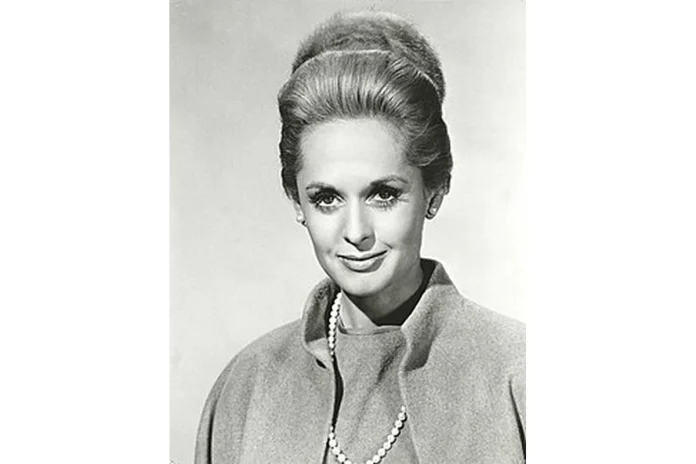
Tippi Hedren Bio
Nathalie Kay “Tippi” Hedren, born on January 19, 1930, is a retired American actress and former fashion model who became one of the most recognizable screen presences of the early 1960s. She is best known for her leading roles in two films directed by Alfred Hitchcock, the suspense-thriller The Birds (1963) and the psychological drama Marnie (1964). Beyond her work in front of the camera, Hedren built a long second career as an animal rights advocate, founding the Roar Foundation and supporting the Shambala Preserve, a wildlife habitat in Acton, California, that cares for lions and tigers rescued from circuses and private owners. Her career has spanned more than six decades and has included work in film, television, and humanitarian efforts across the globe.
Early Life and Background
Nathalie Kay Hedren was born in New Ulm, Minnesota, on January 19, 1930, to Bernard Carl Hedren and Dorothea Henrietta Hedren, who was of German and Norwegian descent. Her paternal grandparents were Swedish immigrants who had settled in the Midwest. For many years, her actual year of birth was misreported in the press as 1935, a discrepancy she finally addressed in a 2004 A&E Biography, confirming the 1930 date that matches the Minnesota Historical Society’s birth registration index. When Hedren was four years old, her family moved to Morningside, a neighborhood in Edina, Minnesota, where she lived until she was seventeen and began modeling for the regional department store chain Dayton’s.
Hedren attended Morningside School and later West High School in Minneapolis, where she first explored her interest in performance and modeling. Her early exposure to the fashion world through local department store work laid the foundation for what would become a highly successful modeling career. As a teenager, she developed the poised screen presence that would later catch the attention of Hollywood’s most famous director.
Path to Acting
On her twentieth birthday, Hedren bought a one-way ticket to New York City, where she joined the prestigious Eileen Ford modeling agency. Within a year, she made her unofficial film debut as “Miss Ice Box” in the 1950 musical comedy The Petty Girl, although she long considered The Birds to be her first real film role because it was her first credited performance. During the 1950s and early 1960s, she built a highly successful modeling career, appearing on the covers of Life, The Saturday Evening Post, McCall’s, and Glamour.
In 1961, after seven years of marriage to the actor Peter Griffith, Hedren divorced and moved back to California with her young daughter, Melanie. Her transition into acting came about almost by accident. On October 13, 1961, an agent contacted her about a producer interested in working with her, and she soon discovered that the producer was none other than Alfred Hitchcock. Hitchcock had seen her in a commercial for a diet drink called Sego while watching The Today Show, and he signed her to a seven-year contract that would change her life and career forever.
Tippi Hedren Career
Early Career (1950-1960)
During her early years in the entertainment industry, Hedren focused primarily on her modeling career rather than acting. She received several film offers during the early 1950s, but turned them down because she had no interest in acting and believed it was very difficult to succeed in Hollywood. Her early film experience was limited to a brief, uncredited walk-on role as “Miss Ice Box” in The Petty Girl, a 1950 musical comedy starring Robert Cummings and Joan Caulfield.
Throughout the decade, Hedren established herself as one of the most photographed faces in America, gracing the covers of leading magazines and becoming a familiar name in fashion circles. Although she received several film offers during that time, she had no interest in acting, as she knew it was very difficult to succeed. This period of her life laid the foundation for the poised, photogenic presence that would later captivate audiences on the big screen.
Breakthrough (1961-1966)
Hedren’s breakthrough came in 1963 when she starred in Alfred Hitchcock’s The Birds, a suspense-thriller that became one of the most iconic films of the decade. Hitchcock personally guided her through an extensive two-day color screen test and served as her acting coach during production, teaching her how to break down a script and develop a character. Her performance was widely praised, with Variety writing that aside from the birds, the film belonged to Hedren, who made an auspicious screen bow. For this role, she received the Golden Globe Award for New Star of the Year at the 21st Golden Globe Awards, tied with Elke Sommer and Ursula Andress.
The following year, Hedren starred as Marnie Edgar in Hitchcock’s psychological drama Marnie (1964), a demanding role for which she was originally offered to Grace Kelly. Although the film received mixed reviews upon release, Hedren’s performance has since been re-evaluated and praised; Richard Brody of The New Yorker wrote in 2016 that her performance is one of the greatest in the history of cinema. Marnie was the second and last collaboration between Hedren and Hitchcock, as the two had a bitter falling out during the production, and Hedren later revealed publicly that Hitchcock had made sexual demands on her that she refused. The relationship ended in a high-profile dispute that left her under contract but unpaid for nearly two years.
Notable Works and Milestones
Beyond her Hitchcock collaborations, Hedren built a long and varied career that included Charlie Chaplin’s final film, A Countess from Hong Kong (1967), alongside Marlon Brando and Sophia Loren. She went on to appear in dozens of films and television shows, including the political satire Citizen Ruth (1996) with Laura Dern, the comedy I Heart Huckabees (2004) directed by David O. Russell, and memorable guest spots on series such as Tales from the Darkside, Hart to Hart, and The Bold and the Beautiful. In 2016, she published her autobiography, Tippi: A Memoir, telling her own story for the first time in her own words.
Tippi Hedren Award Nominations
Throughout her long career in film and television, Tippi Hedren has earned recognition from major industry organizations for her acting work. Her most notable early nomination came at the 21st Golden Globe Awards in 1964, when she was honored as New Star of the Year, an award she shared with Elke Sommer for The Prize and Ursula Andress for Dr. No. Her work in later decades also brought her additional honors, including recognition from international film organizations for her contributions to world cinema.
Tippi Hedren Awards Won
Tippi Hedren’s contributions to film and humanitarian causes have been recognized with several prestigious honors. In 1964, she won the Golden Globe Award for New Star of the Year for her performance in Alfred Hitchcock’s The Birds, a clear sign that her screen debut had made a major impact on audiences and critics. Her work in support of world cinema and animal welfare has also been recognized with the Jules Verne Award, and she received a star on the Hollywood Walk of Fame, cementing her status as a Hollywood legend.
Tippi Hedren Family
Tippi Hedren was born to Bernard Carl Hedren and Dorothea Henrietta Hedren, who was of German and Norwegian descent. Her paternal grandparents were Swedish immigrants who had settled in Minnesota. She has one daughter, the actress Melanie Griffith, who was born on August 9, 1957, during her first marriage to the actor Peter Griffith. Through Melanie, Hedren has three grandchildren, including the actress Dakota Johnson. Hedren’s family has been closely tied to her work in animal rescue, with both Melanie and Dakota Johnson involved in the care of the animals at the Shambala Preserve.
Personal Life
Tippi Hedren has been married three times. Her first marriage was to the actor Peter Griffith from 1952 to 1960, with whom she had her daughter Melanie. She then married her agent and producing partner Noel Marshall in 1964, and the couple collaborated on the ambitious wildlife film Roar (1981), though the difficult production led to their divorce in 1982. In 1985, she married the steel manufacturer Luis Barrenechea, but they divorced in 1992; Hedren later said that Barrenechea was everything she wanted in a man, except that he was an alcoholic and that was unbearable. She was also engaged to the veterinarian Martin Dinnes from 2002 until their breakup in mid-2008. Beyond her personal life, Hedren is widely known for her humanitarian work, including her role in helping Vietnamese refugees establish nail salons in the United States in the 1970s, and for her lifelong dedication to the care of lions and tigers at the Shambala Preserve in Acton, California.