
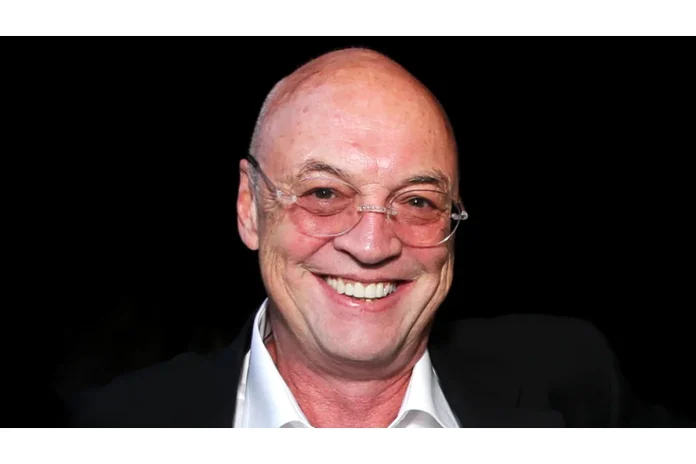
Victor Salva Bio
Victor Ronald Salva (born March 29, 1958) is an American film director and screenwriter who has spent most of his career working in the horror genre. He is best known as the writer-director of the Jeepers Creepers films, beginning with the 2001 original, and is also recognized for the fantasy drama Powder (1995). Over the course of more than three decades in film, Salva has built a body of work that he has described as atmospheric and macabre, with an emphasis on mood over conventional happy endings. His career has also been marked by significant legal and public controversy stemming from a 1988 conviction.
Early Life and Background
Victor Ronald Salva was born on March 29, 1958, in Martinez, California, in the United States. He was raised in a Catholic household, and his early family life was marked by hardship. Salva’s biological father left the family, and he has stated that his stepfather was a physically abusive alcoholic. In adulthood, he has also spoken about being disowned by his family after he came out as gay at the age of 18.
From a young age, Salva was drawn to horror and science fiction, and he has named the classic monster film Creature from the Black Lagoon as an early favorite. His passion for cinema was striking: a local newspaper reported in 1975 that the 17-year-old Salva went to see the film Jaws at the movie theater an extraordinary 55 times. Before transitioning into filmmaking as a profession, he worked as a childcare worker, a detail that later drew public scrutiny during the legal proceedings connected to his debut feature.
Path to Directing
Salva began making films while he was still a teenager, and by the time he graduated from high school he had already written and directed more than 20 short and feature-length projects. To help finance his filmmaking hobby, he often held two jobs during the week. His early dedication to the craft paid off when his short horror film Something in the Basement (1986), an allegory about a young boy awaiting his brother’s return from war, won first place in the fiction category at the Sony/AFI Home Video Competition and went on to receive a Bronze Plaque at the Chicago International Film Festival.
The success of that short film brought Salva to the attention of legendary director and producer Francis Ford Coppola, who agreed to produce Salva’s first theatrical feature, Clownhouse (1989). Coppola reportedly saw considerable potential in the young filmmaker and loaned him the same cameras he had once given George Lucas for American Graffiti (1973). Salva has since described himself as a protégé of Coppola, a relationship that would shape his early entry into the industry.
Victor Salva Career
Early Career (1986–1995)
Salva’s professional career in film began in 1986 with Something in the Basement, and his feature debut arrived in 1989 with Clownhouse, produced by Francis Ford Coppola’s company. Following a period of legal trouble and a hiatus after his release from prison in 1992, he worked as a telemarketer during the week while continuing to write scripts on weekends. He returned to directing with the direct-to-video horror film The Nature of the Beast (1995), a project he based on characters he had encountered while incarcerated.
That same year, Salva wrote and directed Powder (1995), a fantasy drama about an albino teenager with extraordinary powers, which became his first major studio release. The film’s theatrical debut coincided with renewed public attention to his 1988 conviction, leading the victim, Nathan Forrest Winters, to publicly call for a boycott of the film. Disney, the studio behind Powder, stated that it had only learned of the director’s background after production had already begun.
Breakthrough (1999–2006)
Salva’s next feature was the coming-of-age thriller Rites of Passage (1999), which follows a homophobic father whose rejection of his gay son inadvertently pushes the young man toward a dangerous figure. The film earned Salva the Moxie! Award for Best Feature at the Santa Monica Film Festival. He then wrote and directed Jeepers Creepers (2001), with Francis Ford Coppola serving as executive producer. The horror film became a major commercial success and set a record for the largest Labor Day box office opening at the time of its release.
Building on that success, Salva returned to write and direct Jeepers Creepers 2 (2003), again with Coppola as executive producer. The sequel continued the franchise’s success and cemented Salva’s reputation within the horror genre. He later stepped outside of horror to direct Peaceful Warrior (2006), an adaptation of Dan Millman’s semi-autobiographical book Way of the Peaceful Warrior, which follows a young gymnast whose life is transformed by a mysterious spiritual mentor.
Later Career (2011–2017)
Salva returned to the horror genre with Rosewood Lane (2011), a thriller about a radio host menaced by a sinister figure from her past, followed by Dark House (2014), another genre entry. He then wrote, directed, and produced Jeepers Creepers 3 (2017), which revisited the long-running franchise. The film drew controversy for including a character who was the victim of child sexual abuse, and dialogue perceived as attempting to justify such abuse was later removed from the final cut.
Notable Works and Milestones
Salva’s signature achievements include the Jeepers Creepers franchise, beginning with the record-breaking 2001 original and continuing through its 2003 and 2017 sequels, as well as the studio fantasy drama Powder (1995). His short film Something in the Basement (1986) earned him a Bronze Plaque at the Chicago International Film Festival, while his feature Rites of Passage (1999) won the Moxie! Award for Best Feature at the Santa Monica Film Festival. Throughout his career, he has maintained a long-running creative partnership with Francis Ford Coppola, who produced and executive produced several of his most significant projects.
Victor Salva Award Nominations
Publicly documented nominations for Victor Salva’s work as a director and screenwriter are limited. The available record highlights his festival wins rather than a broad slate of nominations, and verified entries outside of festival honors are not clearly established across his body of work.
Victor Salva Awards Won
Victor Salva has received recognition at film festivals for his work as a director. His short horror film Something in the Basement (1986) won first place in the fiction category at the Sony/AFI Home Video Competition and earned a Bronze Plaque at the Chicago International Film Festival. His feature film Rites of Passage (1999) received the Moxie! Award for Best Feature at the Santa Monica Film Festival.
Victor Salva Family
Victor Ronald Salva was born in Martinez, California, to a family shaped by significant personal challenges. His biological father abandoned the family, and he was raised by a stepfather whom he has described as a physically abusive alcoholic. He was raised Catholic and later came out as gay at the age of 18, after which, by his own account, his family disowned him.
Personal Life
Salva was convicted in 1988 of sexually abusing Nathan Forrest Winters, the 12-year-old lead actor of his debut feature Clownhouse (1989), and of possessing child pornography. He pleaded guilty to lewd and lascivious conduct, oral sex with a person under 14, and procuring a child for pornography, and was sentenced to three years in state prison, of which he served 15 months, along with lifetime registration as a sex offender. He completed parole in 1992. The case drew organized protests and boycotts of his later films, particularly Powder (1995), and the victim’s public advocacy has remained a defining element of the public conversation around Salva’s career.