
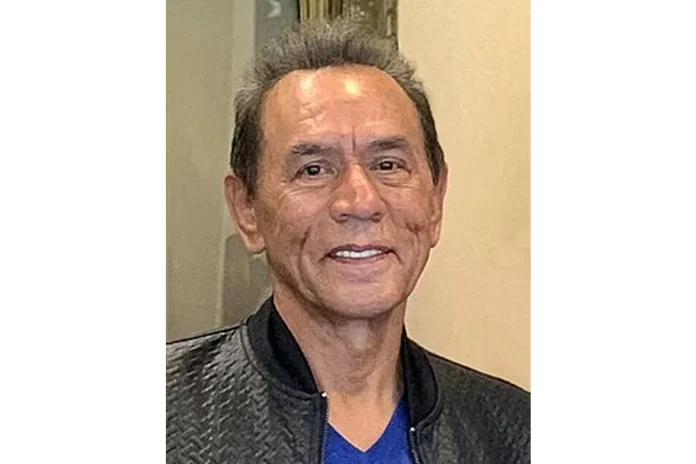
Wes Studi Bio
Wes Studi (Cherokee: ᏪᏌ ᏍᏚᏗ), born Wesley Studie on December 17, 1947, is a Cherokee American actor and film producer whose commanding screen presence has shaped the way Native American characters are portrayed in mainstream cinema. Born in Nofire Hollow, Oklahoma, Studi served in the Vietnam War before building one of the most respected careers in Hollywood, highlighted by roles in Academy Award-winning films such as Dances with Wolves and The Last of the Mohicans. In 2019, he received an Academy Honorary Award, becoming the first Native American actor to be honored by the Academy specifically for acting. Beyond film, Studi is recognized for his advocacy for Indigenous languages and cultures.
Early Life and Background
Studi was born into a Cherokee family in Nofire Hollow, a rural area in Cherokee County, Oklahoma, named after his mother’s family. He is the son of Maggie Studie, a housekeeper, and Andy Studie, a ranch hand, and he spoke only Cherokee at home until he started elementary school. After graduating from the Chilocco Indian Agricultural School in 1964, where his vocational major was in dry cleaning, Studi attended Tulsa Community College following his return from military service. In 2024, on the television series Finding Your Roots, Studi learned that the man listed on his birth certificate was not his biological father and that researchers had traced his lineage to brothers Jess and Bobby Blair, while also confirming that his sixth great-grandmother was Nanyehi, a respected Cherokee leader.
At the age of 17, Studi enlisted in the Oklahoma National Guard and completed his basic and advanced infantry training at Fort Polk, Louisiana. He volunteered for active duty and served in Vietnam with the 3rd Battalion, 39th Infantry Regiment, 9th Infantry Division, completing a 12-month tour and rising to the rank of Sergeant. After his discharge, he became active in Native American advocacy, joining the American Indian Movement in 1972 and taking part in the Trail of Broken Treaties, a march on Washington, D.C. He also participated in the 1973 Wounded Knee Incident at Pine Ridge Reservation, an experience that shaped his lifelong commitment to Indigenous rights.
Path to Acting
Following his military service and activism, Studi returned to Oklahoma and enrolled at Tulsa Community College, where he first discovered acting. He joined the American Indian Theater Company and appeared in the play The Royal Hunt of the Sun, an experience that opened the door to professional performance. During this period, he also taught the Cherokee language and syllabary and helped establish a Cherokee-language newspaper, work that reflected his deep commitment to cultural preservation. After his first marriage ended in divorce, Studi left ranching and began studying acting seriously, encouraged by a friend who suggested it would be a good way to meet new people.
Studi’s screen career began in 1988 with the film The Trial of Standing Bear, which marked his transition from stage work to cinema. This debut set the stage for a series of powerful performances in films centered on Indigenous histories, eventually leading to his breakthrough roles in the early 1990s.
Wes Studi Career
Early Career (1988–1989)
Studi made his film debut in 1988 with The Trial of Standing Bear, a project that introduced him to the camera and connected him with producers interested in telling Native American stories. Although he had limited screen time, the role established his presence in a growing circle of Indigenous-focused productions. He continued to build his résumé through small parts while developing his craft between film and stage work in Oklahoma.
By the end of the decade, Studi had laid the foundation for the wave of historical dramas that would soon define his career. His early training in theatre and his deep familiarity with Cherokee history gave him a unique authority that directors quickly recognized when casting roles requiring cultural authenticity and emotional depth.
Breakthrough (1990–1993)
Studi rose to international prominence with his role as a Pawnee warrior in Kevin Costner’s Academy Award-winning epic Dances with Wolves in 1990. Two years later, he delivered one of his most memorable performances as the Huron warrior Magua in Michael Mann’s The Last of the Mohicans (1992), a role that showcased his intensity and earned him widespread critical praise. He then starred alongside Eric Schweig in TNT’s historical film The Broken Chain, part of the network’s Native American initiative that produced three television movies and several documentaries over a 14-month period.
In 1993, Studi took on the title role in Geronimo: An American Legend, a film that examined the life of the legendary Apache leader and further cemented his reputation as one of Hollywood’s most compelling portrayers of Indigenous figures. These back-to-back performances in the early 1990s established him as a defining voice in Native American cinema.
Notable Works and Milestones
Studi’s signature works include Dances with Wolves (1990), The Last of the Mohicans (1992), Geronimo: An American Legend (1993), The New World (2005), and Avatar (2009), in which he played the Na’vi chief Eytukan. He also portrayed Police Lieutenant Joe Leaphorn in PBS adaptations of Tony Hillerman’s novels, including Skinwalkers, Coyote Waits, and A Thief of Time. In 2017, he starred as Cheyenne chief Yellow Hawk in Hostiles, and in December 2020, The New York Times ranked him No. 19 on its list of the 25 Greatest Actors of the 21st Century. In 2025, he briefly reprised his Avatar role as Eytukan in the sequel Avatar: Fire and Ash.
Wes Studi Award Nominations
Wes Studi’s decades-long career has brought him recognition from numerous awards bodies that have honored his performances in both film and television. His body of work, particularly his portrayals of complex Native American characters, has earned nominations across major industry awards celebrating both mainstream and Indigenous cinema.
Wes Studi Awards Won
In 2019, Wes Studi received an Academy Honorary Award, presented at the 90th Academy Awards ceremony, making him the first Native American actor to receive an Oscar specifically for acting. During his acceptance speech, Studi addressed the audience partly in the Cherokee language, of which he is a fluent speaker, and remarked that the recognition was long overdue.
| Award | Wins | Year |
|---|---|---|
| Academy Honorary Award | 1 | 2019 |
Wes Studi Family
Studi is the son of Andy Studie, a ranch hand, and Maggie Studie, a housekeeper. He grew up in a Cherokee household in rural Oklahoma, where his mother’s family gave their name to the Nofire Hollow community. From his first marriage to Rebecca Graves, which lasted from 1974 to 1982, Studi has a daughter, Leah, and a son, Daniel. He later married Maura Dhu Studi in 1986, and together they have a son, Kholan. Maura Dhu is the only child of the late actor Jack Albertson, and the family has lived on a farm near Santa Fe, New Mexico, since the early 1990s.
Personal Life
Studi and his wife, Maura Dhu Studi, perform together in the band Firecat of Discord and are actively involved in cultural preservation. He serves as the honorary chair of the national endowment campaign of the Indigenous Language Institute in Santa Fe, continuing the language work he began earlier in life. A longtime advocate for Native American rights, Studi endorsed Senator Bernie Sanders for president in the 2016 U.S. presidential election.