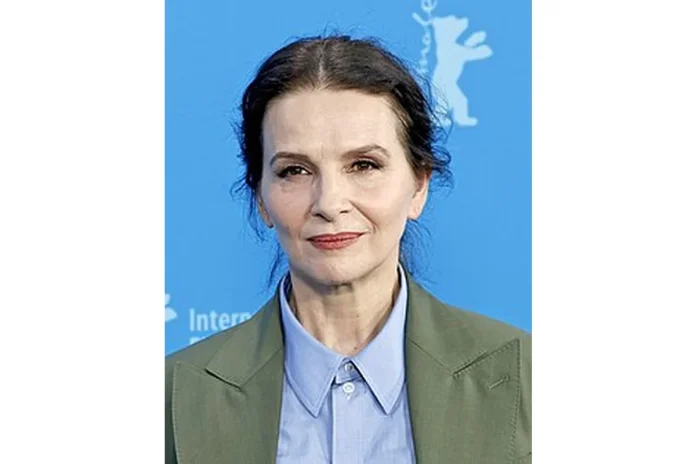
Juliette Binoche Bio
Juliette Binoche (born 9 March 1964) is a French actress known for her captivating performances in over 60 films, primarily in French and English. Renowned for her versatile roles, she has earned numerous accolades, including an Academy Award, a BAFTA Award, and a César Award. Binoche first gained prominence through collaborations with esteemed directors such as Jean-Luc Godard and Krzysztof Kieślowski, and she is the only actress, alongside Julianne Moore, to have won an acting award at the world’s three major film festivals: a Volpi Cup, a Silver Bear for Best Actress, and the Cannes Film Festival Award for Best Actress.
Her career spans decades and includes both cinema and stage work. She has built a reputation as one of the most respected actresses of her generation, with signature roles in films such as Three Colours: Blue, The English Patient, and Certified Copy.
Early Life and Background
Juliette Binoche was born in Paris, France, the daughter of Jean-Marie Binoche, a director, actor, and sculptor, and Monique Yvette Stalens, a teacher, director, and actress. Her father was French with one-eighth Portuguese-Brazilian ancestry and was raised partly in Morocco by his French-born parents, while her mother was born in Częstochowa, Poland. Her maternal grandparents were actors born in Częstochowa, and both were imprisoned at Auschwitz by the German Nazi occupiers because they were considered intellectuals. Her great-uncle was Léon Binoche, who won a gold medal in rugby at the 1900 Paris Olympics.
When her parents divorced in 1968, four-year-old Juliette and her sister Marion were sent to a provincial boarding school. During their teenage years, the sisters spent school holidays with their maternal grandmother and went months without seeing their parents. Binoche has stated that this perceived parental abandonment had a profound effect on her. She was not particularly academic and began acting in amateur stage productions during her teenage years. At seventeen, she directed and starred in a student production of Eugène Ionesco’s play Exit the King.
She studied acting at the Conservatoire National Supérieur d’Art Dramatique but quit after a short time, disliking the curriculum. In the early 1980s, she found an agent through a friend and joined a theater troupe, touring France, Belgium, and Switzerland under the pseudonym “Juliette Adrienne”. During this period, she also began lessons with acting coach Vera Gregh.
Path to Celebrity
Her first professional screen experience came as an extra in the TF1 television series Dorothée, danseuse de corde (1983) directed by Jacques Fansten, followed by a small role in the television film Fort bloque. Binoche then secured her first feature-film appearance in Pascal Kané’s Liberty Belle (1983). The role required just two days on-set, but the experience inspired her to pursue a career in film.
In 1983, she auditioned for the female lead in Jean-Luc Godard’s controversial film Hail Mary, a modern retelling of the Virgin birth. Although she spent six months on the set in Geneva, her presence in the final cut was confined to a few scenes. She followed this with a supporting role in Annick Lanoë’s Les Nanas and gained significant exposure in Jacques Doillon’s critically acclaimed Family Life, in which she played the volatile teenage step-daughter of Sami Frey’s central character. This film set the tone of her early career and brought her to wider attention.
Later in 1985, Binoche emerged as a leading actress in André Téchiné’s Rendez-vous, cast at short notice when Sandrine Bonnaire had to leave the production. The film premiered at the 1985 Cannes Film Festival and won Best Director. Rendez-vous made her a star in France, and in 1986 she earned her first César nomination for Best Actress for her performance.
Juliette Binoche Career
Early Career (1984–1991)
Following her breakthrough with Rendez-vous, Binoche starred opposite Michel Piccoli in Jacques Rouffio’s My Brother-in-Law Killed My Sister (1986), a critical and commercial failure. Later in 1986, she again starred opposite Michel Piccoli in Leos Carax’s avant-garde thriller Mauvais Sang, which was a critical and commercial success and earned her a second César nomination. In August 1986, she began filming Philip Kaufman’s adaptation of Milan Kundera’s novel The Unbearable Lightness of Being, her first English-language role, released in 1988 to worldwide success.
In 1988, Binoche returned to the stage in an acclaimed production of Anton Chekhov’s The Seagull directed by Andrei Konchalovsky at Théâtre de l’Odéon in Paris. She then began work on Leos Carax’s Les Amants du Pont-Neuf, which was beset by production problems and took three years to complete. When finally released in 1991, the film was a critical success and earned Binoche a European Film Award and her third César nomination.
Breakthrough (1992–2000)
In the 1990s, Binoche pursued an international career and was cast in a series of critically and commercially successful films. She relocated to London for the 1992 productions of Wuthering Heights and Damage, both of which enhanced her international reputation. In 1993, she starred in Krzysztof Kieślowski’s Three Colours: Blue, the story of a young woman who loses her composer husband and daughter in a car accident. The film premiered at the 1993 Venice Film Festival, where she won the Best Actress Prize, along with a César Award and a Golden Globe nomination. She also made cameo appearances in Three Colours: White and Three Colours: Red.
In 1995, Binoche starred in the big-budget adaptation The Horseman on the Roof, directed by Jean-Paul Rappeneau, which was a worldwide box office success. Her career-defining moment came with The English Patient (1996), directed by Anthony Minghella and based on Michael Ondaatje’s novel. The film won nine Academy Awards, including Best Supporting Actress for Juliette Binoche, making her the second French actress to win an Oscar after Simone Signoret. For her role in Lasse Hallström’s Chocolat (2000), she received a nomination for the Academy Award for Best Actress.
Notable Works and Milestones
Among her most celebrated works are Three Colours: Blue, for which she won the Volpi Cup and César Award, and The English Patient, which earned her the Academy Award for Best Supporting Actress. In 2010, she completed her European “best actress triple crown” by winning the Cannes Film Festival Award for Best Actress for Abbas Kiarostami’s Certified Copy, following earlier wins at Venice and Berlin.
Juliette Binoche Award Nominations
Throughout her career, Juliette Binoche has received numerous award nominations recognizing her performances in French and English-language cinema and on stage. She earned her first César for Best Actress nomination for Rendez-vous in 1986, followed by further César nominations for Mauvais Sang, Les Amants du Pont-Neuf, Damage, The Horseman on the Roof, La Veuve de Saint-Pierre, Jet Lag, and Caché. She received a Golden Globe nomination for Three Colours: Blue and another for La Veuve de Saint-Pierre. Binoche was nominated for the Academy Award for Best Actress for Chocolat and for the Tony Award for Best Actress in a Play for her Broadway debut in Harold Pinter’s Betrayal in 2000.
Juliette Binoche Awards Won
Juliette Binoche has won many of the most prestigious awards in world cinema. She won the Volpi Cup for Best Actress at the 1993 Venice Film Festival and the César Award for Best Actress for Three Colours: Blue. She won the Academy Award for Best Supporting Actress for The English Patient (1996) and the Silver Bear for Best Actress at the Berlin International Film Festival. In 2010, she won the Cannes Film Festival Award for Best Actress for Certified Copy, completing her unique European “best actress triple crown”. She also received the European Film Audience Award for Best Actress for Chocolat, and her dance production in-i won the prestigious Premio Roberto Rossellini.
Juliette Binoche Family
Juliette Binoche’s family has strong artistic roots. Her father, Jean-Marie Binoche, was a director, actor, and sculptor, while her mother, Monique Yvette Stalens, was a teacher, director, and actress. Her sister, Marion Stalens, is a professional photographer and documentary director who has collaborated with Binoche on several projects, including the documentary Juliette Binoche – Sketches for a Portrait. Marion is married to stage director Pierre Pradinas. Her great-uncle Léon Binoche was an Olympic gold medalist in rugby at the 1900 Paris Olympics.
Binoche has two children: a son, Raphaël, born on 2 September 1993, whose father is scuba diver André Halle, and a daughter, Hana, born on 16 December 1999, whose father is actor Benoît Magimel. Binoche also has a half-brother, Camille Humeau, born in 1978, who is a musician and appeared in a 2007 stage production of Cabaret directed by Sam Mendes.
Personal Life
Binoche was married to André Halle from 1992 to 1995 and to actor Benoît Magimel from 1998 to 2003, with whom she starred in Children of the Century (1999) and later in The Taste of Things (2023). She is a Christian and reads the Bible daily, stating in a 2025 interview with The Independent: “I believe there is a God up there, but it cannot just be belief. It needs to be concrete for me.”
Since 1992, she has been a patron of the French-Cambodian charity Enfants d’Asie and is godmother to five Cambodian orphans. She has also been involved with Reporters Without Borders since 2000. In 2024, she was elected President of the European Film Academy, and in February 2025 she was named jury president for that year’s Cannes Film Festival.