
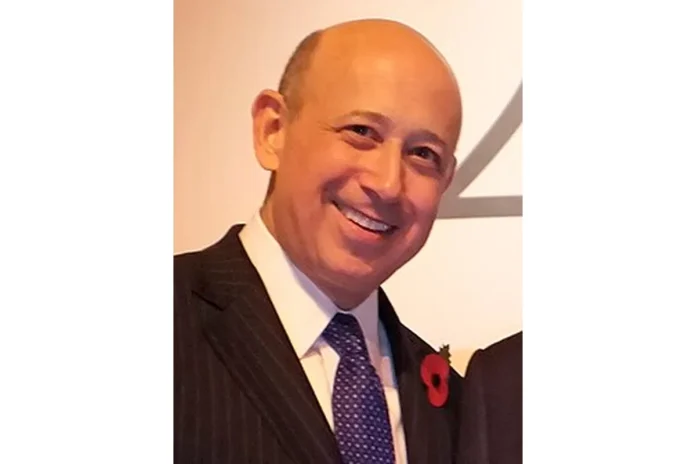
Lloyd Blankfein Bio
Lloyd Craig Blankfein is an American investment banker who served as chairman and chief executive officer of Goldman Sachs from 2006 to 2018 and has served as senior chairman of the firm since 2019. Over more than three decades at the company, he became one of the most recognizable figures on Wall Street, particularly for his role during the 2008 financial crisis. Beyond banking, Blankfein is known for his philanthropy, his civic engagement, and his frequent public commentary on economic and political issues.
Early Life and Background
Lloyd Craig Blankfein was born on September 20, 1954, in the Bronx borough of New York City, and was raised in a low-income Jewish family. His father, Seymour Blankfein, worked as a clerk with the U.S. Postal Service branch in Manhattan, and his mother worked as a receptionist. The family lived in the Linden Houses, a public housing project in the East New York section of Brooklyn, an upbringing that Blankfein has often cited as formative to his drive and discipline.
He attended New York City public schools, graduating as valedictorian from Thomas Jefferson High School in 1971. From there, he enrolled at Harvard College, where he lived in Winthrop House and earned an A.B. in history in 1975. He continued at Harvard Law School and received his J.D. degree in 1978, setting the stage for a legal career that would soon turn toward finance.
Path to Wall Street
After law school, Blankfein briefly worked at the law firms Proskauer Rose and Donovan, Leisure, Newton & Irvine. In 1982, he made the decisive move into finance by joining J. Aron & Co., a small commodities trading firm that had been acquired by Goldman Sachs the previous year. He began as a precious metals salesman in the firm’s London office, learning the trading desk culture that would define his career.
Through the 1980s and early 1990s, Blankfein rose through the ranks of Goldman’s commodities and currency businesses. In 1994, then-chairman Stephen Friedman tasked him with co-managing the currency and commodities divisions, a role he held until 1997. After Henry Paulson became CEO, Blankfein was identified as his eventual successor, and in 2004 he was promoted to president and chief operating officer, overseeing the firm through the mid-2000s commodities boom.
Lloyd Blankfein Career
Becoming CEO of Goldman Sachs (2006)
In May 2006, U.S. President George W. Bush nominated Henry Paulson to serve as the 74th United States Secretary of the Treasury. As part of the succession plan, Blankfein was asked to become chairman and chief executive officer of Goldman Sachs, and he assumed the role in July 2006. His elevation placed him at the helm of one of the world’s most powerful investment banks at a critical moment for global finance.
Navigating the 2008 Financial Crisis
Almost immediately after taking charge, Blankfein faced the 2008 financial crisis. The Federal Reserve lowered interest rates, and the U.S. Treasury extended public support to private banks. Blankfein and his team positioned Goldman Sachs to take advantage of dovish monetary policy and reduced competition, expanding the firm’s market share as rival institutions collapsed or were absorbed by competitors. By the crisis’s end, Goldman had become the second-largest investment bank in the United States.
His handling of the crisis drew both praise and criticism. In 2009, he was named Financial Times Person of the Year, with the citation noting that his bank had stuck to its strengths and used low interest rates and diminished competition to make significant trading profits. He was twice named one of the most influential people in the world by Time magazine. At the same time, he testified before the Financial Crisis Inquiry Commission in January 2010 and again before the Senate Permanent Subcommittee on Investigations in April 2010, defending Goldman’s conduct and its market-maker role in subprime-mortgage-related securities. Senator Carl Levin accused him of misleading Congress, though no perjury charges were filed.
Leadership Era (2009–2018)
Blankfein continued to lead Goldman Sachs through a period of regulatory scrutiny and cultural debate. In March 2012, a former Goldman executive, Greg Smith, published a widely circulated op-ed in The New York Times criticizing the firm’s leadership and client treatment, drawing Blankfein into broader public debate about Wall Street ethics. In February 2018, Blankfein instituted new hiring priorities focused on quantitative strategists to bolster the firm’s trading business.
On March 15, 2018, Blankfein issued an internal memo advocating for complete gender parity across the firm’s workforce, acknowledging that while pay practices were equal, the representation of women and diverse professionals required significant additional work. Throughout this era, he was a frequent public voice on economic policy, executive compensation, and political issues, including critiques of wealth-tax proposals and public commentary during the coronavirus pandemic urging the reopening of the U.S. economy in 2020.
Notable Events and Milestones
Blankfein’s tenure is defined by his stewardship of Goldman Sachs through the 2008 financial crisis, his 2009 Financial Times Person of the Year recognition, and his 2010 congressional testimony during a national reckoning over Wall Street conduct. In 2011, Forbes Magazine ranked him #43 on its list of the World’s Most Powerful People. On March 9, 2018, The Wall Street Journal reported that he would step down as CEO by year-end, and it was later announced that David Solomon would succeed him as CEO on October 1, 2018, and as chairman by the end of 2018.
Lloyd Blankfein Career Wins
Over his career, Lloyd Blankfein received several major recognitions for his leadership of Goldman Sachs, most notably the Financial Times Person of the Year award in 2009 for guiding the firm through the global financial crisis. He was also twice named one of the most influential people in the world by Time magazine and was ranked among Forbes Magazine’s list of the World’s Most Powerful People in 2011.
Career Highlights
Blankfein’s most prominent career milestone was leading Goldman Sachs through the 2008 financial crisis, after which he was named Financial Times Person of the Year. He was twice included on Time magazine’s list of the most influential people in the world and was listed as the 43rd most powerful person in the world by Forbes in 2011. In 2006, as the highest-paid executive on Wall Street, he received a total compensation package of $54.4 million, reflecting Goldman’s record net earnings of $9.5 billion that year.
Other Wins and Achievements
Beyond public recognition, Blankfein was a prominent civic and philanthropic figure. From 2000 to 2009, he personally donated $11 million to charitable organizations, and the Lloyd and Laura Blankfein Foundation supported Harvard Law School, the Ethical Culture Fieldston School, Barnard College, the Robin Hood Foundation, and Carnegie Hall. He served on the board of the Partnership for New York City and on the board of overseers of Weill Cornell Medical College.
Lloyd Blankfein Family
Family Background and Personal Lineage
Lloyd Craig Blankfein was born to a low-income Jewish family in the Bronx. His father, Seymour Blankfein, was a clerk with the U.S. Postal Service branch in Manhattan, and his mother worked as a receptionist. The family later moved to the Linden Houses, a public housing project in the East New York section of Brooklyn, where Blankfein spent his formative years.
Personal Life
Blankfein is married to Laura Jacobs, an attorney and the daughter of Norman S. Jacobs, the editor-in-chief of the Foreign Policy Association publications. The couple married in 1983 and have two sons and a daughter. On September 22, 2015, Blankfein was diagnosed with a form of lymphoma. He received multiple rounds of chemotherapy treatment and, by October 2016, was reported to be in remission.