
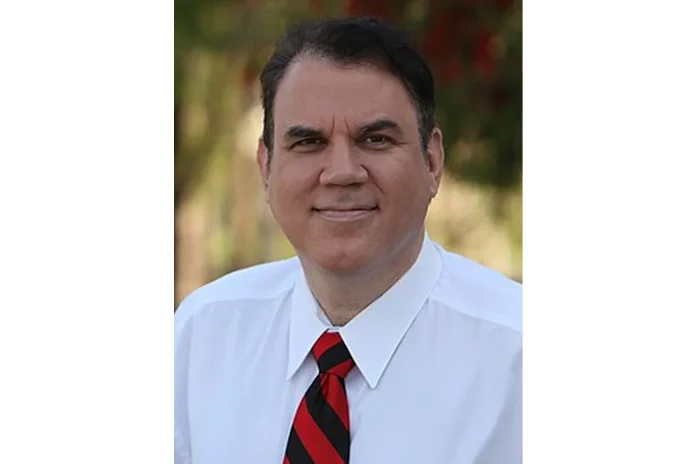
Alan Grayson Bio
Alan Mark Grayson (born March 13, 1958) is an American politician, attorney, and entrepreneur who served in the United States House of Representatives for two non-consecutive stretches. A member of the Democratic Party, he represented Florida’s 8th congressional district from 2009 to 2011 and later represented the 9th congressional district from 2013 to 2017. He is widely recognized as a progressive voice in Congress and a former vice-chair of the Congressional Progressive Caucus.
Beyond politics, Grayson built a career as a lawyer specializing in whistleblower fraud cases against Iraq War contractors and co-founded the telecommunications company IDT Corporation. He has repeatedly sought higher office, including bids for the United States Senate and seats in the Florida Legislature.
Early Life and Background
Alan Mark Grayson was born on March 13, 1958, in the Bronx, New York City, to Daniel Franklin Grayson and Dorothy Ann Grayson, née Sabin. He grew up in Adee Towers, a Mitchell–Lama Housing Program building, an experience that shaped his later focus on housing and economic issues. Grayson is Jewish, a background that has informed aspects of his public life.
He graduated from the prestigious Bronx High School of Science in 1975. To support his undergraduate studies, Grayson worked as a janitor, nightwatchman, and reporter for the Boston Phoenix. He went on to earn a Bachelor of Arts degree magna cum laude and Phi Beta Kappa from Harvard College in 1978, with a Special Concentration in Urban Studies.
After working as an economist for two years, Grayson returned to Harvard for graduate studies. In 1983, he earned both a Juris Doctor cum laude from Harvard Law School and a Master in Public Policy from the John F. Kennedy School of Government. He also completed all coursework and the comprehensive examination for a Ph.D. in government, and he wrote his master’s thesis on gerontology.
Path to US Politics
Before entering electoral politics, Grayson built a successful legal and business career. He clerked at the Colorado Supreme Court in 1983 and at the U.S. Court of Appeals for the D.C. Circuit from 1984 to 1985, where he worked alongside future Supreme Court Justices Ruth Bader Ginsburg and Antonin Scalia. He later practiced contract law in Washington, D.C., and founded his own firm, Grayson & Kubli, in 1991, specializing in government contract law.
In the early 2000s, Grayson became a plaintiffs’ attorney focused on whistleblower fraud cases against Iraq War contractors. His most prominent case, a False Claims Act suit against Custer Battles, resulted in a jury verdict of more than $13 million, upheld on appeal in 2009. This work, combined with his criticism of the war in Iraq, brought him national attention and laid the groundwork for his later political career.
Alan Grayson Career
Early Career (2006-2008)
Alan Grayson first entered electoral politics in 2006, when he ran for the Democratic nomination in Florida’s 8th congressional district. He lost the primary to Charlie Stuart, a prominent local businessman and conservative Democrat, who went on to lose the general election to incumbent Republican Ric Keller.
Undeterred, Grayson announced a second run for the seat in late 2007. In the August 2008 Democratic primary, he defeated Stuart by a wide margin, and he went on to defeat Keller in the general election, 52–48%, capturing the seat and beginning his first term in Congress.
First Term in the House of Representatives (2009-2011)
During his first term, Alan Grayson quickly became one of the most talked-about members of Congress. He was a member of the Congressional Progressive Caucus and served as its vice-chairman. He gained national attention for sponsoring the Teach the Constitution Week resolution, which encouraged high schools to dedicate a week each September to teaching the U.S. Constitution.
He also championed the New Frontier Congressional Gold Medal Act of 2009, which called for awarding the Congressional Gold Medal to Apollo 11 astronauts Neil Armstrong, Edwin “Buzz” Aldrin Jr., and Michael Collins, as well as John Glenn. The bill passed the House unanimously on July 20, 2009, the 40th anniversary of the Moon landing.
Grayson was equally known for his combative rhetoric. In a September 2009 House floor speech, he summarized the Republican health care plan as “don’t get sick, and if you do get sick, die quickly,” a comment that drew bipartisan criticism. He later apologized for his use of the word “holocaust” in a subsequent statement on the same topic. In 2010, he introduced the Public Option Act, a four-page bill that would have allowed Americans to buy into the Medicare program.
His first term ended in defeat. Republican Daniel Webster beat Grayson 56–38% in 2010, following a campaign marked by controversial advertisements from both sides and heavy spending by outside groups.
Comeback in the House of Representatives (2013-2017)
After a one-term absence, Alan Grayson returned to Congress in 2013, this time representing Florida’s newly created 9th congressional district. He ran unopposed in the Democratic primary and defeated Republican Todd Long, 63–37%, in the general election, calling it “the biggest comeback in the history of the U.S. House of Representatives.”
During his second stint, Grayson moderated his tone and focused on legislative work. David Weigel of Slate magazine wrote in July 2013 that Grayson had become “the most effective member of the House,” noting that he had passed more amendments than any of his 434 peers. Grayson continued to advocate for progressive priorities, including expanded healthcare access, environmental protections, and oversight of federal defense spending.
He was reelected in 2014, defeating Republican Carol Platt with 54% of the vote. In 2016, he chose not to seek reelection to his House seat in order to run for the United States Senate.
Senate Bids and Later Campaigns (2016-Present)
In 2016, Alan Grayson ran for the U.S. Senate in Florida but was defeated in the Democratic primary by fellow Representative Patrick Murphy, 59–18%. Murphy went on to lose the general election to incumbent Republican Marco Rubio. Two years later, Grayson sought a return to the House in the 9th district but lost the Democratic primary to his successor, Darren Soto, 66–34%.
He announced another Senate run in 2021, challenging Rubio, but dropped that bid in 2022 to run in the open race for Florida’s 10th congressional district, where he lost the Democratic primary. In 2024, he finished third in the Democratic primary for the Florida Senate, and he later entered the 2025 Florida Senate special election. He is also running in the 2026 United States Senate special election in Florida.
Notable Events and Milestones
Alan Grayson’s career has been defined by both legislative accomplishments and headline-grabbing moments. He is perhaps best known for his 2009 “die quickly” speech on the House floor, the introduction of the Public Option Act, and his 2012 comeback victory, which he described as historic. He has also been recognized for his long-running legal battle against Iraq War contractor fraud and his role as vice-chair of the Congressional Progressive Caucus.
Alan Grayson Career Wins
Alan Grayson has won three elections to the United States House of Representatives, representing two different Florida districts across two non-consecutive stretches. He has also won one Democratic primary during his 2008 campaign, defeating Charlie Stuart in a rematch.
U.S. House of Representatives Highlights
Grayson first won a seat in Congress in 2008, defeating incumbent Republican Ric Keller in Florida’s 8th congressional district, 52–48%. After losing his 2010 reelection bid, he mounted a successful comeback in 2012, winning the newly drawn 9th district with 63% of the vote against Republican Todd Long. He was reelected again in 2014, taking 54% of the vote against Republican Carol Platt.
Other Wins and Achievements
Beyond his electoral victories, Grayson has achieved notable success in the legal and business worlds. He co-founded and served as the first president of IDT Corporation, a telecommunications company that helped build his personal fortune. He also secured a landmark $13 million verdict in a whistleblower fraud case against Iraq War contractor Custer Battles, a case that was upheld on appeal in 2009.
Alan Grayson Family
Family Background and Public Service
Alan Mark Grayson was born to Daniel Franklin Grayson and Dorothy Ann Grayson, née Sabin, in the Bronx, New York City. He grew up in a public housing development, an experience that informed his later advocacy for working-class Americans. He is Jewish, and his faith has played a role in shaping his political identity and his approach to issues such as civil rights and social justice.
Personal Life
Grayson married Lolita Grayson in 1990, and the couple had five children. They separated in March 2014, and their 25-year marriage was annulled by mutual agreement in April 2015. On May 31, 2016, he married Dr. Dena Minning, his third wife. Minning ran unsuccessfully for his old House seat in 2016. Grayson has been ranked among the wealthiest members of Congress, with a reported net worth of $31.41 million in 2010, largely from his business career and legal victories. He resides in Orlando, Florida.