
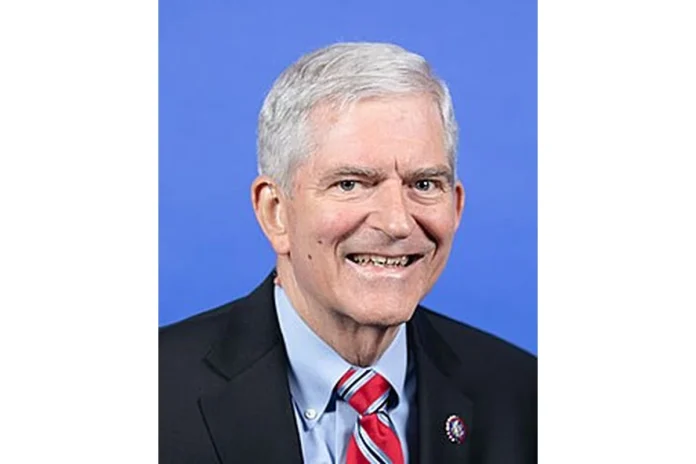
Daniel Webster Bio
Daniel Alan Webster (born April 27, 1949) is an American politician and businessman who has served as the U.S. representative for Florida’s 11th congressional district since 2017. A Republican and the longest-serving legislator in Florida history, he first entered Congress in 2011 after 28 years in the Florida Legislature. He owns and operates a family heating and air-conditioning business and is a prominent advocate for homeschooling and conservative causes.
Early Life and Background
Daniel Alan Webster was born in Charleston, West Virginia, the son of Mildred Rada (Schoolcraft), a nurse, and Dennis Webster. When he was seven, his family moved to Orlando, Florida, on a doctor’s recommendation that a change in climate might relieve his chronic sinus problems. He was raised in the Orlando area, where he later settled permanently.
He is reportedly a distant relative of the famous antebellum politician and orator Daniel Webster. Webster attended the Georgia Institute of Technology in Atlanta, where he served as student government chaplain from 1970 to 1971 and was a member of the Tau Kappa Epsilon fraternity. He graduated in 1971 with a Bachelor of Science degree in electrical engineering.
After college, Webster’s Vietnam War student deferment expired, making him eligible for the military draft, but he was not drafted because he failed the physical exam due to lifelong foot problems that prevent him from standing for long periods. Since college, he has worked in the family heating and air-conditioning business, which he now owns and operates.
Path to US Politics
Webster’s entry into public service began with a local zoning dispute in Orange County. While working with his church to convert a residential house into a Sunday school space, Webster found that the county commission had rejected every zoning exemption request submitted by a church or religious organization. Unable to find a politician who shared his frustration, he decided to run for office himself at age 30.
He first ran for the Florida House of Representatives in 1979 and won a competitive Republican primary, advancing to a runoff that he won 54% to 46%. In the 1980 general election, he defeated Democratic State Representative Henry Swanson 51% to 49%, a margin of just 2,070 votes, with the race decided by his own Pine Hills precinct. The narrow victory launched a 28-year career in the Florida Legislature.
Daniel Webster Career
Early Career (1980–1995)
Webster was first elected to the Florida House of Representatives in 1980 and quickly rose through the chamber’s Republican minority leadership, serving as Minority Floor Leader and then Minority Whip. In 1982, after redistricting, he was reelected in the new 41st House District, defeating Craig Crawford 58% to 42%, and in 1984 he won a third term over fellow State Representative Dick Batchelor, 54% to 46%.
After defeating Batchelor in 1984, Webster never faced another opponent in the State House, winning reelection unopposed every two years. His first bill to become law was the 1985 Home Education Program Act, which legalized homeschooling in Florida, a measure he considers his most significant early legislative achievement. In 1990, he sponsored legislation introducing the policy of covenant marriage, which would make divorce between consenting adults far more difficult except in cases of infidelity.
Florida Legislature Breakthrough (1996–2008)
When Republicans gained a majority in the Florida House in 1996, Webster became the first Republican Speaker of the Florida House of Representatives in 122 years, since the Reconstruction era. He served as Speaker until 1998, when term limits made him ineligible to run for reelection, and during that time he pursued a disciplined agenda of lower taxes and balanced education funding.
As Speaker in 1997, Webster insisted that school funding legislation must address the needs of all districts without raising taxes. He agreed to a school construction plan funded by up to $2.5 billion in bonds, while arguing that the crowding problem was being exaggerated for political purposes. He also sponsored 1998 legislation to improve and streamline pre-kindergarten education and to provide training for parents who homeschooled their children.
In 2002, Webster unsuccessfully sought the position of Florida Senate president. He won election to the Florida Senate in 1998 and served until reaching the term limit in 2008, including a term as Senate Majority Leader from 2006 to 2008. During this period, he sponsored legislation on steroid testing oversight for high school athletes and a 2008 bill requiring that women seeking an abortion receive an ultrasound, which did not pass that year but later became law. He was also a central figure in the 2005 Terri Schiavo case, introducing a bill that would have prevented the removal of feeding tubes from patients in persistent vegetative states when family members disagreed.
U.S. Congress Era (2010–Present)
After initially resisting suggestions to run for federal office, Webster entered the 2010 race for Florida’s 8th congressional district and won the Republican primary with 40% of the vote. He went on to defeat Democratic incumbent Alan Grayson 56% to 38% in the general election, propelled by endorsements from former Florida Governor Jeb Bush and former Arkansas Governor Mike Huckabee. He was subsequently named one of 52 “Young Guns” by the National Republican Congressional Committee.
Following redistricting, Webster ran in the 10th district in 2012 and defeated former Orlando Police Chief Val Demings 52% to 48%. He continued to represent the 10th district through 2016 before court-ordered redistricting pushed him into the 11th district, where he defeated Democrat Dave Koller 65% to 32% in 2016. He has since won reelection in 2018, 2020, and 2022, including a hard-fought 2022 Republican primary against Laura Loomer that he won 51% to 44%.
On the national stage, Webster has run three times for Speaker of the House. In January 2015, he received 12 votes, and in October 2015 he received nine votes in the final tally as he sought to replace John Boehner. In 2017, despite not being a candidate, he received one vote from Thomas Massie of Kentucky. In the 115th Congress, he served on the Transportation and Infrastructure Committee, the Natural Resources Committee, and the Science, Space and Technology Committee, and he has chaired the Senate Judiciary Committee during his time in the Florida Legislature.
Notable Events and Milestones
Webster is the longest-serving legislator in Florida history and the first Republican Speaker of the Florida House since Reconstruction, both signature achievements of his career. In 2005, State Road 429 was designated the “Daniel Webster Western Beltway,” in 2008 the Florida Department of Transportation’s Turnpike District Headquarters was named the “Senator Daniel Webster Building,” and the largest committee room in the Florida House was renamed “Speaker Daniel Webster Hall.” In December 2020, he was one of 126 Republican members of the House who signed an amicus brief supporting Texas v. Pennsylvania, a lawsuit contesting the results of the 2020 presidential election.
Daniel Webster Career Wins
Daniel Alan Webster has compiled an unusually long record of electoral success at both the state and federal levels, including 28 years in the Florida Legislature and continuous service in the U.S. House of Representatives since 2011. He ran unopposed in nearly every state legislative race after 1984 and has continued to win comfortably in his redrawn congressional districts.
Florida Legislature Highlights
Webster served in the Florida House of Representatives from 1980 to 1998, including terms as Minority Floor Leader and Minority Whip, and in the Florida Senate from 1998 to 2008, including service as Senate Majority Leader from 2006 to 2008. His first major legislative win was passage of the 1985 Home Education Program Act, which legalized homeschooling in Florida. He became the first Republican Speaker of the Florida House in 122 years when the GOP took the majority in 1996, a position he held until 1998.
Other Wins and Achievements
Webster has received extensive recognition for his legislative work, including the Republican Party of Florida Statesman of the Year (1995), the Florida Chamber of Commerce Legislator of the Year (1995), the Florida Farm Bureau Legislative Award (1995), the Florida League of Cities Quality Floridian (1995), the Florida Banking Association Award (1995), the Florida Hotel and Motel Association Special Recognition Award (1995), the Board of Regents Legislative Award (1995), the Florida Association of State Troopers Leadership Award (1996), the American Heart Association recognition (1996), the Florida Medical Association recognition award (1996), and the Florida Family Policy Council Award (2006). He holds an “A” rating from the National Rifle Association and a “0” rating from the Human Rights Campaign.
Daniel Webster Family
Family Background and Lineage
Webster is reportedly a distant relative of the antebellum politician and orator Daniel Webster, the 19th-century U.S. senator and secretary of state. He is the son of Dennis Webster and Mildred Rada (Schoolcraft), a nurse who raised him in the family. After his move to Florida at age seven, he grew up in the Orlando area and built his adult life and career there.
Personal Life
Webster and his wife, Sandra E. “Sandy” (Jordan) Webster, have been married since 1972 and have six children, all of whom they homeschooled using the Advanced Training Institute curriculum founded by Bill Gothard. As of 2018, they have 17 grandchildren. In May 2014, their son John married Alyssa Bates, daughter of Gil and Kelly Bates of the reality-show family featured on Bringing Up Bates. The Websters are members of First Baptist Church of Central Florida, and Webster serves on the University of Central Florida board of trustees. In 2021, he and his wife faced health issues that caused him to miss some votes; she had cancer surgery and he had a pacemaker installed.