
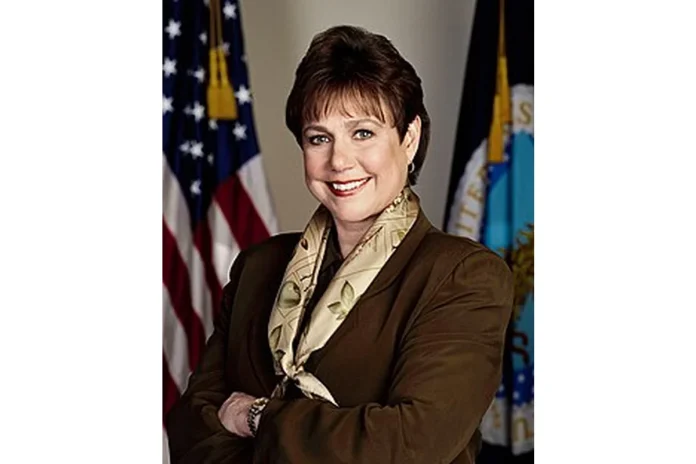
Ann Veneman Bio
Ann Margaret Veneman (born June 29, 1949) is an American attorney and politician who served as the 27th United States Secretary of Agriculture from 2001 to 2005 and as the fifth executive director of UNICEF from 2005 to 2010. A member of the Republican Party, she was the first woman to serve as U.S. Secretary of Agriculture and the second woman to lead UNICEF, following Carol Bellamy. Her career has combined legal practice, government service, and international development, with a focus on food safety, agricultural trade, child nutrition, and global programs to reduce hunger and improve maternal and child health.
Across more than four decades in public life, Veneman has moved between courtroom practice, federal and state agencies, and international institutions. She has also advised private companies and nonprofit boards, and she has been recognized with several honorary doctoral degrees for her contributions to agriculture, law, and humanitarian work.
Early Life and Background
Ann Margaret Veneman was born on June 29, 1949, in Modesto, California, and was raised on a peach farm in the same community. Her father, John Veneman, was a former Undersecretary of Health, Education and Welfare and a member of the California State Assembly, giving her an early exposure to public policy and government service. Growing up in a household connected to both farming and state government helped shape her later interest in agricultural policy and public administration.
Veneman earned a Bachelor of Arts degree in political science from the University of California, Davis. She went on to receive a Master of Public Policy from the Richard and Rhoda Goldman School of Public Policy at the University of California, Berkeley, and a Juris Doctor degree from the University of California, Hastings College of the Law. Her academic training in political science, policy, and law prepared her for a career that would blend legal practice with high-level government leadership.
Over the years, Veneman has been awarded honorary doctoral degrees from California Polytechnic State University, San Luis Obispo (2001), Lincoln University in Missouri (2003), Delaware State University (2004), and Middlebury College (2006), reflecting recognition of her work in agriculture, law, and international development.
Path to US Politics
Veneman began her legal career in 1976 as a staff attorney with the General Counsel’s office of the Bay Area Rapid Transit District in Oakland, California. In 1978, she returned to Modesto, where she served as a Deputy Public Defender, gaining courtroom experience in criminal defense. By 1980, she had joined the Modesto law firm of Damrell, Damrell and Nelson, where she rose from associate to partner, building a foundation in private legal practice.
Her transition to federal government came in 1986, when she joined the United States Department of Agriculture’s Foreign Agricultural Service as Associate Administrator, a role she held until 1989. During this period she worked on the Uruguay Round talks for the General Agreement on Tariffs and Trade (GATT), engaging directly with international trade negotiations. She then served as Deputy Undersecretary of Agriculture for International Affairs and Commodity Programs from 1989 to 1991, further establishing her expertise in agricultural trade policy.
In 1991, Veneman was appointed United States Deputy Secretary of Agriculture, the first woman to hold the department’s second-highest-ranking position, serving until 1993. After leaving office, she practiced with the law firm and lobby group Patton, Boggs and Blow and served on several boards. In 1995, she re-entered government as Secretary of the California Department of Food and Agriculture, again the first woman to hold that post, serving until 1999 before returning to private practice at the firm Nossaman LLP from 1999 to 2001.
Ann Veneman Career
Early Career (1976-1991)
Veneman’s early career combined courtroom practice in California with growing responsibilities in federal agricultural policy. After working as a staff attorney for the Bay Area Rapid Transit District and then as a Deputy Public Defender in Modesto, she entered private practice at Damrell, Damrell and Nelson, where she became a partner. These roles gave her a strong grounding in legal analysis, public service, and client advocacy.
Her move to Washington, D.C., came in 1986 with the Foreign Agricultural Service, where she served as Associate Administrator until 1989. She contributed to the Uruguay Round of GATT negotiations and later served as Deputy Undersecretary of Agriculture for International Affairs and Commodity Programs, laying the groundwork for her later leadership in agricultural trade.
Secretary of Agriculture (2001-2005)
On January 20, 2001, Veneman was unanimously confirmed by the United States Senate and sworn in as the 27th United States Secretary of Agriculture under President George W. Bush, becoming the first woman to lead the department. Early in her tenure she released a policy framework, Food and Agricultural Policy: Taking Stock for the New Century, outlining priorities for the department. She also confronted the outbreak of foot and mouth disease in Europe, prompting stronger sanitary and phytosanitary measures, and after the September 11, 2001 attacks, she oversaw additional protections for the agriculture and food supply.
Veneman focused on modernizing USDA programs, launching an e-Government initiative that expanded electronic access to services, and securing three consecutive clean financial audits for the department. She established the ‘Leaders of Tomorrow’ initiative to support agricultural education and mentoring, increased internship opportunities, and encouraged young people to pursue careers across the food and agricultural sector. She also reauthorized the Food Stamp Program and child nutrition programs, increased their funding, and in 2004 completed the transition from paper food stamps to electronic debit cards to reduce fraud and expand access.
Her tenure included responses to outbreaks of avian influenza and exotic Newcastle disease in poultry, both of which were quickly eradicated, as well as strengthened food safety oversight after various product recalls. On December 23, 2003, Veneman announced the first detected case of Bovine spongiform encephalopathy, or mad cow disease, in the United States, in a cow of Canadian origin in Washington State. Within a week, she announced additional protective measures, including a ban on nonambulatory cattle from the human food supply and acceleration of a national livestock identification system. Internationally, she organized the 2003 Ministerial Conference on Science and Technology, bringing together ministers from 120 nations to discuss how science and technology could reduce hunger and poverty in the developing world.
UNICEF Executive Director (2005-2010)
Appointed by U.N. Secretary-General Kofi Annan on January 18, 2005, Veneman took office as the fifth executive director of UNICEF on May 1, 2005, serving until 2010. She was the second woman to lead the organization. In this role, she expanded UNICEF’s focus on maternal and newborn health, working with the World Health Organization, the United Nations Population Fund, and the World Bank to accelerate progress in the 25 countries with the highest rates of infant mortality.
In 2007, Veneman helped launch a partnership with U.S. playwright Eve Ensler to raise awareness of sexual violence against women in the Democratic Republic of the Congo, and she publicly called for greater international efforts to end female genital mutilation. In 2009, she was named to Forbes Magazine’s list of the World’s 100 Most Powerful Women, ranking 46th. She was succeeded by Anthony Lake on May 1, 2010.
Post-UNICEF Activities (2010-Present)
After leaving UNICEF, Veneman served as an adviser to Nestlé and took a seat on the company’s board of directors. Nutrition campaign groups criticized her involvement because of the company’s history of violating a global code restricting advertising of breast milk substitutes. Beyond corporate advisory work, she has continued to engage in policy and legal matters, including signing a 2015 amicus brief asking the United States Supreme Court to nationally recognize same-sex marriage.
Ann Veneman Family
Family Background and Political Lineage
Veneman was raised on a peach farm in Modesto, California, by her father, John Veneman, a former Undersecretary of Health, Education and Welfare and a member of the California State Assembly. Her family’s roots in farming and state government provided an early window into agricultural issues and legislative work, helping shape her later career focus on food policy and rural affairs.
Personal Life
Veneman is a lawyer who has practiced law in Washington, D.C., and California, including service as a deputy public defender. In 2002, she was diagnosed with breast cancer and received successful treatment. She is a second cousin of Star Wars creator George Lucas. Throughout her career, she has also been active on several corporate and advisory boards, including later service with Nestlé.