

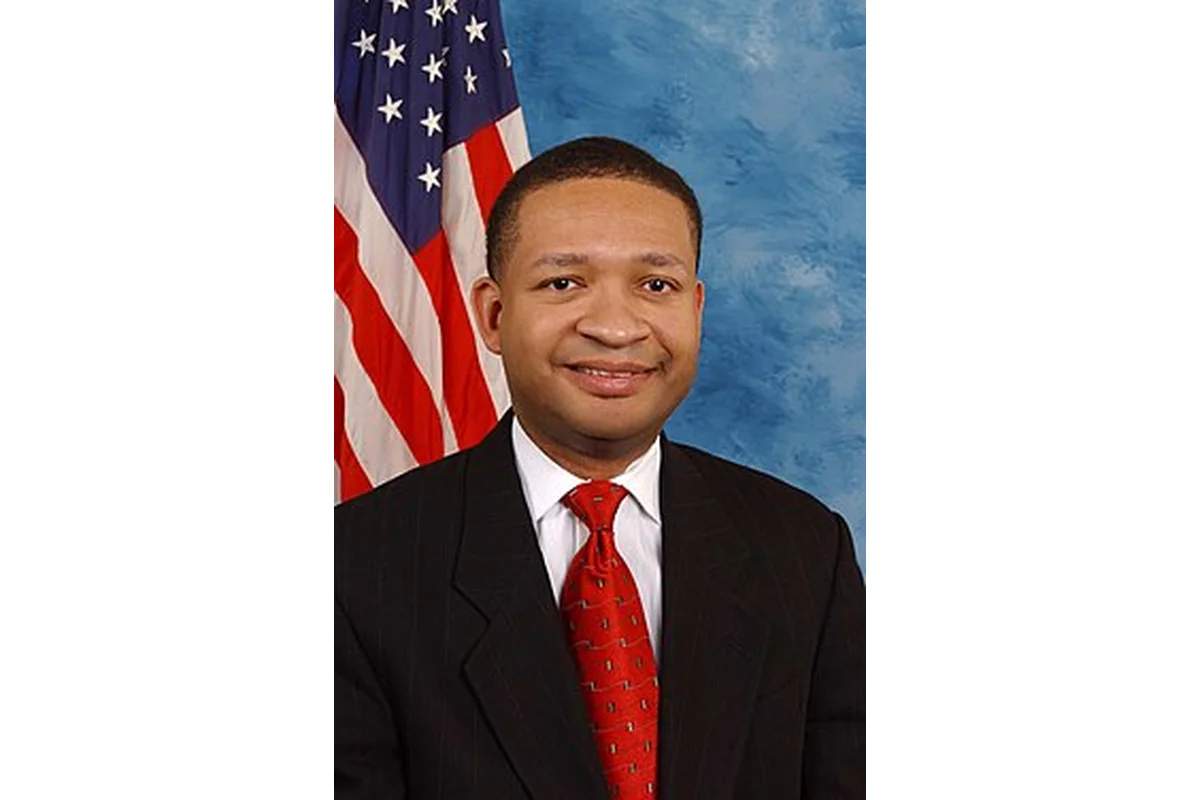
Artur Davis Bio
Artur Genestre Davis (born October 9, 1967) is an American attorney and former politician who represented Alabama’s 7th congressional district in the United States House of Representatives from 2003 to 2011. A graduate of Harvard College and Harvard Law School, Davis gained national attention as an early supporter of Barack Obama’s 2008 presidential bid and as a nominating speaker at the 2008 Democratic National Convention. He later made unsuccessful bids for governor of Alabama in 2010 and for mayor of Montgomery in 2015 and 2019.
Known for shifting party affiliation several times, Davis moved from the Democratic Party to the Republican Party, back to the Democrats, and then again to the Republicans before returning once more to the Democrats. His independent streak made him a distinctive voice in Southern politics, and his vote against the Affordable Care Act drew national headlines.
Early Life and Background
Artur Genestre Davis was born in Montgomery, Alabama, on October 9, 1967. He was raised primarily by his mother and grandmother in the same Alabama capital that would later become the site of his political comebacks and defeats. Growing up in Montgomery, Davis attended Jefferson Davis High School, where he developed the rhetorical skills that would later define his political career.
After high school, Davis enrolled at Harvard University, where he graduated magna cum laude in 1990. He went on to earn a Juris Doctor degree, cum laude, from Harvard Law School, where he received the Best Oralist Award in the prestigious Ames Moot Court Competition. His academic record at both institutions marked him as one of the most accomplished Alabama-born scholars of his generation.
Path to US Politics
Following law school, Davis returned to Alabama and began his legal career as an intern at the Southern Poverty Law Center. He then worked as a civil rights lawyer before serving as an Assistant United States Attorney, gaining experience in federal prosecution and constitutional law. These early roles helped him build a reputation as a sharp legal mind committed to civil rights.
Davis entered politics in 2000 when he challenged ten-year incumbent Earl F. Hilliard in the Democratic primary for Alabama’s 7th congressional district. Although he lost that first race by a margin of 58 to 34 percent, the contest established him as a rising voice in the state Democratic Party. In 2002, Davis ran again, turning the primary into a national story by highlighting his opponent’s controversial 1997 trip to Libya. After narrowly winning the initial primary and then dominating the runoff, Davis secured the heavily Democratic seat and entered Congress in January 2003.
Artur Davis Career
Early Career (2003–2006)
As a freshman in Congress, Davis led the successful fight to reverse funding cuts for minority land grant colleges, including Tuskegee University. In his second term, he won a floor fight to restore funding for the HOPE VI public housing renovation program, persuading more than sixty Republicans to vote with the Democrats. In 2005, he was the lead Democratic sponsor of a bill establishing a national cord blood bank to widen the availability of blood transfusions for patients suffering from sickle cell anemia and diabetes.
Davis was appointed to the Senior Whip Team for the Democratic Caucus of the 109th Congress and served as co-chair of the centrist House New Democrat Coalition. He also took on the role of Southern Regional co-chair for the Democratic Congressional Campaign Committee, building a national profile as a moderate Democrat with crossover appeal.
Breakthrough (2007–2008)
In January 2007, Davis became the first member of Congress outside Illinois to endorse Senator Barack Obama for president, signaling his willingness to take early political risks. At the 2008 Democratic National Convention, he delivered a seconding speech formally placing Obama’s name in nomination and served as one of Obama’s national campaign co-chairs. These moves elevated Davis onto the national stage and made him a fixture of political commentary.
Media outlets speculated that Davis could be tapped as Attorney General in an Obama administration, but he told The Birmingham News that he did not expect such an offer and would refuse it if made. His prominence during the 2008 campaign cemented his standing as one of the party’s most visible figures, even as he remained based in Alabama.
Democratic Era (2009–2011)
Assigned to the influential House Committee on Ways and Means in the 110th Congress, Davis used the platform to advocate for ethics reform, becoming the first member of the Congressional Black Caucus to demand that Ways and Means Chairman Charles B. Rangel surrender his gavel amid an ethics investigation. He twice voted against the Affordable Care Act, in November 2009 and again in March 2010, making him the only member of the Congressional Black Caucus to oppose the legislation when it passed.
In April 2009, Davis also voted against the Matthew Shepard and James Byrd, Jr. Hate Crimes Prevention Act, further distancing himself from parts of his party’s base. On February 6, 2009, he announced his candidacy for Governor of Alabama, framing his campaign around independence from Democratic Party orthodoxy. He lost the June 1, 2010 Democratic primary to state Agriculture Commissioner Ron Sparks and announced that he would not seek re-election to the House, returning to the private practice of law at the end of his term in 2011. Democrat Terri Sewell succeeded him as the first African-American woman elected to Congress from Alabama.
Notable Events and Milestones
One of the defining moments of Davis’s career was his 2010 vote against the Affordable Care Act, which made national news and contributed to his loss of support among African-American voters in the Democratic primary. His decision to relocate to Virginia in 2012 and join the Republican Party marked a striking turn, and his speech at the 2012 Republican National Convention in support of Mitt Romney cemented his image as a political outlier willing to cross traditional lines.
Artur Davis Career Wins
Artur Davis won election to the United States House of Representatives four times, serving Alabama’s 7th congressional district from 2003 to 2011. He also won the 2002 Democratic primary runoff against Earl F. Hilliard and a 2004 primary challenge from Albert Turner Jr. by a margin of 88 to 12 percent. Beyond electoral victories, he won key legislative fights, including restoring funding for minority land grant colleges and for the HOPE VI public housing program.
Congressional Highlights
Davis secured his House seat in November 2002 and held it through four consecutive Congresses. He was re-elected in 2004 with no general election opposition after dispatching his primary challenger, and he continued to represent the district through the 111th Congress. Although he never captured statewide office, his ability to win repeatedly in a heavily Democratic district established him as a serious political figure for nearly a decade.
Other Wins and Achievements
Outside of electoral politics, Davis earned national recognition as one of the leading co-chairs of Barack Obama’s 2008 presidential campaign and as a featured speaker at the 2008 Democratic National Convention. In 2012, he was named a visiting fellow at the Harvard Institute of Politics, and his opinion columns began appearing in the conservative National Review. These platforms extended his influence well beyond Alabama’s borders.
Artur Davis Family
Family Background and Upbringing
Artur Genestre Davis was raised in Montgomery, Alabama, by his mother and grandmother. Limited public information is available about his extended family, and he has generally kept his early family life out of the spotlight. His upbringing in the capital of Alabama, however, helped shape his deep familiarity with the state’s political and racial history.
Personal Life
Davis is married to Tara Johnson. The couple has kept much of their personal life private, and details about children and family milestones are not widely documented. After leaving Congress, Davis relocated to Virginia before eventually returning to Alabama to pursue his mayoral bids in Montgomery.