
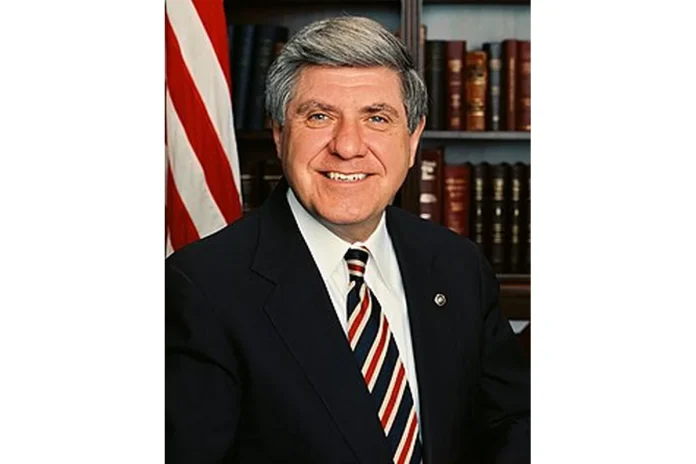
Ben Nelson Bio
Earl Benjamin Nelson, known publicly as Ben Nelson, is an American politician, attorney, and businessman who built a long career representing Nebraska at the state and federal levels. He served as the 37th governor of Nebraska from 1991 to 1999 and later as a United States senator from Nebraska from 2001 to 2013. A member of the Democratic Party, Nelson was often described as the most conservative Democrat in the Senate, frequently breaking with his party on high-profile issues. As of 2026, he remains the last Democrat to have won or held statewide office in Nebraska.
Before entering public service, Nelson worked as an insurance executive and attorney in Omaha. After leaving the Senate in 2013, he led the National Association of Insurance Commissioners before returning to private legal practice. His career included work on health-care, judicial confirmations, taxes, and veterans and agricultural issues affecting Nebraska and the nation.
Early Life and Background
Earl Benjamin Nelson was born on May 17, 1941, in McCook, a community in southwestern Nebraska. He is the only child of Birdella Nelson and Benjamin Earl Nelson. Nelson grew up in a small-town Midwestern environment that shaped his lifelong focus on agriculture, rural communities, and conservative-leaning policy debates in the state.
During his youth, Nelson earned the rank of Eagle Scout, a distinction that reflected his early commitment to civic service and community involvement. These formative experiences laid the groundwork for his later interest in law, public policy, and government leadership in Nebraska.
Path to US Politics
Nelson pursued higher education at the University of Nebraska–Lincoln, where he earned a Bachelor of Arts in 1963, a Master of Arts degree in 1965, and a Juris Doctor in 1970. His training in law and public policy provided the foundation for his work in both the insurance industry and state government.
After graduating from law school, Nelson joined Central National Insurance Group of Omaha as assistant general counsel. In 1975, the governor appointed him state insurance director. After a change in administration, he returned to Central National Insurance as an executive vice president and eventually rose to president of the company. These professional experiences helped him transition from the private sector into elected office.
Early Political Activity
Nelson became involved in state politics through the Democratic Party and served as state chairman of Democrat Helen Boosalis’s 1986 gubernatorial campaign. Boosalis, who was mayor of Lincoln, lost the general election to Republican state treasurer Kay Orr by a margin of 53% to 47%. Although the campaign was unsuccessful, it gave Nelson direct experience with statewide political organizing and coalition building.
Ben Nelson Career
Early Career (1990–1995)
Nelson first ran for electoral office in 1990, narrowly defeating first-term Republican Governor Kay Orr by just 4,030 votes out of more than 586,000 cast. During the campaign, Nelson attacked Orr’s support for a proposed low-level nuclear waste dump in the state. Once in office, he pushed for the Nebraska State Department of Environmental Quality to deny the dump’s application for an operating license, ultimately leading to a lawsuit that the state settled for $145 million.
During his first term, Nelson introduced legislation to cut crime through the Safe Streets Act and the Juvenile Crime Bill, advocated for low-income families through the Kids Connection health care system, and enacted welfare reforms. He also pushed for tax cuts that benefited more than 400,000 middle-income Nebraska families. In 1994, he was reelected with 73% of the vote, the largest margin of victory for a Nebraska governor in half a century, despite national Republican gains that year.
Breakthrough (1990 Gubernatorial Win)
Nelson’s breakthrough came in 1990, when he became the first Democrat in years to capture the Nebraska governorship. His narrow victory over the incumbent governor positioned him as a rising figure in state politics and signaled a brief shift in the political landscape of a traditionally Republican state.
As governor, Nelson took some conservative stances on issues in right-leaning Nebraska. He pushed welfare reform before it was enacted at a national level and opposed President Bill Clinton’s efforts on health care. These decisions reflected his independent streak and helped him build a record that appealed to Nebraska voters across the political spectrum.
Democratic Party Era (1991–2013)
After two terms as governor, Nelson was ineligible to run for reelection in 1998 because of Nebraska’s term-limits law. He was succeeded as governor by Republican Mike Johanns, the mayor of Lincoln. In 1996, Nelson ran for an open United States Senate seat after fellow Democrat Jim Exon retired, but he was defeated in an upset by Republican businessman and Vietnam veteran Chuck Hagel.
He was elected to Nebraska’s other Senate seat in the 2000 election, defeating Republican Attorney General Don Stenberg with 51% of the vote after spending $1,004,985, about 50% more than his opponent. In 2006, Nelson was reelected to the Senate in a landslide, defeating Republican Pete Ricketts by a 64% to 36% margin, the biggest victory for a Democratic Senate candidate in Nebraska since Edward Zorinsky won 66% of the vote in 1982. He did not run for a third term in 2012 and was succeeded by Republican Deb Fischer.
Notable Events and Milestones
Nelson played a key role as the lead Democratic senator in the Gang of 14, a bipartisan group that forged a compromise in May 2005 to prevent the Republican leadership from implementing the so-called nuclear option on judicial filibusters. He was the only Democratic senator to vote to confirm conservative appellate court nominee Janice Rogers Brown and later the first Democratic senator to support Samuel Alito’s confirmation to the United States Supreme Court. In 2010, he was the only Democrat to vote against Elena Kagan’s confirmation to the Supreme Court.
Ben Nelson Career Wins
Ben Nelson’s career wins include two terms as governor of Nebraska and two terms in the United States Senate. His 1994 gubernatorial reelection by 73% of the vote stood as the largest margin of victory for a Nebraska governor in half a century. In 2006, he earned the biggest victory margin for a Democratic Senate candidate in Nebraska since 1982, and his 1990 victory made him the first Democrat in years to win the governorship of the state.
Political Office Highlights
Nelson’s most prominent wins include his 1990 victory over incumbent Governor Kay Orr, his 1994 gubernatorial landslide, and his 2000 and 2006 Senate election victories. In the 2006 general election, he received 42% of Republican votes, 73% of Independent votes, and 96% of Democratic votes, and he won all but 13 counties in the western part of the state. His strong cross-party appeal was a defining feature of his statewide victories.
Other Wins and Achievements
Beyond his election wins, Nelson helped pass major legislation including the Economic Growth and Tax Relief Reconciliation Act of 2001 and the 2003 tax cut, supported welfare reform, and was the decisive 60th vote to advance the Affordable Care Act. In 2013, he was named chief executive officer of the National Association of Insurance Commissioners, a recognition of his longstanding expertise in insurance regulation.
Ben Nelson Family
Family Background and Public Service Lineage
Ben Nelson is the only child of Birdella Nelson and Benjamin Earl Nelson, both of whom raised him in McCook, Nebraska. His parents’ roots in small-town Nebraska shaped his lifelong interest in agricultural policy, veterans’ issues, and the concerns of rural communities across the state.
Personal Life
Nelson lives in Omaha, Nebraska, with his wife, Diane. They had four children together and have five grandchildren. In 2016, their daughter Sarah Nelson died at the age of 46 after a fall at her home in Palm Springs, California.