
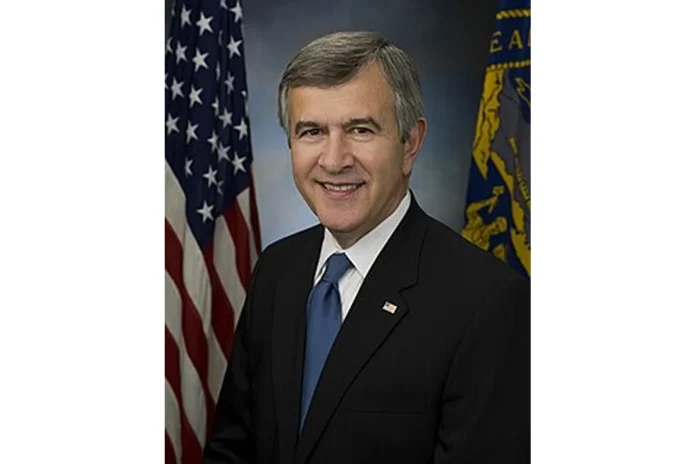
Mike Johanns Bio
Michael Owen Johanns (born June 18, 1950) is an American attorney and politician who built a long career in Nebraska public life before serving as a United States senator. A member of the Republican Party since 1988, he was the 38th governor of Nebraska from 1999 to 2005 and served as the United States Secretary of Agriculture under President George W. Bush from 2005 to 2007. He represented Nebraska in the United States Senate from 2009 to 2015.
Before entering statewide politics, Johanns practiced law in Lincoln and served on local boards, including a tenure as the 47th mayor of Lincoln, Nebraska, from 1991 to 1998. Throughout his career, he has focused on agricultural trade, ethanol policy, and fiscal restraint, and he later served on the board of directors of the Millennium Challenge Corporation after leaving the Senate.
Early Life and Background
Michael Owen Johanns was born on June 18, 1950, in Osage, Iowa, the son of Adeline Lucy (née Royek) and John Robert Johanns. His father was of German and some Luxembourgish ancestry, and his maternal grandparents had immigrated from Poland. Johanns grew up working on his family’s farm, an experience that helped shape his later interests in agricultural policy.
He graduated from Osage Community High School in 1968 and went on to attend Saint Mary’s University of Minnesota in Winona, where he earned a Bachelor of Arts in Communications in 1971. Johanns then attended Creighton University School of Law, receiving his Juris Doctor and joining the Nebraska State Bar Association in 1974. His upbringing in rural Iowa gave him an early appreciation for farming communities, a theme that would run through his later public service.
Path to US Politics
After law school, Johanns clerked for Nebraska Supreme Court Justice Hale McCown from 1974 to 1975 and then practiced law at the firm of Cronin and Hannon in O’Neill, Nebraska, from 1975 to 1976. In 1976, he founded the Lincoln law firm Nelson, Johanns, Morris, Holdeman, and Titus, where he practiced until 1991, building a reputation as a skilled attorney with strong ties to the local business community.
Johanns entered elected office in 1983 when he was elected to the Lancaster County Board as a Democrat, serving until 1987. In 1988, he joined the Republican Party and was elected to the Lincoln City Council, where he served from 1989 to 1991. On May 7, 1991, he was elected the 47th mayor of Lincoln, defeating incumbent mayor Bill Harris with 54 percent of the vote, beginning the executive phase of his public career.
Mike Johanns Career
Early Career (1983–1998)
Johanns’s early political career was defined by steady advancement through local and city offices in Nebraska. As mayor of Lincoln, he was reelected in 1995 with no opposition, becoming the first mayor of Lincoln to win a reelection uncontested since the 1950s. His tenure as mayor was marked by efforts to expand economic development and maintain fiscal discipline, which laid the groundwork for his later statewide ambitions.
In 1998, Johanns launched a long and methodical campaign for governor. He began campaigning in October 1995, visited all 93 of Nebraska’s counties, and traveled more than 100,000 miles, building a strong base of small donors. On November 3, 1998, he and his running mate, David I. Maurstad, defeated Democratic nominee Bill Hoppner by a margin of 54 percent to 46 percent, winning the governor’s mansion.
Governorship Breakthrough (1999–2005)
During his first term as the 38th governor of Nebraska, Johanns focused on direct property tax relief, ultimately enacting a total of $85 million in such relief. He supported Initiative 413, which amended the Nebraska Constitution to limit state government spending and tie tax revenue increases to the rate of inflation. In 2002, Johanns signed legislation raising the state’s cigarette tax by 50 cents per pack, increasing it from 34 to 84 cents.
Johanns also pursued an active agenda on agriculture and energy. He led trade missions to Japan, China, Taiwan, Australia, South Korea, and Brazil, and signed legislation raising state gasoline taxes by 1.25 cents to support ethanol production. In 2001, he served as chairman of the Governors’ Ethanol Coalition, and from 2000 to 2003 he chaired the National Governors Association’s Committee on Economic Development and Commerce. Johanns was known for his aggressive use of the veto, striking down 26 bills in five days in 1999 and later vetoing Nebraska’s entire $5.4 billion two-year state budget in 2003.
In 2002, Johanns won reelection in a landslide, defeating Democrat Stormy Dean by a margin of 69 percent to 27 percent, becoming the first Republican governor of Nebraska to be reelected since Victor E. Anderson in 1956. His second-term priorities included promoting biotechnology and serving as chairman of the Midwestern Governors Association.
Secretary of Agriculture Era (2005–2007)
On December 2, 2004, President George W. Bush nominated Johanns to replace Ann Veneman as United States Secretary of Agriculture, praising his support for ethanol and biodiesel and his knowledge of foreign trade. The United States Senate confirmed him in a voice vote on January 20, 2005, hours after Bush’s second inauguration, and Johanns was sworn in the following day after tendering his resignation as governor.
As Secretary of Agriculture, Johanns continued to focus on expanding international markets for American farm products and on renewable fuel programs. His tenure also drew criticism for being too slow to perform additional tests on cows suspected of having mad cow disease, an issue that prompted significant public debate. Johanns resigned the post on September 20, 2007, to pursue a seat in the United States Senate.
United States Senate Era (2009–2015)
On October 10, 2007, Johanns announced his campaign for the United States Senate seat being vacated by Senator Chuck Hagel. He won the Republican primary by defeating businessman Pat Flynn and, on November 4, 2008, won the general election by defeating Democratic nominee Scott Kleeb. He was sworn in on January 3, 2009, becoming one of only two new Republican senators in the 111th United States Congress, alongside Jim Risch of Idaho.
During his time in the Senate, Johanns voted against the Patient Protection and Affordable Care Act and the Dodd–Frank Wall Street Reform and Consumer Protection Act, and he opposed cap-and-trade legislation. He was a member of the bipartisan “Gang of Eight” that worked on a federal deficit reduction deal in 2011 and was pivotal in rerouting the proposed route of the Keystone Pipeline. On February 18, 2013, Johanns announced that he would not seek reelection in 2014, and he was succeeded by fellow Republican Ben Sasse. In December 2015, President Barack Obama nominated him to the board of directors of the Millennium Challenge Corporation, and the United States Senate confirmed the nomination in February 2016. President Donald Trump nominated him for a second term on the board in March 2019.
Notable Events and Milestones
Among Johanns’s most significant moments was his 2002 gubernatorial landslide, which made him the first Republican governor of Nebraska to win reelection in nearly five decades. His veto of the 1999 Nebraska Legislature’s two-year moratorium on executions, the first such bill to reach any governor’s desk in the nation, drew national attention and was condemned by the American Civil Liberties Union, the American Bar Association, and Pope John Paul II. Johanns also received an award from the National Multiple Sclerosis Society for his work to support funding for autoimmune disease research.
Mike Johanns Career Wins
Mike Johanns compiled a long record of electoral victories at the local, state, and federal levels, winning every major race he entered from 1991 through 2008. His campaigns were noted for early organization, broad geographic outreach, and strong support among moderate voters.
Electoral Highlights
Johanns won his first race for mayor of Lincoln in 1991 with 54 percent of the vote and was reelected without opposition in 1995. In the 1998 Republican gubernatorial primary, he won a crowded field with 40 percent of the vote, then captured the general election 54 percent to 46 percent. He followed this with a 69-percent-to-27-percent reelection victory in 2002, and in 2008 he won both the Republican primary and the general election for the United States Senate.
Other Wins & Achievements
Beyond elections, Johanns earned bipartisan recognition for his gubernatorial record, including the enactment of $85 million in property tax relief and the expansion of ethanol incentive programs. He was chosen by his peers to chair the National Governors Association’s Committee on Economic Development and Commerce in 2000 and again in 2002, and he led the Midwestern Governors Association in 2002. His selection as United States Secretary of Agriculture and his later service on the Millennium Challenge Corporation board reflect a career marked by sustained trust from both Republican and Democratic administrations.
Mike Johanns Family
Family Background and Lineage
Mike Johanns was raised in Osage, Iowa, in a family with deep Midwestern roots. His father, John Robert Johanns, was of German and some Luxembourgish ancestry, while his mother, Adeline Lucy (née Royek), was the daughter of Polish immigrants. The family operated a farm, and Johanns’s upbringing there informed his lifelong interest in agricultural policy.
Personal Life
Johanns married his first wife, Connie Johanns, in 1972, and the couple had two children, a son named Justin and a daughter named Michaela. He also has five grandchildren. Johanns and Connie divorced in 1985, and in 1986 he married Stephanie Armitage, a former Lancaster County Commissioner and Nebraska state senator.