
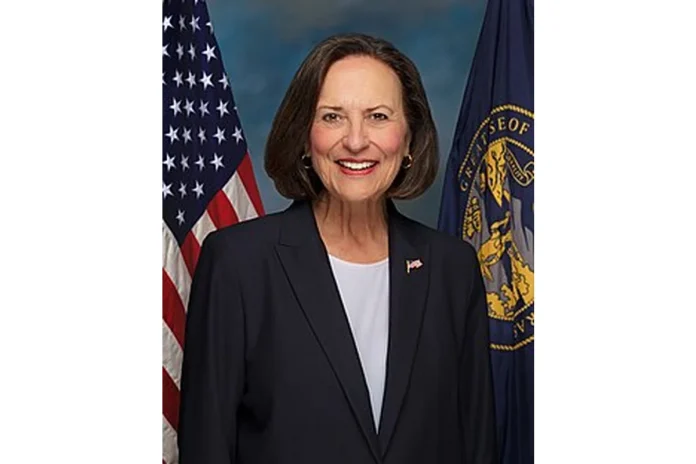
Deb Fischer Bio
Debra Lynelle Fischer, born March 1, 1951, is an American politician and rancher serving as the senior United States senator from Nebraska. A member of the Republican Party, she has held her Senate seat since 2013 and represents a state with deep agricultural roots. Fischer is the third woman to represent Nebraska in the U.S. Senate and the first to be reelected to the chamber.
Before arriving in Washington, Fischer built a career in Nebraska public service, including time in the state legislature and on a local school board. She and her husband, Bruce Fischer, operate a family cattle ranch near Valentine, Nebraska, grounding her political identity in rural life and agricultural issues.
Early Life and Background
Debra Lynelle Fischer was born Debra Lynelle Strobel in Lincoln, Nebraska, on March 1, 1951. She is the daughter of Gerold Carl Strobel and Florence M. (née Bock) Strobel. Her father served as State Engineer and Director of the Nebraska Department of Roads under Governors Kay Orr and Ben Nelson, while her mother worked as an elementary school teacher with Lincoln Public Schools. Growing up in a family tied to both public service and education shaped Fischer’s early interest in civic life.
Fischer attended the University of Nebraska–Lincoln, where she met Bruce Fischer, a man from Valentine, Nebraska. The couple married in 1972 and went on to raise three sons on the Fischer family cattle ranch south of Valentine. In 1987, she returned to the University of Nebraska–Lincoln and completed her Bachelor of Science degree in education, balancing studies with the demands of ranch life.
Path to US Politics
Fischer’s entry into public service began at the local level. In 1990, she was elected to the Valentine Rural High School Board of Education, where she served until 2004. During the same period, Governor Mike Johanns appointed her as a Commissioner to the Nebraska Coordinating Commission for Post-Secondary Education, a role she held from 2000 to 2004.
In 2004, Fischer ran for the Nebraska Legislature from the 43rd legislative district, a vast Sandhills-area seat covering 12 counties and part of a 13th. She won a narrow general-election victory and went on to chair the Transportation and Telecommunications Committee. Her work on the BUILD Nebraska Act, which dedicated a share of state sales tax to infrastructure projects, helped raise her profile and set the stage for her later U.S. Senate campaign.
Deb Fischer Career
Early Career (1990–2004)
Fischer’s early political career centered on education and local governance. Her fourteen years on the Valentine Rural High School Board of Education allowed her to focus on rural schooling issues, a concern that has remained central to her political identity. Her concurrent service on the Nebraska Coordinating Commission for Post-Secondary Education gave her experience with statewide higher-education policy.
This foundation in community-level work helped Fischer build a reputation as a pragmatic conservative in Nebraska’s Sandhills region, where ranching and small-town life define the political landscape. By the time she ran for the state legislature in 2004, she had already established relationships with voters, school officials, and state leaders across her region.
Nebraska Legislature Breakthrough (2005–2013)
In the 2004 Republican primary, Fischer finished second in a field of seven candidates before narrowly defeating front-runner Kevin T. Cooksley in the general election with 50.4% of the vote. She was reelected unopposed in 2008, and during her tenure she chaired the Transportation and Telecommunications Committee while hosting a weekly radio show and writing a newspaper column that reached communities across her sprawling district.
Fischer’s legislative work included a high-profile 2007 filibuster against the Nebraska Clean Indoor Air Act, which nonetheless passed in 2008. She also co-sponsored L.B. 675 in 2009, a measure requiring abortion providers to display ultrasound images before procedures, and helped pass the BUILD Nebraska Act to direct sales-tax revenue toward infrastructure. Term limits prevented her from seeking reelection to the legislature in 2012.
U.S. Senate Era (2013–Present)
After incumbent Senator Ben Nelson announced his retirement in January 2012, Fischer launched her U.S. Senate campaign. Despite being outspent by rivals Jon Bruning and Don Stenberg, she won the Republican primary with 40% of the vote, aided by outside spending from groups such as the Club for Growth and endorsements from Sarah Palin and Representative Jeff Fortenberry.
In the general election, Fischer defeated former Democratic Senator Bob Kerrey by a margin of 58% to 42%, carrying 88 of Nebraska’s 93 counties. She was reelected in 2018 against Democratic nominee Jane Raybould, and in 2024 she defeated independent candidate Dan Osborn, a former union leader, by roughly 6.7 points. Fischer’s Senate work has included advocacy for modernizing the U.S. nuclear triad, support for NATO expansion, and visits to allied partners in the Indo-Pacific.
Notable Events and Milestones
One of Fischer’s defining moments came in 2012, when her underdog Senate primary victory demonstrated her appeal in rural Nebraska. Her 2024 reelection, decided by a narrower margin than her 2018 win, reflected a more competitive political environment while still securing her place as Nebraska’s senior senator.
Deb Fischer Career Wins
Deb Fischer’s electoral record includes a state legislature victory in 2004, an unopposed reelection in 2008, a U.S. Senate primary win in 2012, a general-election victory the same year, a 2018 Senate reelection, and a 2024 Senate win. Together, these results span local school-board service, state legislative leadership, and three federal Senate campaigns.
Nebraska Legislature Highlights
Fischer first won her Nebraska Legislature seat in 2004 by defeating Kevin T. Cooksley in a close general election. She returned to the legislature unopposed in 2008 and served until term limits forced her out in 2012. During her tenure, she chaired the Transportation and Telecommunications Committee and helped pass the BUILD Nebraska Act.
Other Wins and Achievements
Fischer served on the Valentine Rural High School Board of Education from 1990 to 2004 and was appointed by Governor Johanns to the Nebraska Coordinating Commission for Post-Secondary Education from 2000 to 2004. In the U.S. Senate, she has been a vocal advocate for rural infrastructure, agricultural policy, and a strong national defense.
Deb Fischer Family
Family Background and Public Service
Fischer was raised in a family with strong ties to Nebraska public life. Her father, Gerold Carl Strobel, served as State Engineer and Director of the Nebraska Department of Roads, while her mother, Florence M. Strobel, was an elementary school teacher with Lincoln Public Schools. That blend of infrastructure and education helped shape Fischer’s later policy interests.
Personal Life
Debra Lynelle Fischer married Bruce Fischer in 1972, after the two met at the University of Nebraska–Lincoln. Together they have raised three sons and operate Sunny Slope Ranch, a family cattle ranch near Valentine, Nebraska, where the next generation owns most of the family corporation’s stock. In 2020, the elder Fischers relocated from the ranch to Lincoln, Nebraska.