
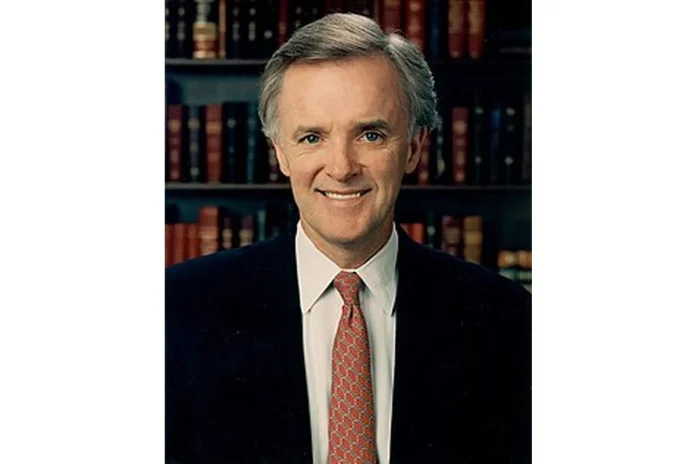
Bob Kerrey Bio
Joseph Robert Kerrey, widely known as Bob Kerrey, is an American politician, businessman, former United States Navy SEAL officer, and university administrator. Born on August 27, 1943, in Lincoln, Nebraska, he received the Medal of Honor for valor during the Vietnam War in 1970 after being severely wounded in combat. Kerrey served as the 35th governor of Nebraska from 1983 to 1987 and represented Nebraska in the United States Senate from 1989 to 2001. He later served as president of The New School in New York City from 2001 to 2010. A member of the Democratic Party since 1978, Kerrey sought the Democratic presidential nomination in 1992 and has continued to play an active role in public life.
Early Life and Background
Bob Kerrey was born in Lincoln, Nebraska, the son of James Henry Kerrey, a builder and businessman, and Elinor Fern Kerrey, née Gonder, a University of Nebraska instructor. He grew up in the city and attended Lincoln public schools, graduating from Lincoln Northeast High School in 1961. Kerrey went on to earn a Bachelor of Science degree in pharmacy from the University of Nebraska in 1966, where he joined the Phi Gamma Delta fraternity and was inducted into the Society of Innocents during his senior year.
Raised in a middle-class household in the heart of Nebraska, Kerrey developed an early interest in service, shaped by the values of his parents and his Midwestern upbringing. His pharmacy studies provided a scientific foundation that would later inform his disciplined approach to both military training and public administration. The formative years in Lincoln set the stage for his decision to enter naval service shortly after completing his university education.
Path to US Politics
After completing his education, Bob Kerrey served in the United States Navy as a SEAL officer during the Vietnam War, completing Officer Candidate School in 1967 and Basic Underwater Demolition and SEAL training later that year. He deployed to Vietnam in 1969 as assistant platoon commander with Delta Platoon, SEAL Team ONE, and was seriously wounded in combat on March 14, 1969, losing the lower part of his right leg. On May 14, 1970, President Richard Nixon awarded him the Medal of Honor for conspicuous gallantry and intrepidity, and he was later medically discharged from the Navy.
Following his military discharge, Kerrey returned to Nebraska and built a successful business career, owning and operating a chain of restaurants known as Grandmother’s Skillet from 1972 to 1982, along with other ventures in fitness centers, a bowling alley, cattle futures, and commercial real estate. While managing these businesses, he gained his initial political experience through a 1971 voter registration drive with anti-war activist Allard K. Lowenstein, by managing a friend’s successful state legislative campaign, and by serving on the city of Lincoln’s Human Rights Commission. Originally a Republican, Kerrey switched to the Democratic Party in 1978.
Bob Kerrey Career
Early Career (1983–1987)
Bob Kerrey entered elective politics in 1982 when he ran for Governor of Nebraska. He won the Democratic nomination with 71 percent of the vote against state senator George Bill Burrows and went on to defeat incumbent Republican Charles Thone in the general election, 51 percent to 49 percent. Sworn in as the 35th governor of Nebraska, he served a single four-year term from 1983 to 1987 and chose not to seek re-election.
During his tenure as governor, Kerrey pursued policies centered on welfare reform, education reform, job training, and environmental conservation, several of which became models for other states and the federal government. In 1986, he served as chair of the Midwestern Governors Association. He gained national attention in July 1986 when he ordered the Nebraska State Patrol to halt a nuclear-waste train and directed the Nebraska Army National Guard to park a tank on the tracks at the Kansas-Nebraska border, a confrontation resolved after federal authorities agreed to notify state officials of future shipments.
Breakthrough (1988–1992)
Bob Kerrey ran for the United States Senate in 1988, challenging recently appointed Republican incumbent David Karnes. He won the Democratic primary with 92 percent of the vote and defeated Karnes in the general election, 57 percent to 42 percent, beginning what would become twelve years in the upper chamber of Congress. As a senator, Kerrey served on the Agriculture Committee and the Finance Committee, sat on the Appropriations Committee from 1989 to 1996, and served as vice chairman of the Intelligence Committee from 1995 to 1999.
Kerrey earned a reputation for independent thinking, most famously casting the deciding vote in favor of President Bill Clinton’s 1993 budget plan. In 1999, he voted for the Gramm–Leach–Bliley Act, which repealed portions of the Glass–Steagall Act, defending his position by arguing that concerns about a financial meltdown similar to 1929 were dramatically overblown. In September 1991, he announced his candidacy for the 1992 Democratic presidential nomination and, although initially viewed as the early frontrunner, finished third in the New Hampshire primary, briefly rebounded with a South Dakota primary win, and exited the race after a fourth-place finish in the Colorado primary.
Democratic Era (1989–2001)
Throughout his time in the United States Senate, Bob Kerrey established himself as a key Democratic voice on fiscal and security policy. He was elected to a second Senate term in 1994, defeating businesswoman Jan Stoney by a margin of 55 percent to 45 percent. He chaired the Democratic Senatorial Campaign Committee during the 104th Congress and continued to serve on multiple influential committees until his retirement in January 2001, when he was succeeded by fellow Democrat and former Nebraska governor Ben Nelson.
Following his departure from the Senate, Kerrey was appointed to the National Commission on Terrorist Attacks Upon the United States, commonly known as the 9/11 Commission, which issued its final report on July 22, 2004. After leaving public office, he served as president of The New School in New York City from 2001 to 2010, during which time he more than doubled the university’s endowment, expanded enrollment by 44 percent to over 10,200 students, and oversaw significant academic growth before being succeeded by David E. Van Zandt.
Notable Events and Milestones
Bob Kerrey’s most defining public moment came on March 14, 1969, when his actions on Hon Tre island near Nha Trang Bay earned him the Medal of Honor. In February 2001, reports surfaced about his role in the 1969 Thanh Phong raid, where his SEAL team was involved in the deaths of numerous civilians in a Vietnamese village considered a free-fire zone, an event Kerrey acknowledged with public anguish. In 2012, he sought a return to the United States Senate to succeed his former successor, Ben Nelson, winning the Democratic primary but losing the general election to Republican state senator Deb Fischer.
Bob Kerrey Career Wins
Bob Kerrey compiled a distinguished record of political victories, including a governorship, two United States Senate elections, and a South Dakota Democratic presidential primary during the 1992 cycle. His wins in Nebraska’s largest urban counties, Douglas and Lancaster, demonstrated sustained support in the state’s metropolitan areas, and he remained a recognizable national figure in Democratic politics for more than two decades.
United States Senate Highlights
Bob Kerrey first won election to the United States Senate in 1988, defeating Republican David Karnes with 57 percent of the vote. He was re-elected in 1994, beating Jan Stoney by a 55 percent to 45 percent margin. His 1988 victory marked the first time he captured statewide office, and his 1994 re-election confirmed his standing as one of Nebraska’s most durable Democratic politicians of his era.
Other Wins and Achievements
Bob Kerrey captured the 1982 Nebraska gubernatorial race against incumbent Charles Thone, becoming only the second Democrat to win the office in decades. He also won the South Dakota Democratic presidential primary in 1992, an early campaign bright spot during his brief White House bid. Beyond electoral victories, he received the Medal of Honor in 1970 and honorary doctorates from The New School in 2011 and Southern New Hampshire University in 2016.
Bob Kerrey Family
Family Background and Political Lineage
Bob Kerrey was raised in Lincoln, Nebraska, by his father James Henry Kerrey, a builder and businessman, and his mother Elinor Fern Kerrey, a University of Nebraska instructor. The Kerrey family’s roots in Lincoln shaped his lifelong ties to the city, and his parents’ emphasis on education and hard work influenced his path from pharmacy studies to military service and public office.
Personal Life
Bob Kerrey married Beverly Defnall in 1974, and the couple divorced in 1978. In 2001, he married Sarah Paley, with whom he has a son. He also has two children from his previous marriage. While serving as Governor of Nebraska in the early 1980s, he famously dated actress Debra Winger during the filming of Terms of Endearment, replying to press questions with the line, she swept me off my foot, a reference to his wartime amputation. Kerrey has described himself as an agnostic and has long supported the separation of church and state.