
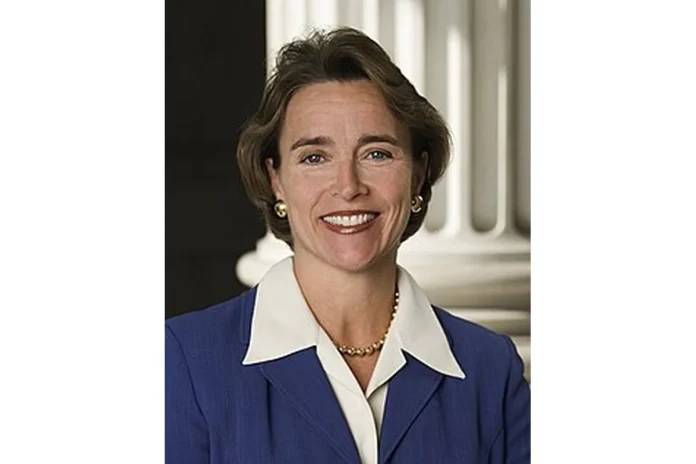
Blanche Lincoln Bio
Blanche Lambert Lincoln (born September 30, 1960) is an American politician and political consultant who served as a United States Senator from Arkansas from 1999 to 2011. A member of the Democratic Party, she built her career representing her home state in both chambers of Congress, with a focus on agriculture, rural development, and small business policy.
Before her Senate career, Lincoln served two terms in the U.S. House of Representatives for Arkansas’s 1st congressional district from 1993 to 1997. She was the first woman elected to the U.S. Senate from Arkansas since Hattie Caraway in 1932 and remains the youngest woman ever elected to the Senate, having taken office at age 38. After leaving the Senate, she founded the Lincoln Policy Group, a Washington-based consulting firm, and has remained active in policy work.
Early Life and Background
Blanche Lambert Lincoln was born in Helena, Phillips County, Arkansas, the daughter of Jordan Bennett Lambert, a rice and cotton farmer, and Martha (née Kelly) Lambert. She is a seventh-generation Arkansan, with deep roots in the Mississippi Delta region that would later shape her policy focus on rural and agricultural issues. Her older sister, Mary Lambert, went on to become a film director.
Lincoln received her early education at public schools in Helena and was student council president at Central High School from 1977 to 1978. She went on to attend the University of Arkansas in Fayetteville, where she was a member of the Chi Omega sorority. She later transferred to Randolph-Macon Woman’s College (now Randolph College) in Lynchburg, Virginia, graduating in 1982 with a Bachelor of Science degree in biology. She had originally planned to pursue a career in nursing before shifting toward public service.
After college, Lincoln worked as a staff assistant for U.S. Representative Bill Alexander, a Democrat who represented Arkansas’s 1st congressional district. She remained in Alexander’s congressional office until 1984, gaining firsthand experience with federal legislative work.
Path to US Politics
Lincoln’s entry into electoral politics came in 1992, when she challenged her former boss, Bill Alexander, in the Democratic primary for Arkansas’s 1st congressional district. Defeating him by a margin of 60 to 40 percent, she went on to win the general election against Republican Terry Hayes with 70 percent of the vote. Her victory coincided with the election of fellow Arkansan Bill Clinton to the presidency.
During her two terms in the House, Lincoln positioned herself as a centrist Democrat. She was one of only a handful of Democrats to support the Central American Free Trade Agreement and one of 17 Democrats to vote for the Teamwork for Employees and Managers Act of 1995. She also supported tax cuts and a balanced-budget amendment to the Constitution. In 1993, she became one of the first three women to play in the annual Congressional Baseball Game, alongside Ileana Ros-Lehtinen and Maria Cantwell.
Lincoln chose not to seek reelection in 1996 because she was pregnant. She returned to politics in 1998, running for the U.S. Senate seat being vacated by retiring Democrat Dale Bumpers.
Blanche Lincoln Career
Early Career (1992–1997)
Blanche Lambert Lincoln began her electoral career in 1992 with her primary upset of Representative Bill Alexander. The win demonstrated her strong support among Arkansas voters, and her landslide victory in the general election made her one of the rising figures in the state’s Democratic Party.
During her two House terms, she focused on agricultural and rural issues, building a record that would later define her Senate career. Her reputation as a conservative-leaning Democrat helped her appeal to the increasingly diverse Arkansas electorate.
First Term as U.S. Senator (1999–2005)
In 1998, Lincoln won the U.S. Senate race by defeating Republican state senator Fay Boozman, the brother of future U.S. Representative John Boozman, by a margin of 55 to 42 percent. Her victory made her the first woman elected to the Senate from Arkansas since Hattie Caraway and the youngest woman ever elected to the chamber at the time.
In the Senate, Lincoln focused heavily on agricultural policy and was a leading advocate for the Delta Regional Authority, a federal program designed to spur economic development in the lower Mississippi Delta. She also served on several committees, including the Senate Finance Committee, the Special Committee on Aging, and the Senate Committee on Energy and Natural Resources.
Lincoln won reelection in 2004, defeating Republican state Senator Jim Holt by a margin of 56 to 44 percent. That same year, she co-founded the Senate Hunger Caucus, a bipartisan forum for addressing national and international hunger and food insecurity.
Second Term as U.S. Senator (2005–2011)
During her second term, Lincoln played a central role in shaping the Food, Conservation, and Energy Act of 2008, commonly known as the farm bill. She helped broker the compromise that led to its passage, championing nutrition programs, conservation efforts, rural development, and renewable energy. She also led the fight against an amendment that would have capped agricultural subsidy payments at $250,000 per farm, arguing the cap was unfair to cotton growers and other producers in her state.
On September 9, 2009, Lincoln became chair of the Senate Agriculture, Nutrition and Forestry Committee. She was the first Arkansan and the first woman to hold the position in the committee’s 184-year history. As chair, she continued to focus on farm policy and rural economic issues.
Lincoln also took high-profile positions on health care reform, voting in favor of the Affordable Care Act but pledging to filibuster any legislation containing a public health insurance option. She opposed the Employee Free Choice Act and voted against bringing Guantanamo Bay prisoners to the United States for trial. In 2007, she called for the resignation of Attorney General Alberto Gonzales over the firing of federal prosecutors.
In 2010, Lincoln narrowly survived a Democratic primary challenge from Lieutenant Governor Bill Halter, with an early endorsement from former President Bill Clinton. In the general election, she lost to Republican U.S. Representative John Boozman by a landslide, 58 to 37 percent.
Notable Events and Milestones
Lincoln’s career is marked by several historic firsts: she was the first woman elected to the U.S. Senate from Arkansas since Hattie Caraway, the youngest woman ever elected to the Senate at the time, the first Arkansan to chair the Senate Agriculture Committee, and the first woman to hold that committee’s gavel. She also appeared in the 2007 documentary 14 Women, directed by her older sister Mary Lambert.
Blanche Lincoln Career Wins
Blanche Lincoln won four major elections during her political career, building a record of strong support among Arkansas voters before the state’s political landscape shifted toward Republicans. Her victories include two U.S. House races, her initial Senate race in 1998, and her 2004 Senate reelection.
U.S. Senate Highlights
Lincoln’s first Senate victory in 1998 was a watershed moment, making her the youngest woman ever elected to the Senate and the first woman from Arkansas to win a Senate seat since Hattie Caraway in 1932. She defeated Fay Boozman by a comfortable 55 to 42 percent margin.
Six years later, Lincoln won a second Senate term by defeating Republican state Senator Jim Holt 56 to 44 percent, even as President George W. Bush carried Arkansas with 54 percent of the vote. Her second-term victory cemented her standing as one of the state’s most prominent political figures.
U.S. House Highlights
Lincoln first won her U.S. House seat in 1992 with 70 percent of the vote against Republican Terry Hayes. She was reelected to a second term in 1994, running under her married name, Blanche Lincoln, and built a reputation as a centrist Democrat focused on agricultural and rural policy.
Blanche Lincoln Family
Family Background
Blanche Lambert Lincoln was born into a deeply rooted Arkansas family. Her father, Jordan Bennett Lambert, was a rice and cotton farmer, and her mother was Martha (née Kelly) Lambert. She is a seventh-generation Arkansan with strong ties to the Helena and Phillips County community.
Personal Life
Lincoln married Steve Lincoln in 1994. Her husband is a distant relative of former President Abraham Lincoln. She is a member of the Episcopal Church. Lincoln chose not to seek reelection to the House in 1996 because she was pregnant, though she returned to politics in 1998 to run for the U.S. Senate. After leaving the Senate in 2011, she founded the Lincoln Policy Group, a consulting firm, and continues to be active in public policy work.